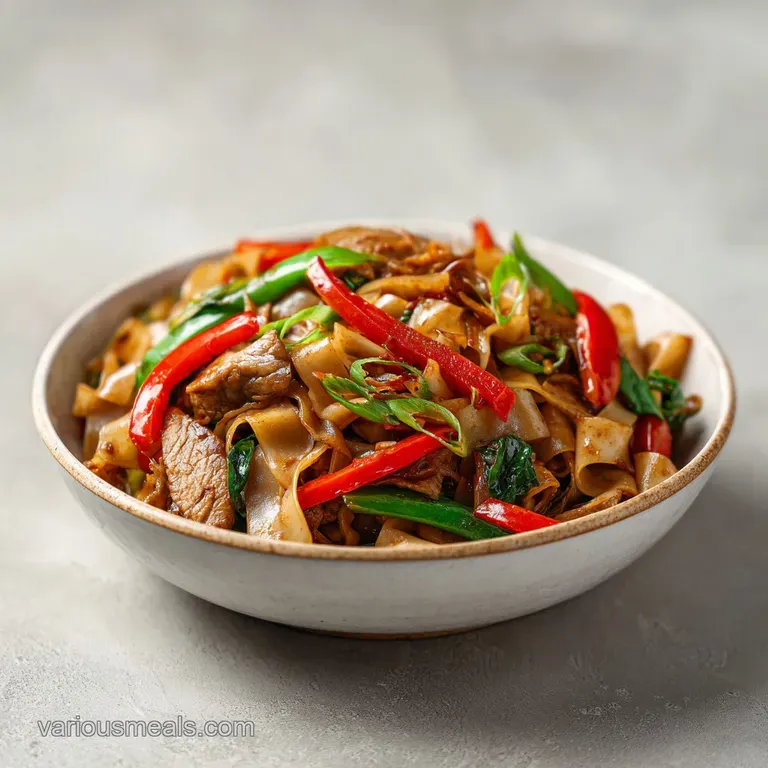
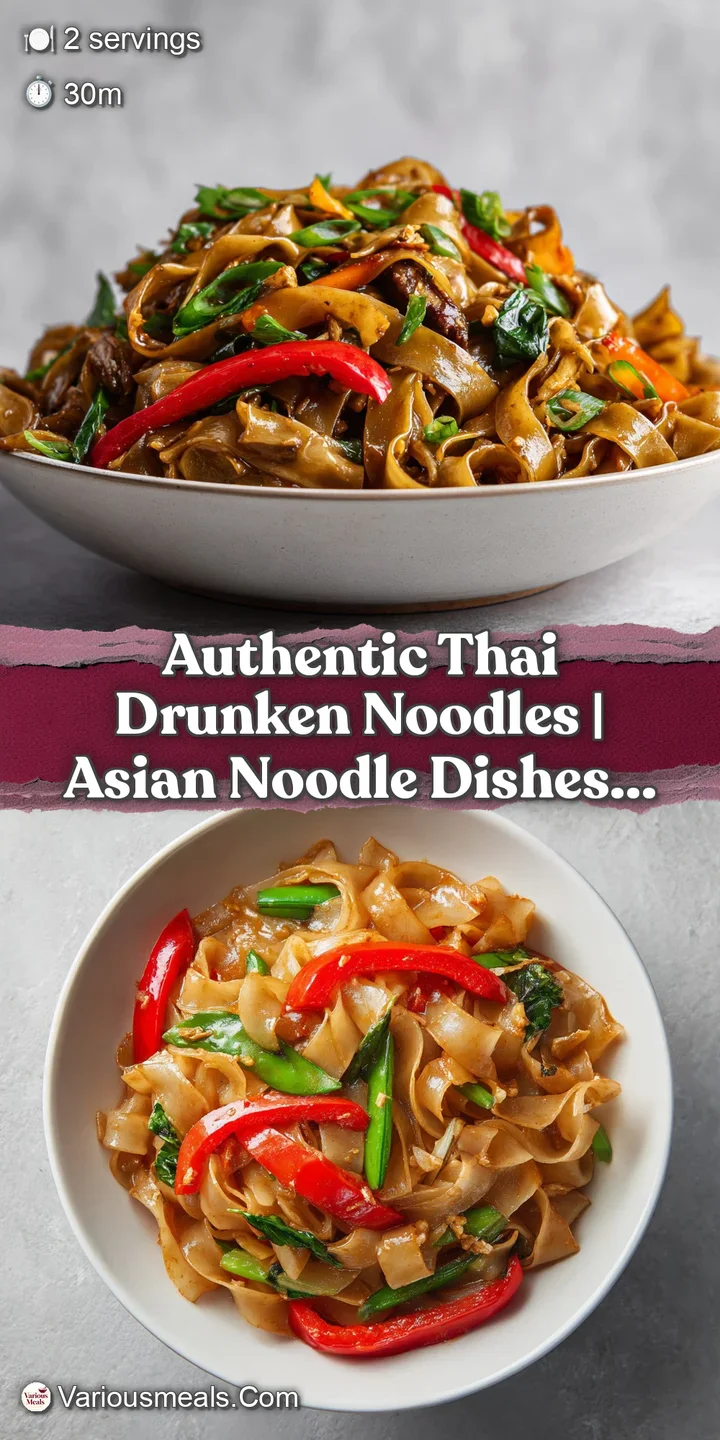
Authentic Thai Drunken Noodles with Chicken
- Time: Active 20 minutes, Passive 10 minutes, Total 30 minutes
- Flavor/Texture Hook: Savory, spicy, and smoky with chewy charred noodles
- Perfect for: High energy weeknight dinners or impressing spice loving friends
- Mastering the Bold Flavors of Drunken Noodles
- Why High Heat and Quick Tossing Works
- The Essential Blueprint for Your Shopping Trip
- Selecting the Right Tools for Wok Cooking
- Step-by-Step Execution for a Smoky Finish
- Solving Common Textural Issues in the Wok
- Creative Twists to Customize Your Stir Fry
- Preservation Secrets
- Choosing the Perfect Drinks and Sides
- Summary Table for Serving
- Very High in Sodium
- Recipe FAQs
- 📝 Recipe Card
Mastering the Bold Flavors of Drunken Noodles
The first thing you notice isn't the sight, it's the sound. That aggressive, crackling hiss as cold sauce hits a scorching carbon steel surface, followed immediately by the scent of caramelized sugar and fermented fish sauce.
It's a smell that fills the kitchen, stinging your nose with the sharp heat of Thai bird's eye chilies and the sweet, anise like perfume of fresh Thai basil. I remember the first time I tried to make this at home, I was so timid with the heat that the noodles turned into a clump of gray paste.
It was a disaster, honestly. But then I realized the secret isn't just the ingredients; it's the courage to let the pan get smoking hot.
We are aiming for that elusive "wok hei" or breath of the wok. When you toss those wide rice noodles over a high flame, they shouldn't just warm up, they should catch the heat, developing little charred brown spots that add a complex, smoky depth.
This dish, known as Pad Kee Mao, is the ultimate late night comfort food. Legend says it was invented by someone who came home after a few drinks and threw together whatever was in the fridge.
Whether that's true or not, the result is a vibrant, chaotic, and totally addictive plate of food that hits every single taste bud.
Don't be intimidated by the list of sauces or the heat. Once you have your prep done, the actual cooking happens in less time than it takes to set the table. We're talking 10 minutes of high intensity tossing.
You'll want to have everything chopped, measured, and ready to go because once that oil starts smoking, there is no stopping. Let's get into how we build those layers of flavor, starting with the aromatics and ending with that iconic hit of basil.
Why High Heat and Quick Tossing Works
Understanding the mechanics of a stir fry helps you move from just following a recipe to actually controlling the outcome. It's about heat management and moisture control.
- Thermal Momentum: Using a heavy skillet or wok allows the surface to retain heat even when cold chicken and vegetables are added, preventing the ingredients from steaming in their own juices.
- Starch Gelatinization: Soaking noodles in room temperature water instead of boiling them ensures they reach a "flexible but firm" state, allowing them to finish cooking in the sauce without losing their structural integrity.
- Sugar Caramelization: The palm sugar in the sauce reacts with the high heat of the wok, creating a sticky, slightly charred coating on the noodles that provides a deep, smoky sweetness.
- Essential Oil Release: Adding the Thai basil at the very end, off the heat, allows the residual warmth to wilt the leaves just enough to release their volatile oils without turning them bitter or brown.
| Method | Time | Texture | Best For |
|---|---|---|---|
| High Heat Stovetop | 10 minutes | Charred, chewy, and smoky | Authentic flavor and texture |
| Medium Heat Skillet | 15 minutes | Softer noodles, less char | Beginners or low smoke kitchens |
| Outdoor Wok Burner | 5 minutes | Intense smoke, crispy edges | Experienced cooks with equipment |
The difference between a "good" stir fry and a "legendary" one often comes down to the pan choice. While a standard non stick skillet can work, it often won't handle the high temperatures required for that authentic char. If you can, use a carbon steel wok or a heavy cast iron skillet.
These materials are excellent at transferring heat quickly to the surface of the food, which is what gives the Drunken Noodles their signature personality.
The Essential Blueprint for Your Shopping Trip
When you head to the market, the quality of your soy sauces and the freshness of your herbs will make or break this dish. Don't settle for the generic grocery store "soy sauce" if you can find the specific Thai varieties.
The dark soy sauce, in particular, is what gives the dish its rich, mahogany color and a hint of molasses like sweetness.
| Component | Science Role | Pro Secret |
|---|---|---|
| Wide Rice Noodles | Carbohydrate base for sauce absorption | Soak in room temp water to keep them "al dente" before frying |
| Thai Basil | Aromatic finish and essential oil source | Use only the leaves and add them after the heat is off |
| Bird's Eye Chilies | Capsaicin delivery for sharp, clean heat | Mince with seeds for maximum fire, or de seed for a milder hum |
| Palm Sugar | Sweetener and caramelization agent | Grate it fine so it dissolves instantly in the sauce mixture |
For the protein, 1/2 lb chicken breast is perfect, but the way you cut it matters. You need to slice it thinly against the grain. This shortens the muscle fibers, ensuring the chicken stays velvety and tender even after a quick sear in the hot wok. If you slice it with the grain, it can end up feeling stringy or tough.
1. The Aromatics Breakdown
The trifecta of garlic, shallots, and chilies forms the flavor foundation. We use 5 cloves of garlic and 3 Thai bird's eye chilies because we want that punchy, sharp start. If you’re a fan of deeper, more complex pasta dishes, you might notice some similarities in how we build flavor here compared to how a French Onion Pasta uses slow cooked alliums to create a base, though here we are doing it in seconds rather than minutes.
2. The Protein Component
Chicken breast is the classic choice here, providing a lean, mild backdrop for the intense sauce. We use 1/2 lb, which is just enough to make the meal feel substantial without overcrowding the pan. Overcrowding is the enemy of the sear; if there's too much meat, the temperature drops and the chicken starts to boil.
3. The Perfect Sauce Blend
This is the soul of the Drunken Noodles. We are mixing 2 tbsp oyster sauce for body, 1 tbsp light soy sauce for salt, 1 tbsp dark soy sauce for color, 1 tsp fish sauce for that funky umami, and 1 tbsp palm sugar to round it all out. It should taste balanced salty, sweet, and savory all at once.
| Original Ingredient | Substitute | Why It Works |
|---|---|---|
| Chinese Broccoli | Broccolini or regular broccoli | Similar crunch. Note: Regular broccoli takes slightly longer to cook |
| Palm Sugar | Brown sugar or honey | Provides the necessary sweetness for caramelization |
| Bird's Eye Chilies | Serrano peppers or red pepper flakes | Delivers heat, though the flavor profile is slightly more vegetal |
If you can't find Chinese broccoli (Gai Lan), don't stress. Regular broccoli works, but I recommend peeling the stems and slicing them thinly so they cook at the same rate as the florets. The goal is to have vegetables that are "vibrant but still crisp," adding a necessary textural contrast to the soft noodles.
Selecting the Right Tools for Wok Cooking
You don't need a professional kitchen, but a few specific tools make the process much smoother. A carbon steel wok is the gold standard because it reacts to heat changes instantly. When you turn the flame up, the wok gets hot now, not in three minutes.
This responsiveness is vital when you're trying to sear chicken without overcooking it.
If you don't have a wok, a heavy 12 inch stainless steel or cast iron skillet is your next best bet. The key is surface area. You need enough room to toss 7 oz of dried rice noodles (which expand significantly once soaked) along with your vegetables and protein.
If the pan is too small, everything will just stack up and steam.
A high-quality wok spatula is also a massive help. These have a slight curve that matches the shape of the wok, allowing you to get under the noodles and flip them without breaking them. If you're using a flat skillet, a wide metal or silicone spatula will do the trick.
Just make sure it’s sturdy enough to handle the weight of the noodles.
step-by-step Execution for a Smoky Finish
Before you turn on the burner, do a final check. Sauce mixed? Noodles drained? Chicken sliced? Basil leaves picked? Good. Now, let’s make some magic happen.
- Soak the noodles. Place 7 oz dried rice noodles in a bowl and cover with room temperature water. Let them sit for 20-30 minutes until they are flexible but still firm. Do not boil them, or they will turn to mush in the wok.
- Mix the sauce. Whisk 2 tbsp oyster sauce, 1 tbsp light soy, 1 tbsp dark soy, 1 tsp fish sauce, and 1 tbsp palm sugar until the sugar is completely dissolved.
- Sear the chicken. Heat your wok over high heat until it starts to smoke. Add 2 tbsp neutral oil and the sliced chicken. Cook until browned and just opaque, then remove and set aside. Note: This prevents the chicken from getting tough while the vegetables cook.
- Sauté the aromatics. Add the remaining 1 tbsp oil. Toss in the 5 cloves minced garlic, 3 minced chilies, and sliced shallot. Stir fry for 30 seconds until the aroma fills the room.
- Flash cook the greens. Throw in the chopped Chinese broccoli and sliced red bell pepper. Stir fry for 1 minute until colors are bright.
- Combine and char. Add the drained noodles, the prepared sauce, and the cooked chicken. Toss vigorously for 1-2 minutes over high heat until the noodles absorb the liquid and you see brown charred spots.
- The Basil finish. Turn off the heat. Immediately add the 1 cup of Thai basil. Toss briefly until the leaves wilt from the residual heat.
- Serve immediately. Transfer to plates while the noodles are still glossy and the basil is vibrant.
| Feature | Stovetop Wok | Oven Baked Version |
|---|---|---|
| Texture | Smoky and slightly chewy | Softer and more uniform |
| Prep Time | 20 minutes | 20 minutes |
| Cooking Speed | 10 minutes | 25-30 minutes |
When you are tossing the noodles in step 6, don't be afraid to let them sit for 10-15 seconds without moving them. This is how you get those beautiful charred edges. If you move them constantly, they won't have enough contact time with the hot metal to develop that smoky flavor.
Listen for the sizzle; if it sounds like it's simmering, your pan isn't hot enough.
Solving Common Textural Issues in the Wok
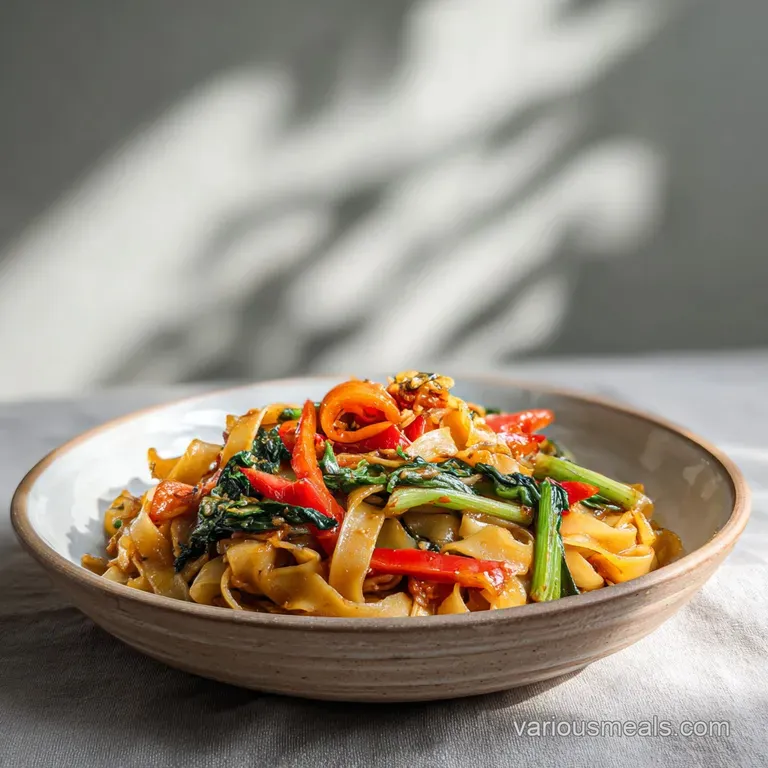
The most common frustration with Drunken Noodles is the texture of the noodles. They are either too hard and crunchy or they've dissolved into a sticky heap. This usually comes down to the soaking time or the heat of the pan.
1. Why are my noodles breaking?
If your noodles are snapping into small pieces while you toss them, they were likely under soaked or over cooked. Rice noodles are delicate. By soaking them in room temperature water for 20-30 minutes, you hydrate them slowly.
If you use boiling water, the outside gets mushy while the inside stays hard, leading to breakage. Also, be gentle with your spatula think of it as "folding" the noodles rather than "chopping" them.
2. The dish is too salty or too sweet
The balance of Thai food is a delicate dance between salt (fish sauce/soy), sweet (palm sugar), and acid (though this dish relies more on savory umami). If it's too salty, you might have used a soy sauce that is more concentrated, or perhaps your noodles didn't absorb enough water.
If it's too sweet, the palm sugar might not have fully caramelized. You can usually fix a salty dish by adding a squeeze of lime juice at the end; the acid helps cut through the sodium.
3. The noodles are sticking to the wok
This is almost always a temperature issue. If the pan isn't hot enough when you add the noodles and sauce, the starch will stick to the metal like glue. You want the oil to be shimmering and the pan to be at a point where a drop of water flicked onto it evaporates instantly.
Using enough oil is also key don't be too shy with those 3 tablespoons of neutral oil.
| Problem | Root Cause | Solution |
|---|---|---|
| Mushy Noodles | Over soaking or boiling | Soak in room temp water for exactly 20-30 mins |
| Dry Noodles | Not enough sauce or high evaporation | Add a splash of water or extra soy sauce during tossing |
| Burnt Garlic | Added too early or pan too hot for aromatics | Toss aromatics for only 30 seconds before adding veggies |
Common Mistakes Checklist - ✓ Don't boil the noodles; room temp water keeps them chewy and intact. - ✓ Use high smoke point oil like canola or grapeseed; olive oil will burn and taste bitter.
- ✓ Prep everything before lighting the stove; stir frying is too fast for mid cook chopping. - ✓ Add the basil only after the heat is off to preserve its delicate, spicy aroma. - ✓ Searing the chicken separately ensures it stays juicy rather than becoming rubbery.
Creative Twists to Customize Your Stir Fry
While the chicken version is a classic, the beauty of Drunken Noodles is how easily it adapts to what you have in the fridge. The sauce is so bold it can stand up to almost any protein or vegetable.
1. The Seafood Twist
Substitute the chicken for 1/2 lb of large shrimp or sliced squid. Seafood cooks incredibly fast, so you only need about 90 seconds of searing before setting it aside. The briney sweetness of shrimp pairs beautifully with the funk of the fish sauce.
2. Vegan Friendly Swap
To make this vegan, swap the chicken for extra firm tofu (pressed and cubed) or sliced king oyster mushrooms. Use a vegan "oyster" sauce made from mushrooms and replace the fish sauce with a high-quality light soy sauce or a pinch of extra salt.
The mushrooms are particularly good as they soak up the sauce and provide a meaty texture.
3. The "Crispy Edge" Variation
If you want even more texture, you can pan fry the soaked noodles in a bit of oil for 2 minutes before adding any other ingredients. This gives them a slightly crispy, "fried" exterior that contrasts wonderfully with the silky sauce.
- If you want more heat, keep the seeds in all three Thai bird's eye chilies and mince them finely.
- If you want extra crunch, double the amount of Chinese broccoli and add some sliced water chestnuts.
- If you want a richer sauce, add an extra tablespoon of oyster sauce and a teaspoon of toasted sesame oil at the end.
If you enjoy experimenting with different flavor profiles, you might find that the boldness of these noodles reminds you of other high intensity recipes. For instance, the way the sauces emulsify and coat the noodles is a different take on how fats and liquids combine in a French Onion Pasta, though the Thai version is much faster and relies on over high heat friction.
Preservation Secrets
Drunken Noodles are undoubtedly best served fresh off the wok, while the noodles are at their most elastic and the basil is still green. However, life happens, and sometimes you have leftovers.
Storage: Store any leftovers in an airtight container in the fridge for up to 3 days. The noodles will continue to absorb the sauce as they sit, so they might be a bit softer the next day, but the flavors will have melded together beautifully.
Reheating: Avoid the microwave if possible, as it can make rice noodles rubbery or "explosive." Instead, reheat them in a skillet over medium heat with a splash of water or a tiny bit of oil. This helps loosen the noodles and restores some of that glossy texture.
Zero Waste: Don't throw away your basil stems! While we only use the leaves in the stir fry, the stems carry a ton of flavor. You can toss them into a soup stock or steep them in a bit of vinegar to make a spicy, aromatic herbal dressing.
Also, if you have leftover Chinese broccoli stems, peel the tough outer skin and slice the tender core into rounds they are delicious and crunchy.
Choosing the Perfect Drinks and Sides
Since this dish is known for its heat and intensity, your pairings should either complement the spice or provide a cooling contrast.
In Thailand, a cold lager is the traditional choice. The carbonation and crisp finish help scrub the palate between spicy bites. If you prefer wine, a dry Riesling or a Gewürztraminer works wonders; the slight floral notes and natural acidity stand up well to the aromatics like garlic and basil.
For a non alcoholic option, an iced Thai tea with plenty of condensed milk is the ultimate fire extinguisher. The fat in the milk helps neutralize the capsaicin from the chilies, while the sugar balances the saltiness of the sauce.
Side Dish Ideas: - A simple cucumber salad with rice vinegar and sugar to provide a cool, crunchy contrast. - Crispy fried eggs (Thai style with lacy, browned edges) served right on top of the noodles.
- Fresh slices of raw cabbage or green beans, which are often served on the side in Thailand to help manage the heat.
The total calories for this dish come in at 812 calories per serving, which reflects the hearty nature of the noodles and the protein. With 42.1 g of protein, it's a complete, satisfying meal that doesn't really need much else to feel like a feast.
Just remember to serve it immediately while it's still "shattering" with heat and the aroma is at its peak.
Summary Table for Serving
| Servings | Ingredient Adjustments | Pan Size | Cook Time |
|---|---|---|---|
| 2 people | Use quantities exactly as listed | 12 inch wok/skillet | 10 minutes |
| 4 people | Double everything; cook in two batches | 14 inch wok | 20 minutes (total) |
| 1 person | Halve all ingredients | 10 inch skillet | 8 minutes |
When scaling up, it is crucial to work in batches. If you try to cook 4 servings of Drunken Noodles in one standard home wok, the temperature will drop, the noodles will steam, and you'll lose that vital char.
Cook two servings, plate them, and then do the second batch it only takes 10 extra minutes and the quality difference is massive. Trust me, your taste buds will thank you for the extra effort. Right then, let's get that wok smoking!
Very High in Sodium
1785 mg 1785 mg of sodium per serving (78% 78% of daily value)
The American Heart Association recommends no more than 2,300mg of sodium per day for most adults, with an ideal limit of about 1,500mg.
Tips to Reduce Sodium
-
Choose Low-Sodium Oyster Sauce-20%
Oyster sauce is a major sodium contributor. Opt for a low-sodium version to significantly cut down on salt without sacrificing flavor.
-
Use Less Soy Sauce-15%
Reduce the amount of both light and dark soy sauce. Consider using half the amount, or explore 'no-salt added' soy sauce alternatives.
-
Select Low-Sodium Fish Sauce-10%
Fish sauce is concentrated in sodium. Look for a low-sodium variety or reduce the quantity by half.
-
Adjust Chili and Garlic-5%
While not significant sodium sources, increasing the amount of fresh chilies and garlic can boost flavor, allowing for less reliance on salty sauces.
-
Boost with Fresh Herbs and Spices
Emphasize fresh Thai basil, and consider adding other aromatics like ginger or lime zest to enhance the overall flavor profile without adding sodium.
Recipe FAQs
What exactly are Drunken Noodles?
They are a popular Thai street food dish featuring wide, chewy rice noodles stir fried at high heat with savory sauces, fresh Thai basil, and a spicy kick.
Is it true that the dish contains alcohol because of its name?
No, this is a common misconception. The name refers to the dish being so spicy that you need a drink, or the tradition of serving it as a late night meal for people heading home after a night out.
What are the essential ingredients in Drunken Noodles?
You need wide rice noodles, chicken, and fresh Thai basil. The flavor profile relies on a blend of oyster sauce, light and dark soy sauce, fish sauce, palm sugar, garlic, chilies, shallots, Chinese broccoli, and red bell pepper.
What is the main difference between Pad Thai and Drunken Noodles?
They have distinct flavor profiles and textures. Pad Thai is typically sweeter and tamarind based, while Drunken Noodles are savory, spicy, and characterized by their distinct charred flavor from high heat wok cooking.
How to ensure the rice noodles do not turn into mush?
Soak the dried rice noodles in room temperature water for 20-30 minutes. Never boil them; keeping them flexible but firm ensures they hold their texture when tossed in the wok.
How to achieve the signature charred, smoky flavor?
Heat your carbon steel wok or heavy skillet until it is smoking before adding oil. Maintain high heat throughout the process and toss the noodles vigorously with the sauce and chicken for 1-2 minutes until they develop those characteristic charred spots.
How to incorporate the Thai basil correctly?
Turn off the heat completely before adding the leaves. Toss the basil briefly until the residual heat wilts them; this preserves their aromatic profile and prevents them from overcooking or turning bitter.
Authentic Thai Drunken Noodles
Ingredients:
Instructions:
Nutrition Facts:
| Calories | 812 calories |
|---|---|
| Protein | 42.1 g |
| Fat | 26.4 g |
| Carbs | 98.5 g |
| Fiber | 3.4 g |
| Sugar | 9.2 g |
| Sodium | 1785 mg |
