Baked Pineapple Chicken Kabobs: Tangy & Charred
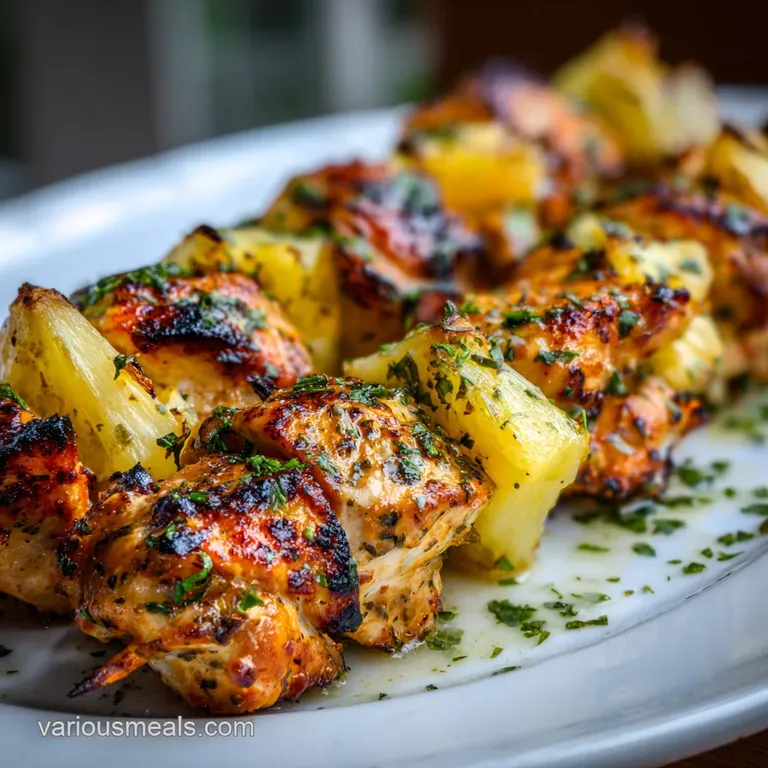
- Time: Active 15 minutes, Passive 15 minutes, Total 30 minutes
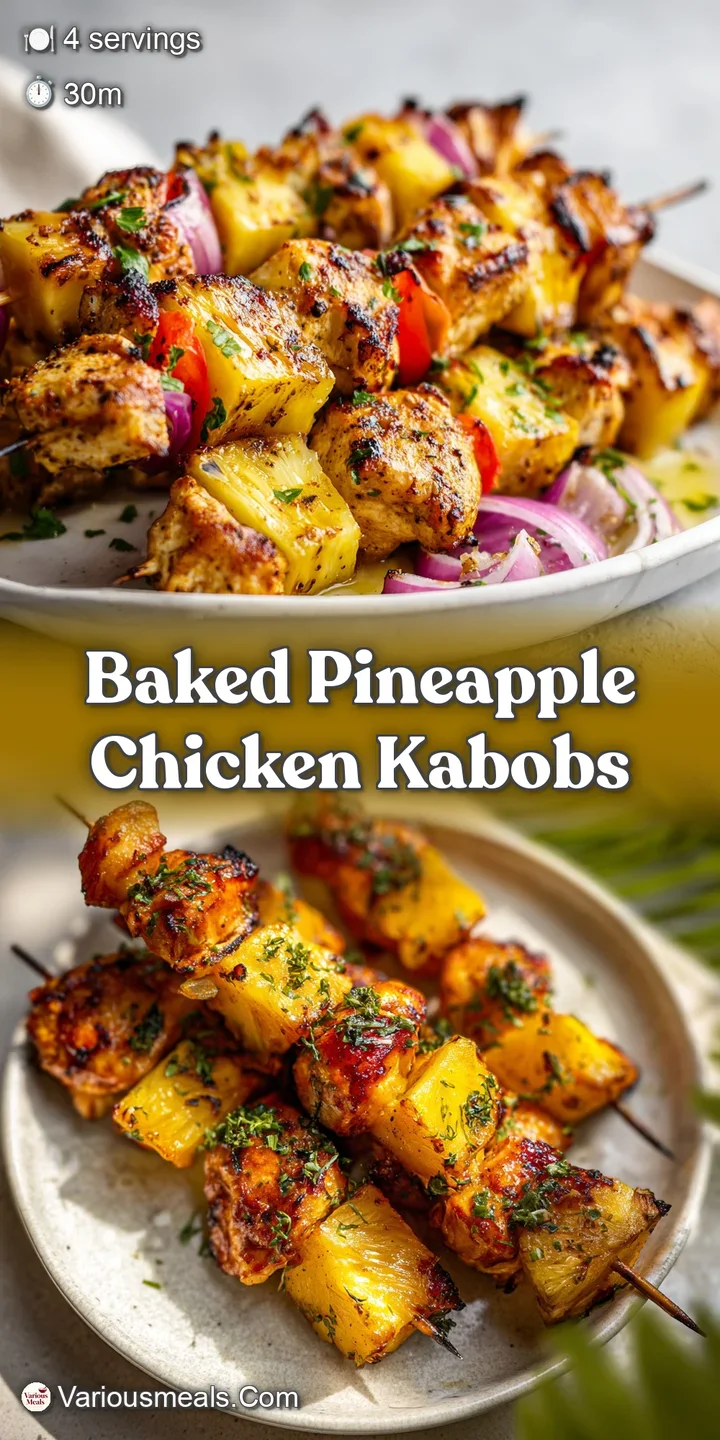
- Flavor/Texture Hook: Tangy, charred edges with a velvety, syrupy glaze
- Perfect for: Approachable weeknight dinners and family gatherings
- Mastering Baked Pineapple Chicken Kabobs
- The Science of the Glaze
- Component Analysis and Selection
- The Selection of Essential Elements
- Essential Tools for Kitchen Success
- Step by Step Assembly Guide
- Common Pitfalls and Easy Fixes
- Adjusting Portions for Large Crowds
- Kitchen Myths Debunked
- Preserving and Using Leftovers
- Plating and Side Dish Ideas
- Very High in Sodium
- Recipe FAQs
- 📝 Recipe Card
Mastering Baked Pineapple Chicken Kabobs
I still remember the first time I tried making these for a backyard get together. I was so excited about the tropical vibes that I cut the pineapple chunks way too small and let the meat marinate overnight. Big mistake.
I ended up with what I can only describe as "chicken jam" - the fruit enzymes had completely broken down the protein, and the skewers were a soggy mess that fell apart before they even hit the tray. It was a humbling moment, but it taught me everything I needed to know about the chemistry of tropical fruit.
The secret I discovered is all about timing and heat. You want that over high heat sizzle to caramelize the sugars in the pineapple without turning the chicken into mush. We are aiming for a specific contrast here: the bright, acidic pop of the fruit against the rich, salty depth of the soy ginger glaze.
When you get it right, the edges of the red onion shatter slightly in your mouth while the center of the chicken remains tender and moist.
We have all been there, staring at a tray of gray, steamed looking meat and wondering where we went wrong. This version solves that by focusing on a two stage glaze process. We use the oven to do the heavy lifting, then finish with a concentrated reduction that clings to every nook and cranny.
It is a total transformation from the basic "chicken on a stick" to a meal that feels like a celebration.
The Science of the Glaze
Enzymatic Control: The bromelain enzyme in fresh pineapple breaks down collagen, so we limit marinating time to prevent the meat from becoming unpleasantly soft.
Maillard Reinforcement: Adding brown sugar to the soy base lowers the caramelization temperature, allowing the skewers to develop a dark, rich crust within the short 15 minutes cook time.
Starch Gelatinization: The cornstarch slurry creates a translucent, velvety coating that suspends the aromatics like garlic and ginger directly against the meat's surface.
| Thickness | Internal Temp | Rest Time | Visual Cue |
|---|---|---|---|
| 2.5 cm cubes | 74°C (165°F) | 3 mins | Juices run clear, no pink |
| 1.5 cm cubes | 74°C (165°F) | 2 mins | Opaque white throughout |
| 3.5 cm cubes | 74°C (165°F) | 5 mins | Firm to the touch |
The key to that signature texture is ensuring the oven is fully preheated. If the tray isn't hot, the pineapple will release its juice before the meat sears, leading to a puddle of liquid rather than a beautiful glaze. This is similar to the moisture management I discuss in my Honey Butter Chicken recipe, where heat control is everything.
Component Analysis and Selection
| Ingredient | Science Role | Pro Secret |
|---|---|---|
| Low sodium soy sauce | Provides umami and salt for osmosis | Use low sodium to control the salt concentration as it reduces |
| Fresh ginger | Contains zingibain for mild tenderizing | Grate it frozen to get a fine paste without the woody fibers |
| Cornstarch | Acts as a thickener and moisture barrier | Always dissolve in cold water first to prevent clumping |
The Selection of Essential Elements
For this recipe, we are working with 680g of boneless skinless chicken breasts. This lean protein is the ideal canvas for our bold sauce. You'll also need 30ml of extra virgin olive oil to help conduct heat and 6g of kosher salt mixed with 1g of cracked black pepper for that base seasoning.
The tropical punch comes from 475ml of fresh pineapple chunks, which pair beautifully with two large bell peppers and one large red onion for that necessary crunch.
The glaze is a powerhouse blend: 120ml of soy sauce, 50g of packed brown sugar, 15g of freshly grated ginger, and two cloves of minced garlic. We finish it with 5ml of toasted sesame oil for that nutty aroma. To get that thick, glossy finish, have 8g of cornstarch and 15ml of water ready for a slurry.
| Original Ingredient | Substitute | Why It Works |
|---|---|---|
| Chicken Breasts (680g) | Chicken Thighs (680g) | Higher fat content; more forgiving and stays succulent |
| Fresh Pineapple (475ml) | Canned Chunks (475ml) | Note: Less enzymatic activity, so meat won't tenderize as much |
| Brown Sugar (50g) | Honey (45ml) | Adds a floral note but burns faster; watch the oven closely |
Why this? Fresh pineapple contains active enzymes that help soften the chicken fibers during the brief cook time.
| Feature | Fresh Pineapple | Shortcut (Canned) |
|---|---|---|
| Texture | Firm and fibrous | Softer and more uniform |
| Flavor | Bright, acidic, tart | Very sweet, less complex |
| Browning | Superior caramelization | Tends to soften before browning |
Essential Tools for Kitchen Success
You don't need a professional kitchen, but a few specific tools make this much easier. A heavy duty rimmed baking sheet (like a Nordic Ware half sheet) is vital to catch the bubbling juices.
I also highly recommend using metal skewers if you have them; they conduct heat into the center of the chicken, helping it cook faster from the inside out.
If you're using wooden skewers, you absolutely must soak them in water for at least 30 minutes before threading. Otherwise, they will catch fire under the high heat.
A small saucepan is needed to simmer the glaze into that velvety consistency, and a silicone pastry brush is the best tool for painting the sauce onto the skewers without knocking off the vegetables.
step-by-step Assembly Guide
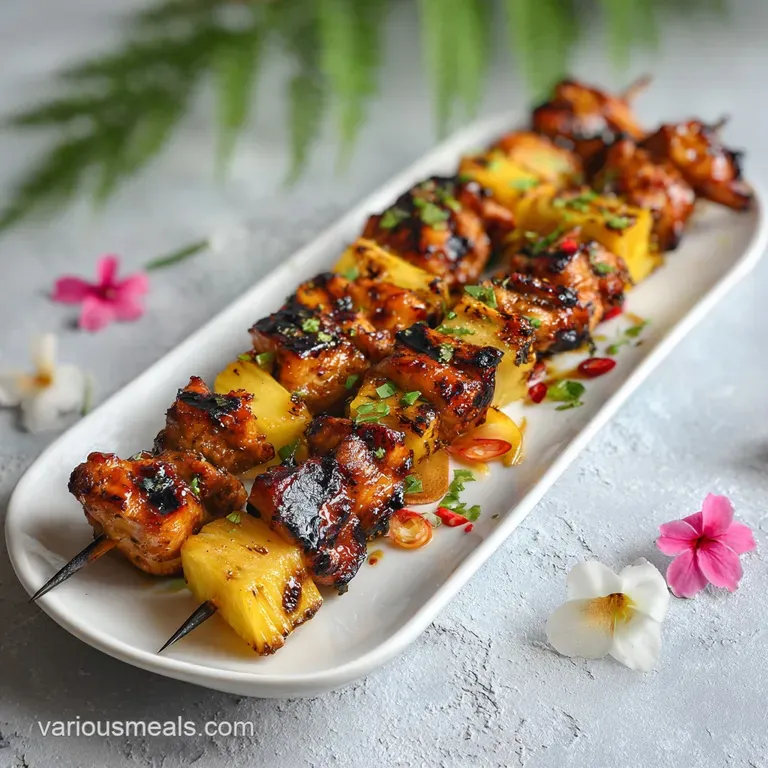
- Prep the oven. Preheat your oven to 200°C (400°F) and line a large baking sheet with parchment paper. Note: This prevents the sugar in the glaze from sticking to the pan.
- Cube the protein. Cut the 680g of chicken into 2.5 cm pieces. Ensure they are uniform so they cook at the same rate.
- Season the base. Toss the chicken with 30ml of olive oil, 6g of salt, and 1g of pepper in a large bowl.
- Create the glaze. In a small saucepan, whisk 120ml soy sauce, 50g brown sugar, 15g ginger, garlic, and 5ml sesame oil. Simmer until the sugar dissolves.
- Thicken the sauce. Mix 8g cornstarch with 15ml water, whisk it into the saucepan, and cook for 1 minute until the sauce looks glossy and thick.
- Thread the skewers. Alternate chicken, pineapple, bell pepper, and onion. Don't pack them too tightly or they will steam instead of roast.
- Initial bake. Place skewers on the tray and bake for 10 minutes. Listen for the sizzle as the juices start to release.
- Apply the glaze. Remove the tray and brush half of the thickened glaze generously over the skewers.
- Final blast. Bake for another 5 minutes until the edges of the pineapple begin to char and the chicken hits 74°C (165°F).
- Rest and finish. Let the skewers sit for 3 minutes before serving with the remaining glaze on the side.
While your chicken is roasting, it’s the perfect time to prep a side. These flavors work beautifully alongside a simple Air Fryer Broccoli recipe for some extra greens that share that charred, roasted profile.
Common Pitfalls and Easy Fixes
Why Your Chicken Is Rubbery
If the chicken feels bouncy or rubbery, it usually means it was overcooked or the oven temperature was too low. High heat for a short duration is the key to locking in moisture. If you notice the chicken is taking too long, check your oven calibration.
Preventing Soggy Bottoms
Watery vegetables happen when the pan is overcrowded. If the skewers are touching each other, the steam cannot escape, and you'll end up with boiled meat rather than roasted kabobs. Use two pans if you need to, or ensure there is at least a 2 cm gap between each skewer.
| Problem | Root Cause | Solution |
|---|---|---|
| Glaze is too runny | Not enough reduction time | Simmer for an extra 2 mins until it coats a spoon |
| Vegetables are raw | Pieces cut too large | Cut peppers and onions into 2.5 cm squares |
| Skewers are burning | Dry wood skewers | Soak in water for 30 mins minimum before use |
Common Mistakes Checklist
- ✓ Pat the chicken dry with paper towels before oiling (prevents steaming).
- ✓ Avoid marinating the chicken in the pineapple juice for more than 30 minutes.
- ✓ Leave space between ingredients on the skewer for airflow.
- ✓ Use a meat thermometer to pull the chicken at exactly 74°C (165°F).
- ✓ Apply the sugary glaze only in the last 5 minutes to prevent burning.
Adjusting Portions for Large Crowds
When scaling this recipe up for a party, don't just double everything blindly. For a double batch (8 servings), use 1.3kg of chicken, but only increase the salt and spices to about 1.5 times the original amount to avoid over seasoning. You will definitely need to use two separate baking sheets.
If you are scaling down for two people, you can use a smaller toaster oven or a single baking tray. Reduce the cooking time by about 2-3 minutes as a smaller volume of food in the oven often reaches temperature faster.
If you find yourself with half an egg from another recipe, don't use it here; this glaze relies on the starch sugar interaction, not protein binding.
Kitchen Myths Debunked
Many people believe that you must marinate chicken for hours to get flavor. In reality, marinades only penetrate a few millimeters into the meat. For these skewers, the flavor comes from the surface glaze. Long marination in acidic pineapple juice actually damages the meat fibers, leading to a mealy texture.
Another common myth is that you can't get a "grill flavor" in the oven. While you won't get the smoke, the over high heat roasting and the sugar in the glaze produce the Maillard reaction, which is the same chemical process that creates the savory, charred crust on a grill.
Preserving and Using Leftovers
Storage: Keep leftover kabobs in an airtight container in the fridge for up to 3 days. I recommend sliding the ingredients off the skewers before storing to save space and make reheating easier.
Freezing: You can freeze the assembled, uncooked skewers for up to 2 months. Thaw them completely in the fridge before baking. Do not freeze the cooked skewers, as the pineapple texture becomes mushy upon thawing.
Zero Waste: Don't throw away the pineapple core! While it's too tough for skewers, you can mince it finely and add it to a stir fry or simmer it with water and sugar to make a tropical simple syrup for drinks. Any leftover bell pepper scraps can be tossed into a morning omelet or a batch of my African Chicken Peanut recipe.
Plating and Side Dish Ideas
These skewers are quite rich, so I love serving them over a bed of fluffy coconut rice or plain jasmine rice to soak up the extra glaze. The contrast of the hot, savory chicken against a cold, crisp cucumber salad is also a winner.
- Spicy Profile: Add 5g of red pepper flakes to the glaze for a "sweet heat" vibe.
- Low Carb: Serve the skewers over cauliflower rice or a big bed of shredded cabbage.
- The Crunch Factor: Sprinkle toasted sesame seeds and sliced scallions over the top just before serving for a professional finish.
Decision Shortcut If you want extra char, move the oven rack to the top and broil for the last 60 seconds. If you want it sweeter, add 15ml of pineapple juice directly into the glaze reduction.
If you are in a rush, skip the skewers and bake everything as a "sheet pan meal" at 220°C (425°F).
Very High in Sodium
1340 mg mg of sodium per serving (58% of daily value)
The American Heart Association recommends limiting sodium intake to no more than 2,300mg per day for most adults. This recipe significantly exceeds that recommendation.
Sodium Reduction Tips for this Recipe
-
Low-Sodium Soy Sauce-25%
Replace regular soy sauce with a no-sodium or low-sodium version. This simple swap can drastically reduce the sodium content without significantly altering the flavor.
-
Reduce Added Salt-20%
Eliminate or significantly reduce the 1 tsp of kosher salt. Taste the dish as you cook, adding a pinch only if absolutely necessary. You can always add a little more at the end, to taste.
-
Fresh over Canned-15%
Ensure the pineapple chunks are fresh and not from a canned source. Canned fruits are often preserved in sugary syrups containing hidden sodium.
-
Enhance Natural Flavors-10%
Increase the amount of fresh ginger and garlic used. These ingredients enhance the savory notes and can help compensate for the reduction of sodium.
-
Spice it Up!
Experiment with sodium free herbs and spices like smoked paprika, garlic powder, onion powder, red pepper flakes, or black pepper to add flavor without adding sodium.
Recipe FAQs
How long do chicken kabobs take in the oven at 350 degrees?
Do not use 350°F; use 400°F (200°C) instead. Baking at 350°F risks steaming the ingredients before they caramelize; a higher temperature ensures proper searing and browning.
How long to put kabobs in the oven?
Total active baking time is 15 minutes, plus a 3-minute rest. The process involves 10 minutes initial bake, a glaze application, and a final 5-minute bake to achieve 74°C (165°F) internal temperature.
Can you bake kabobs instead of grilling?
Yes, baking works very well, especially for achieving a glossy glaze. The oven provides even heat, which helps cook the chicken through without burning the sugars in the sauce, unlike direct grilling heat.
What temperature should chicken kabobs be cooked at?
Set your oven to 200°C (400°F) for optimal roasting. This higher temperature is crucial for rapidly evaporating surface moisture and caramelizing the pineapple and soy glaze.
How do I prevent the pineapple from making the chicken mushy?
Limit the initial marinade time to 30 minutes maximum. The bromelain enzyme in fresh pineapple quickly tenderizes protein; long contact breaks down the meat fibers into a mushy texture.
My glaze burns before the chicken cooks; what adjustment is necessary?
Apply the sugary glaze only during the final 5 minutes of cooking. The initial bake allows the chicken to cook through using just oil and seasoning; brushing the glaze on late prevents burning the sugar content.
What is the trick to getting a thick, velvety coating on the baked skewers?
Create a cornstarch slurry to thicken the reduced sauce before the final glaze application. If you enjoyed mastering this surface adhesion technique here, see how the same principle works in stabilizing our Creamy Chicken Pasta Dinner.
Baked Pineapple Chicken Kabobs
Ingredients:
Instructions:
Nutrition Facts:
| Calories | 505 calories |
|---|---|
| Protein | 56.4 g |
| Fat | 14.2 g |
| Carbs | 36.8 g |
| Fiber | 3.8 g |
| Sugar | 25.2 g |
| Sodium | 1340 mg |
