Chicken Fettuccine Alfredo: Creamy and Tender
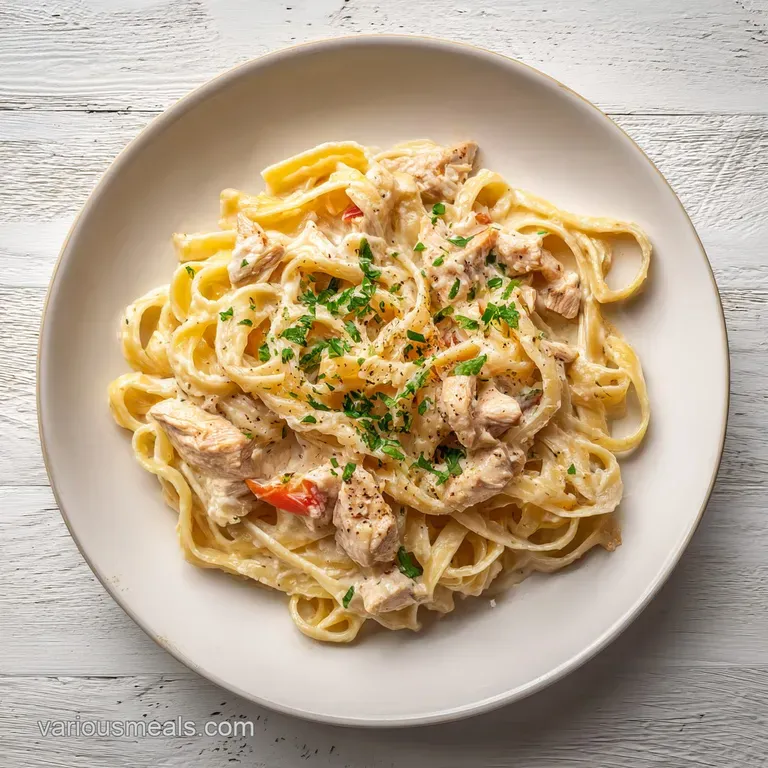
- Time: Active 10 minutes, Passive 15 minutes, Total 25 minutes
- Flavor/Texture Hook: Silky, buttery cream sauce paired with golden, herb crusted chicken
- Perfect for: Cozy Sunday family dinners or an impressive date night meal
- The Roman Roots and American Evolution of Chicken Fettuccine Alfredo
- Why This Creamy Pasta Sauce Works Every Single Time
- How to Know Your Chicken Is Perfectly Cooked
- The Component Analysis of a Truly Velvety Sauce
- Selecting the Right Elements for Your Chicken Fettuccine Alfredo
- Bringing Your Chicken Fettuccine Alfredo Together
- Avoiding Kitchen Disasters and Perfecting the Texture
- Scaling Your Pasta for Different Crowds
- Myths About Traditional Alfredo Sauce
- Keeping It Fresh and Zero Waste Tips
- Dietary Adaptations for Every Table
- Perfect Pairings to Balance the Richness
- Very High in Sodium
- Recipe FAQs
- 📝 Recipe Card
The Roman Roots and American Evolution of Chicken Fettuccine Alfredo
Long before this dish became a staple in American kitchens, it began as a humble gesture of love in Rome. In 1908, Alfredo Di Lelio was trying to coax his wife into eating after she gave birth to their first son. He prepared a simple dish of fettuccine tossed with an abundance of butter and young Parmesan.
There was no cream, no garlic, and certainly no chicken in the original Italian version. However, when the recipe traveled across the Atlantic, it underwent a transformation that added heavy cream and protein, turning it into the comforting, indulgent Chicken Fettuccine Alfredo we crave today.
In my kitchen, I love the contrast between the traditional Roman technique of emulsification and the rich American addition of heavy cream. There is something incredibly satisfying about the way the golden, seared chicken strips cut through the decadent, white sauce.
When you drop those noodles into the simmering cream, the aroma of garlic and nutmeg fills the room, signaling that comfort is on the way. It is a dish that feels like a warm hug, reminding us that sometimes the simplest ingredients, when treated with respect, create the most memorable family meals.
I remember the first time I tried to make this without a recipe. I ended up with a clumpy mess of cheese at the bottom of the pan and noodles that were somehow both dry and slippery. I realized then that this dish isn't just about mixing things together, it is about timing and temperature.
We are not just making a sauce, we are creating a suspension where fat and water live in harmony. Today, I am sharing the secrets I learned from those early mistakes so your sauce stays silky from the first bite to the very last.
Why This Creamy Pasta Sauce Works Every Single Time
Starch Suspension: The reserved pasta water contains dissolved starches that act as a natural bridge between the fats in the butter and the liquids in the cream.
Fat Saturation: Using heavy whipping cream with a 36% fat content provides enough stability to prevent the sauce from curdling when the acidic Parmesan is added.
Fond Integration: Searing the chicken in the same skillet before making the sauce releases browned bits (fond) that dissolve into the cream, adding a deep savory note.
Gentle Tempering: Grating the cheese finely and adding it over medium low heat allows the proteins to melt slowly without seizing into chewy clumps.
How to Know Your Chicken Is Perfectly Cooked
| Chicken Thickness | Searing Time | Resting Time | Visual and Internal Cue |
|---|---|---|---|
| 1/2 inch strips | 3-4 mins per side | 3 minutes | Golden crust, 165°F internal temp |
| 3/4 inch strips | 5-6 mins per side | 5 minutes | Firm to touch, clear juices |
| 1 inch chunks | 4-5 mins total | 2 minutes | Opaque center, no pinkness |
Cooking the chicken in 1/2 inch strips is the secret to getting that beautiful golden brown exterior without overcooking the inside. By the time the outside has that perfect crust, the inside is just reaching 165°F, keeping it juicy enough to stand up to the rich sauce.
The Component Analysis of a Truly Velvety Sauce
| Ingredient | Science Role | Pro Secret |
|---|---|---|
| Heavy Whipping Cream | Emulsion Base | Use room temperature cream to prevent the butter from breaking upon contact. |
| Parmesan Reggiano | Flavor & Thickener | Always grate from a wedge, the pre shredded stuff is coated in starch that ruins the texture. |
| Starchy Pasta Water | Binding Agent | This "liquid gold" is what makes the sauce cling to the noodles rather than sliding off. |
| Unsalted Butter | Fat & Gloss | Cold butter whisked in at the end adds a professional shine to the finished plate. |
Many people overlook the importance of the pasta water, but it is actually the most important ingredient for achieving that restaurant style "cling." Without those starches, the sauce will often separate or pool at the bottom of the bowl, leaving your noodles naked and sad.
Selecting the Right Elements for Your Chicken Fettuccine Alfredo
- 1 lb Dried Fettuccine pasta: Why this? The wide, flat shape provides maximum surface area for the heavy sauce to coat. Substitute: Tagliatelle or Pappardelle.
- 1.5 lbs Boneless skinless chicken breasts: Why this? Leanness contrasts the rich sauce, and strips cook quickly and evenly. Substitute: Chicken thighs for more moisture.
- 2 cups Heavy whipping cream (36% fat): Why this? High fat content ensures the sauce remains stable and doesn't break. Substitute: Full fat coconut milk (adds a nutty flavor).
- 1.5 cups Freshly grated Parmesan Reggiano: Why this? Authentic aged cheese provides the sharp, salty punch needed to balance the cream. Substitute: Pecorino Romano (much saltier).
- 1/2 cup Unsalted butter: Why this? Adds a luxurious mouthfeel and helps emulsify the cheese into the cream. Substitute: Ghee for a more toasted flavor.
- 3 cloves Garlic, grated: Why this? Grating releases more oils than chopping, distributing the flavor evenly through the sauce. Substitute: 1 tsp Garlic powder in a pinch.
- 1/4 tsp Ground nutmeg: Why this? This tiny amount adds a warm, floral depth that cuts through the heaviness of the dairy. Substitute: A pinch of mace.
- 2 tbsp Avocado oil: Why this? High smoke point allows for a hard sear on the chicken without burning. Substitute: Grapeseed oil.
- Sea salt & Kosher salt: Why this? Sea salt for the pasta water mimics the ocean; Kosher salt for the chicken sticks better to the meat. Substitute: Fine table salt (use half the amount).
- 1 tsp Italian seasoning: Why this? A pre mixed blend of oregano, basil, and rosemary provides instant complexity. Substitute: Fresh thyme and dried oregano.
Bringing Your Chicken Fettuccine Alfredo Together
- Boil the water. Fill a large stockpot with 4-6 quarts of water and bring it to a heavy, rolling boil. Add 2 tbsp of sea salt.
- Cook the noodles. Drop the 1 lb of fettuccine into the water. Cook for 1-2 minutes less than the box suggests. Note: Finishing the pasta in the sauce prevents it from becoming mushy.
- Prep the chicken. While the water boils, slice 1.5 lbs of chicken into 1/2 inch strips. Season with 1 tsp kosher salt, 1/2 tsp black pepper, and 1 tsp Italian seasoning.
- Sear the protein. Heat 2 tbsp avocado oil in a heavy bottomed skillet over medium high heat. Place chicken in a single layer and sear for 3-4 minutes per side until golden brown and 165°F. Remove and set aside.
- Build the base. Reduce skillet heat to medium low. Add 1/2 cup unsalted butter and 3 grated garlic cloves. Use a wooden spoon to scrape up the browned bits from the chicken.
- Simmer the cream. Pour in 2 cups heavy whipping cream and 1/4 tsp nutmeg. Simmer for 3-5 minutes until slightly thickened and small bubbles form.
- Incorporate the cheese. Slowly whisk in 1.5 cups of freshly grated Parmesan Reggiano. Whisk constantly until the cheese has completely melted into a smooth liquid.
- Reserve and drain. Before draining the pasta, scoop out 1 cup of the starchy water. Drain the noodles and immediately toss them into the skillet with the sauce.
- Emulsify the dish. Add the reserved pasta water 1/4 cup at a time. Toss the noodles vigorously until the sauce transforms from watery to a thick, glossy coating.
- Final garnish. Place the seared chicken back on top. Sprinkle with 1 tbsp fresh chopped parsley and serve immediately while the sauce is at its silkiest.
Avoiding Kitchen Disasters and Perfecting the Texture
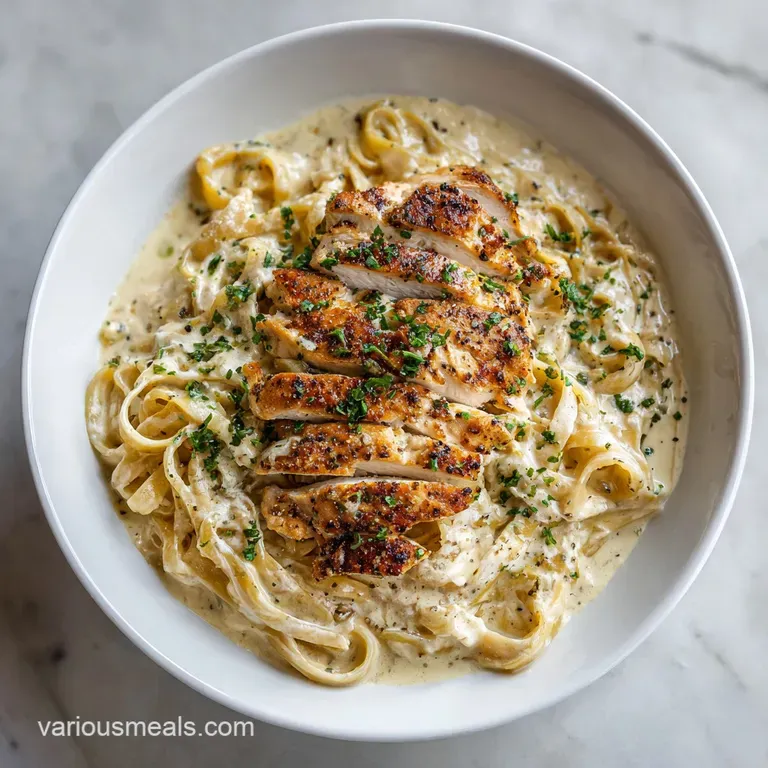
The most common heartbreak with this dish is a sauce that breaks or turns grainy. If you've ever seen oil separating from your cream, it is usually because the heat was too high after the cheese was added. Cheese is a delicate balance of protein and fat.
If you boil it, the proteins tighten up and squeeze out the fat, leaving you with rubbery bits and a greasy mess. Keeping the heat at a gentle simmer is your best insurance policy for a smooth result.
If your sauce feels too thick, don't panic. This is exactly why we save the pasta water. The heat from the pasta continues to absorb moisture even after it leaves the pot. If the sauce looks like it is setting too quickly, a splash of that starchy water will loosen it up and restore that beautiful sheen.
It's much easier to thin a sauce than it is to thicken one, so always err on the side of a slightly thinner consistency before serving.
Why Your Alfredo Sauce Is Grainy
This usually happens because of "thermal shock" or using the wrong cheese. If you add cold, pre shredded cheese to a boiling liquid, it won't melt properly. The cellulose coating on bagged cheese is designed to prevent clumping in the bag, but it also prevents the cheese from becoming one with the cream.
| Problem | Root Cause | Solution |
|---|---|---|
| Sauce is clumpy/grainy | High heat or pre shredded cheese | Use medium low heat and freshly grated Parmesan from a wedge. |
| Sauce won't stick to noodles | No pasta water added | Add 1/4 cup starchy water and toss vigorously to emulsify. |
| Chicken is dry and tough | Overcooked or sliced too thin | Pull chicken at 165°F and let it rest before serving. |
Common Mistakes Checklist
- ✓ Never rinse your pasta after draining; you need that surface starch for the sauce to stick.
- ✓ Always grate your own Parmesan Reggiano for the smoothest possible melt.
- ✓ Don't skip the nutmeg; it is the secret ingredient that makes the dairy taste richer.
- ✓ Use a heavy bottomed pan like a cast iron or thick stainless steel to prevent the cream from scorching.
- ✓ Pat the chicken strips dry with a paper towel before seasoning to get a better sear.
Scaling Your Pasta for Different Crowds
When cutting this recipe in half for a solo dinner or a date for two, you can usually follow the measurements linearly. However, keep an eye on your skillet size. Using a massive skillet for a small amount of sauce can lead to over evaporation, making the sauce disappear before the noodles even hit the pan.
If you're downscaling, consider using a smaller saucepan for the sauce and combining it with the noodles in a warm bowl.
If you are looking for a way to change up the protein while keeping the creamy vibe, you might enjoy my Cheesy Chicken Casserole which uses similar flavor profiles in a baked format. For those scaling up for a large family gathering (8-10 people), you will need to work in batches for the chicken. Overcrowding the pan will cause the chicken to steam rather than sear, which means you'll lose that beautiful golden crust. Double the ingredients but use two separate pots for the pasta to ensure they have enough room to move and don't stick together.
Myths About Traditional Alfredo Sauce
One of the biggest misconceptions is that authentic Alfredo requires flour or a roux. While many restaurant chains use flour to stabilize a cheap, low-fat sauce, a true "Chicken Fettuccine Alfredo" relies entirely on the reduction of cream and the melting of high-quality cheese for its thickness.
Adding flour changes the flavor profile significantly, making it taste more like a Béchamel than a bright, cheesy Alfredo.
Another myth is that you can't reheat this dish. While it is certainly best fresh, you can revive it. People think the microwave is the only way, but that usually results in an oily puddle. The truth is that a little bit of moisture and gentle stovetop heat can bring the emulsion back to life.
It won't be quite as perfect as the first time, but it will be much better than a broken, greasy microwave version.
Keeping It Fresh and Zero Waste Tips
Storage Guidelines: You can keep leftovers in an airtight container in the fridge for up to 3 days. I don't recommend freezing this dish, as the cream and cheese emulsion will almost certainly break during the thawing process, leaving you with a grainy texture that is very hard to fix.
If you must freeze it, do so without the chicken and plan to whisk in a fresh splash of cream when reheating.
- Parmesan Rinds
- Don't throw away the hard end of your Parmesan wedge. Toss it into your next batch of soup or stock for a massive hit of umami flavor.
- Leftover Chicken
- If you have extra seared chicken, it works beautifully in a Broccoli Casserole recipe or sliced cold over a Caesar salad the next day.
- Pasta Water
- If you have leftover starchy water, you can actually use it as a base for a quick pan sauce for vegetables or even to thicken a vegetable soup.
Dietary Adaptations for Every Table
If you are looking to lighten things up without losing that creamy satisfaction, there are a few clever swaps you can make. While this specific recipe is a full fat indulgence, some of my readers prefer a version with a bit more protein and less heavy cream. For a different take on a high protein white sauce, you could try my Cottage Cheese Alfredo which uses blended cottage cheese to mimic that silky texture with significantly less fat.
For those watching their carb intake, replacing the fettuccine with vegetable noodles is a popular choice. I often suggest checking out my Zucchini Lasagna recipe if you love the combination of squash and cheese but want to skip the heavy wheat pasta. If you go the zucchini noodle route for this Alfredo, just be sure to sauté the "zoodles" separately and drain them well, as they release a lot of water that can thin out your beautiful sauce.
If you want a different result, try these tweaks: If you want it extra garlicky, roast a whole head of garlic and squeeze the paste into the cream. If you want a spicy kick, add 1/2 tsp of red pepper flakes to the butter while sautéing the garlic.
If you want it even richer, whisk in an egg yolk at the very end after taking the pan off the heat.
Perfect Pairings to Balance the Richness
Because this dish is so decadent, it really benefits from something bright and acidic on the side. A simple arugula salad with a sharp lemon vinaigrette is my go to. The peppery bite of the greens and the citrus from the dressing cut right through the heavy cream, making every bite of the pasta feel like the first one.
Roasted vegetables also make a fantastic companion. Broccoli, asparagus, or even some blistered cherry tomatoes add a much needed pop of color and a different texture to the plate.
If you are serving this for a family dinner, a loaf of crusty sourdough or garlic bread is almost mandatory for mopping up every last drop of that velvety sauce from the bottom of the bowl. Trust me, nobody wants to see that "liquid gold" go to waste!
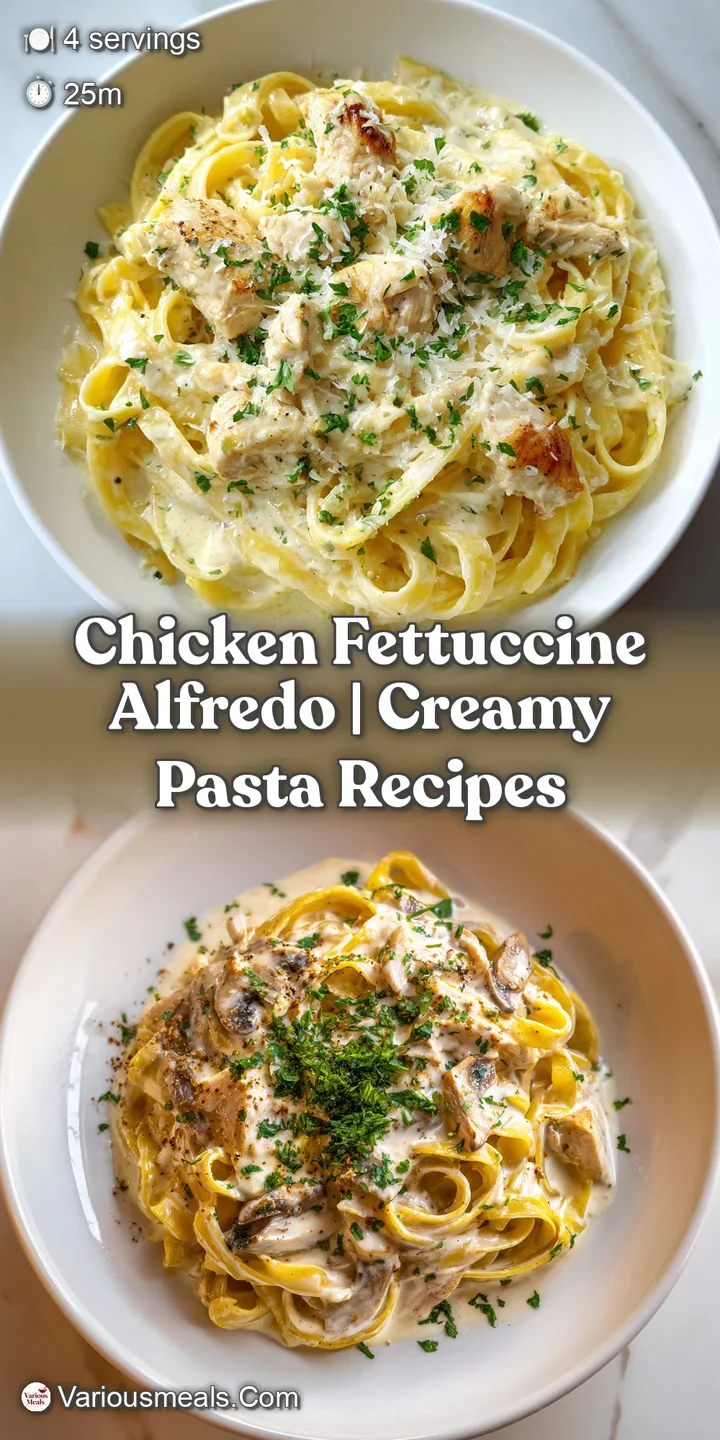
Very High in Sodium
1245 mg 1245 mg (54% 54% of daily value)
The American Heart Association recommends a limit of about 2,300mg per day, with an ideal limit of 1,500mg for most adults.
Tips to Reduce Sodium
-
Drastically Reduce Added Salt-30%
The recipe calls for 2 tbsp of sea salt for the pasta water and 1 tsp of kosher salt for the chicken. Eliminate the 2 tbsp of sea salt entirely from the pasta cooking water and reduce the kosher salt for the chicken to just 1/4 tsp. This is the most significant sodium source.
-
Lower the Parmesan Cheese-15%
Parmesan Reggiano is a significant source of sodium. Reduce the amount of freshly grated Parmesan Reggiano from 1.5 cups to 3/4 cup. This will still provide a cheesy flavor while lowering sodium.
-
Boost Flavor with Herbs and Spices
Enhance the natural flavors of your dish by using a generous amount of fresh herbs like parsley and a blend of spices like Italian seasoning and nutmeg. This helps compensate for reduced salt.
-
Use Unsalted Butter
The recipe already specifies unsalted butter, which is excellent. Continue to use unsalted butter as it contains no added sodium.
-
Rinse Pasta-5%
While not explicitly listed as an ingredient, if you choose to add salt back into your pasta water in the future, rinsing the cooked pasta under cool water can remove a small amount of surface salt.
Recipe FAQs
Is there a difference between chicken fettuccine and chicken alfredo?
Yes, they are distinct dishes. Chicken fettuccine is a broader term for any pasta dish featuring those two components, whereas chicken alfredo specifically requires a sauce made from butter, heavy whipping cream, and Parmesan Reggiano.
What ingredients do you need for chicken alfredo?
You need a specific set of pantry and fresh staples. The core ingredients include dried fettuccine, boneless skinless chicken breasts, unsalted butter, heavy whipping cream, grated garlic, freshly grated Parmesan Reggiano, nutmeg, sea salt, kosher salt, cracked black pepper, Italian seasoning, avocado
oil, and fresh parsley.
Is Alfredo high in potassium?
No, this is a common misconception. While the Parmesan Reggiano does contain some minerals, this dish is primarily a source of fat and protein rather than a significant contributor to your daily potassium intake.
What are common mistakes when making Alfredo?
Rinsing your pasta is the most frequent error. You must keep the surface starch on the cooked noodles so the sauce adheres properly; if you enjoyed this lesson on sauce adhesion, see how we apply similar emulsification techniques in our other pasta recipes.
How to prevent the sauce from becoming grainy?
Whisk in the Parmesan Reggiano only after removing the skillet from direct heat or lowering it to the lowest possible setting. Boiling the sauce once the cheese is added causes the proteins to separate, resulting in a clumped texture rather than a smooth emulsion.
How to get the perfect sear on chicken strips?
Pat your chicken dry with paper towels before seasoning. Excess moisture creates steam that prevents a golden brown crust, so ensure the avocado oil is hot before placing the strips in a single layer to cook for 3-4 minutes per side.
How to handle leftovers without the sauce breaking?
Reheat the pasta gently on the stovetop over low heat with a splash of water. Because the sauce is heavy on cream and butter, using a microwave often causes the fat to separate; adding a small amount of liquid helps restore the creamy consistency.
Creamy Chicken Fettuccine Alfredo
Ingredients:
Instructions:
Nutrition Facts:
| Calories | 1498 kcal |
|---|---|
| Protein | 81.8 g |
| Fat | 91.2 g |
| Carbs | 88.4 g |
| Fiber | 3.2 g |
| Sugar | 4.1 g |
| Sodium | 1245 mg |
