Fruit Christmas Tree Appetizer Recipe
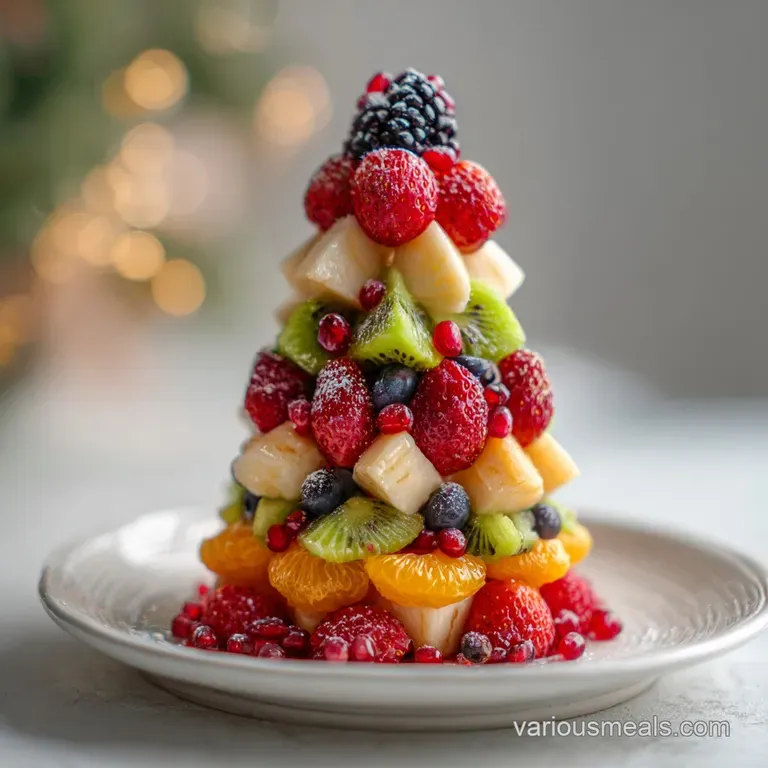
- Time: Active 35 minutes, Passive 0 minutes, Total 35 minutes
- Flavor/Texture Hook: Bursting with succulent berries, crisp grapes, and a refreshing mint finish.
- Perfect for: Holiday parties, festive brunches, or a healthy family dessert centerpiece.
- Create a Stunning Fruit Christmas Tree
- The Logic of Edible Displays
- Vital Statistics for This Project
- Sourcing the Brightest Fresh Produce
- Tools for Stable Fruit Construction
- Assembling Your Festive Fruit Tree
- Solving Common Fruit Stability Issues
- Flavor Variations for Every Party
- Keeping Your Fruit Crisp Longer
- Serving Tips for Holiday Parties
- Logic Over Luck: Debunking Myths
- Fruit Christmas Tree FAQs
- 📝 Recipe Card
Create a Stunning Fruit Christmas Tree
Imagine the scent of freshly sliced pineapple mixing with the sharp, cool aroma of bruised mint leaves. When I first tried making a Fruit Christmas Tree, I thought a foam cone was the only way to go. But let’s be honest, nobody wants to accidentally bite into green floral foam.
I switched to the "pineapple apple spine" method, and let me tell you, the succulent aroma of real fruit acting as the foundation changes the whole vibe of the kitchen.
It’s all about the layers of flavor and color. You start with the deep, golden sweetness of a ripe pineapple, then move into the tart snap of green grapes and the velvety sweetness of strawberries.
By the time you’re tucking in the tiny pomegranate "jewels," you’ve created something that smells like a tropical winter wonderland. Trust me, your friends will be hovering around this thing before you even set the plates down.
We've all seen those Pinterest perfect displays that look like they’d fall over if someone sneezed. We aren't doing that today. I’m going to show you how to anchor this beauty so it stays upright while everyone plucks off their favorite pieces.
It’s simple, impressive, and honestly, quite therapeutic to build once you get into the rhythm of the "branching" phase.
The Logic of Edible Displays
Structural Integrity: The fibrous core of the pineapple provides a dense, heavy base that resists tipping, while the apple’s pectin rich flesh holds skewers firmly without tearing.
Oxidation Control: Lemon juice contains ascorbic acid, which creates a barrier against oxygen, preventing the enzymes in the apple from turning the flesh brown.
Turgor Pressure: Using chilled fruit ensures the cell walls are rigid and "crisp," making it easier for the skewers to pierce the fruit without it sliding off.
Capillary Action: The pomegranate seeds and mint leaves are added last because they don't require skewers; they cling to the moist surfaces of the larger fruit through simple surface tension.
| Servings | Pineapple Needed | Grapes & Berries | Construction Time |
|---|---|---|---|
| 5 people | 1 small (2 lbs) | 1.5 lbs total | 20 minutes |
| 10 people | 1 medium (3 lbs) | 2.5 lbs total | 30 minutes |
| 15 people | 1 large (4-5 lbs) | 4 lbs total | 35 minutes |
The table above helps you scale based on your guest list. For the 15 serving version we are making today, that large pineapple is non negotiable for the weight needed at the bottom.
Vital Statistics for This Project
| Component | Science Role | Pro Secret |
|---|---|---|
| Large Pineapple | Weighted Foundation | Cut the base perfectly flat to prevent the "Leaning Tower" effect. |
| Granny Smith Apple | Structural Taper | Use a firm, under ripe apple for a tighter grip on the central skewer. |
| Lemon Juice | Antioxidant Shield | Spritz the apple immediately after carving to keep the "snow" white. |
The Main Structural Foundation
The 1 large firm pineapple (4-5 lbs) serves as your base. You need that weight to counteract the fruit branches you'll be adding later. If the pineapple is too soft, the whole tree will sway. The 1 large Granny Smith apple sits on top to create that perfect conical taper.
Greenery and Bulk Fruit
For the "needles" of the tree, we use 2 lbs of green seedless grapes. They provide that classic evergreen look. Complementing this is the 2 cups of honeydew melon, which adds a different shade of green and a succulent, watery crunch. These are the workhorses of your Fruit Christmas Tree.
Ornaments and the Star
The 1 lb of fresh strawberries (hulls removed) act as the big red ornaments. Their conical shape fits perfectly into the gaps. We use the 1 large slice of cantaloupe to carve out the topper a bright, orange star that sits proudly at the peak.
Mint and Pomegranate Finish
The 1/2 cup of pomegranate seeds are your "lights," providing a tart pop of juice. Finally, the 1/2 cup of fresh mint leaves are tucked in at the end. Not only do they look like delicate leaves, but the aroma they release every time someone grabs a grape is spectacular.
Sourcing the Brightest Fresh Produce
- 1 large firm pineapple (4-5 lbs)
- Substitute: Large pomelo (if pineapple is unavailable).
- Why this? The weight and fibrous core are essential for holding the heavy fruit branches.
- 1 large Granny Smith apple
- Substitute: Large Fuji apple.
- Why this? Granny Smiths are exceptionally firm and don't turn mushy when skewered repeatedly.
- 1 long wooden bamboo skewer (10 inches)
- Substitute: Two metal skewers taped at the very base.
- Why this? This is the spine that connects the pineapple base to the apple top.
- 2 lbs green seedless grapes
- Substitute: Red seedless grapes (for a "red" tree).
- Why this? They provide the dense, green background that makes the other colors pop.
- 1 lb fresh strawberries, hulls removed
- Substitute: Large blackberries.
- Why this? The vibrant red provides a beautiful contrast and the size fills large gaps.
- 2 cups honeydew melon, cubed or balled
- Substitute: Green kiwifruit slices.
- Why this? Adds texture and a different shade of festive green to the palette.
- 1 cup fresh blueberries
- Substitute: Dark purple grapes.
- Why this? These act as small "baubles" to fill the tiniest holes near the top.
- 1 cup fresh raspberries
- Substitute: Dried cranberries.
- Why this? Their delicate texture adds a velvety look to the finished display.
- 1 large slice cantaloupe
- Substitute: Starfruit slices.
- Why this? It's sturdy enough to be cut into a star and won't flop over.
- 1/2 cup pomegranate seeds
- Substitute: Dried currants.
- Why this? They provide a "glistening" effect that looks like holiday lights.
- 2 tbsp lemon juice
- Substitute: Lime juice.
- Why this? Essential for keeping the apple and melon looking fresh and bright.
- 1 cup water (to mix with lemon juice)
- 1/2 cup fresh mint leaves
- Substitute: Small sprigs of rosemary.
- Why this? The fragrance completes the sensory experience of a "tree."
Tools for Stable Fruit Construction
Before you start, make sure you have a sturdy serving platter. This thing gets heavy! You'll also need a sharp chef's knife for the pineapple and a small paring knife for the detailed work on the apple and cantaloupe star.
A star shaped cookie cutter makes the topper a breeze, but you can freehand it if you're feeling artistic.
Don't forget a box of standard toothpicks. I usually go through about 50 to 70 of them. If you can find the ones that are colored green, they hide even better, but plain wood is perfectly fine. A small bowl of lemon water (2 tbsp lemon juice to 1 cup water) should be ready to dip your cut fruits in as you go.
Assembling Your Festive Fruit Tree
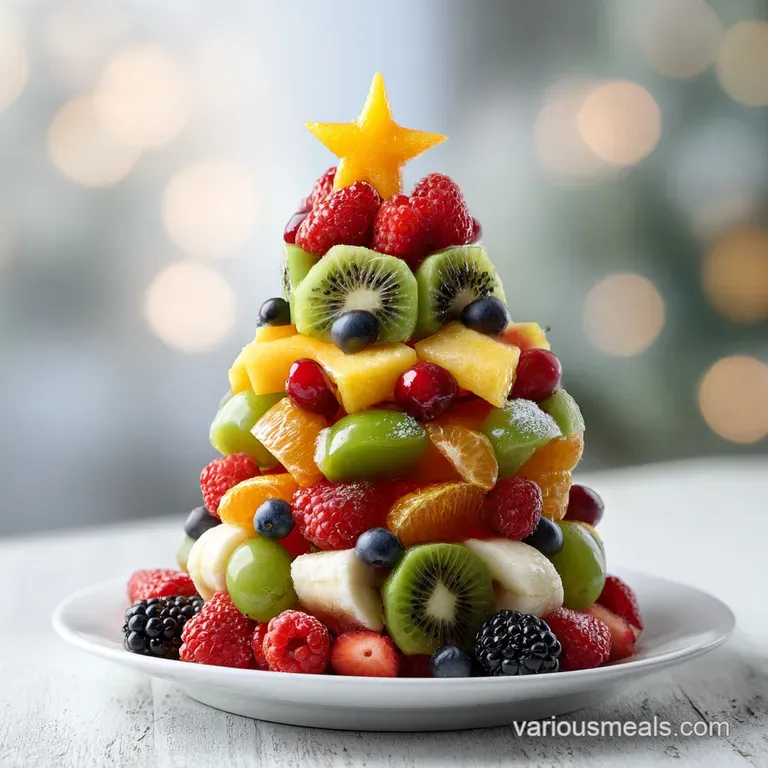
- Prepare the pineapple base. Slice the top and bottom off the pineapple until it stands perfectly level on your platter. Note: This is the most important step for stability.
- Shape the pineapple core. Trim the sides of the pineapple into a slight cone shape, leaving the bottom wide and tapering the top slightly.
- Prepare the apple topper. Cut the bottom off the Granny Smith apple until it sits flush against the top of the pineapple.
- Insert the central spine. Drive the 10 inch bamboo skewer through the center of the apple and deep into the pineapple core. Note: Leave about 1 inch of the skewer poking out the top to hold the star.
- Wash and dry all fruit. Ensure the grapes and berries are bone dry so they don't slide off the toothpicks.
- Angling the toothpicks. Insert toothpicks into the pineapple and apple at a 45 degree upward angle. Note: Gravity will pull the fruit down, so the upward angle locks them in place.
- Apply the "greenery" first. Slide green grapes and honeydew chunks onto the toothpicks until the pineapple core is mostly hidden.
- Add the strawberry ornaments. Space the strawberries evenly around the tree, pushing them firmly onto the picks until the red color creates a balanced pattern.
- Fill the gaps. Use blueberries and raspberries to cover any remaining visible bits of the pineapple or apple.
- Crown the tree. Press the cantaloupe star onto the exposed skewer at the top until it sits securely without wobbling.
- Final garnish. Tuck the mint leaves and pomegranate seeds into the small crevices until the tree looks lush and full.
Solving Common Fruit Stability Issues
The Leaning Pineapple Core
If your tree starts to tilt like a certain tower in Italy, your base wasn't cut flat. This often happens because pineapples have a slightly curved exterior. Take a moment to check the level with your eyes at table height before you start adding fruit.
Fruit Sliding Down Picks
This is usually caused by two things: "wet" fruit or inserting the picks horizontally. When the fruit is wet, it loses friction against the wood. If the pick is horizontal, the weight of a heavy strawberry will inevitably pull it down. Always aim the picks toward the top of the tree!
| Problem | Root Cause | Solution |
|---|---|---|
| Grapes falling off | Pick inserted too shallow | Push pick 2cm into core; leave only 1cm exposed. |
| Apple turning brown | Oxidation | Submerge apple in lemon water for 60 seconds before mounting. |
| Star topper flopping | Skewer too thin | Use two toothpicks side-by-side to "pinch" the star in place. |
Common Mistakes Checklist
- ✓ Always use a firm, barely ripe pineapple (overripe ones are too soft).
- ✓ Pat all fruit completely dry before assembly (prevents "slime" and sliding).
- ✓ Build the tree exactly where you plan to serve it to avoid moving it.
- ✓ Keep the fruit chilled in the fridge until the very second you start building.
- ✓ Don't use "long" toothpicks; standard size prevents the fruit from sticking out too far.
Flavor Variations for Every Party
If you want to move away from the traditional green and red, you can try a "Tropical Sun" version. Swap the grapes for chunks of fresh mango (if firm) and use kiwi slices for the greenery. The vibrant orange and bright green look stunning together.
For something a bit more sophisticated, consider a "Berry Blush" tree using only different shades of red think raspberries, red grapes, and dark cherries.
Another fun idea is to turn this into a dessert board centerpiece. Surround the base of the tree with small bowls of yogurt dip or even melted chocolate. If you like that idea, you should definitely check out my Chocolate Covered Strawberries recipe for tips on getting that perfect chocolate shell. You could even dip half of your tree's strawberries in white chocolate to look like they are covered in snow!
If you're hosting a brunch, this pairs beautifully with other finger foods. I love serving it alongside my Strawberry Ricotta Bruschetta recipe. The creamy ricotta and balsamic glaze on the toast provide a savory sweet contrast to the fresh, cold fruit from the tree.
The Tropical Fruit Twist
Substitute the honeydew with starfruit slices and use papaya chunks as "ornaments." This gives the tree a jagged, architectural look that feels very modern.
Low Carb Fruit Options
If you’re watching sugar, focus heavily on the strawberries, raspberries, and blackberries. Use a cucumber as the "spine" instead of a pineapple to keep the carb count even lower, though it will be a much smaller tree!
| Feature | Fresh Fruit Tree | Shortcut (Foam Cone) |
|---|---|---|
| Aroma | Sweet, tropical, and minty | Neutral or plastic like |
| Sustainability | 100% edible/compostable | Wasteful plastic/foam |
| Ease of Use | Requires carving skills | Just poke and go |
Keeping Your Fruit Crisp Longer
This is a "serve within 2 hours" kind of dish. Because the fruit is cut and exposed to air, it will eventually start to weep juice. If you must make it ahead of time, do not add the mint or pomegranate seeds yet.
Wrap the entire tree tightly (but gently) in plastic wrap and keep it in the coldest part of your fridge.
Storage: Leftover fruit should be pulled off the picks and stored in an airtight container in the fridge for up to 2 days. The pineapple core can be chopped up for a smoothie the next morning.
Zero Waste: Don't throw away those strawberry hulls or the pineapple peel! You can simmer the pineapple skins with a bit of ginger and sugar to make a refreshing "tepache style" drink, or toss the strawberry hulls into a pitcher of water for a subtle fruit infusion.
Serving Tips for Holiday Parties
When you're ready to serve, I highly recommend placing a small "snowfall" of powdered sugar over the tree right before the guests walk in. Use a fine mesh sieve and just a tiny dusting. It makes the pomegranate seeds look like they’re glistening in the frost.
Creating a Dipping Station
Set out a few small carafes of honey lime dressing or a simple marshmallow fluff dip. It encourages guests to engage with the tree and makes the experience feel more like a "course" rather than just a platter.
Adding Edible Snow Effects
If you want to avoid sugar, you can use desiccated coconut. Sprinkle it over the "branches" to mimic heavy snow. It sticks remarkably well to the moist surface of the grapes and adds a lovely nutty flavor to the fruit.
Logic Over Luck: Debunking Myths
Myth: You need a plastic cone for a tall tree. Truth: A large pineapple is actually superior because its weight prevents the tree from becoming top heavy. As long as the base is flat, physics is on your side.
Myth: Soaking fruit in sugar water keeps it fresh. Truth: Sugar actually draws moisture out of the fruit through osmosis, making it go limp and soggy much faster. Stick to plain lemon water for preservation.
Myth: All fruit works on a tree. Truth: Soft fruits like peaches or very ripe pears will simply slide off the toothpick. You need "structural" fruits like grapes, firm berries, and melon.
If you want a sparkling look, do this:
- Wash the grapes in a mixture of water and a splash of vinegar to remove the "bloom" (the white waxy coating) for a deep emerald shine.
- Sprinkle pomegranate seeds over the tree from a height of 12 inches so they catch in the natural crevices.
- Lightly mist the finished tree with a spray bottle of cold water just before serving to give it a "dewy" look.
Frequently Asked Questions
How far in advance can I make a Fruit Christmas Tree? You can assemble the pineapple and apple core up to 4 hours ahead, but the actual fruit should be added no more than 2 hours before serving. This prevents the berries from weeping and the mint from wilting.
What is the best way to transport this to a party? If you must travel, keep the tree in the "core" stage and pack the washed/dried fruit in separate containers. Assemble it on site. Transporting a fully assembled tree is a recipe for a fruit landslide in your car!
Can I use frozen fruit for the tree? No, frozen fruit will become mushy as it thaws and will not stay on the toothpicks. Only use fresh, firm, and chilled produce for structural success.
How do I prevent the cantaloupe star from falling? Ensure the bamboo skewer extends at least 2 inches into the apple and sticks out 1 inch at the top. If the star is heavy, use two toothpicks inserted into the apple at an angle to provide extra support for the star's base.
Fruit Christmas Tree FAQs
How to make a Christmas tree with fruit?
Start by preparing the foundation using a large, firm pineapple. Slice the top and bottom so it stands level, and then slightly taper the sides into a cone shape. Insert a long wooden skewer through a Granny Smith apple and deep into the pineapple core to create the central spine, then build outward using toothpicks angled upward to support the grapes and berries.
Do fruit trees like full sun or shade?
No, this edible display requires cool indoor temperatures or refrigeration. Since the structure relies on the turgor pressure of chilled fruit, direct sunlight or heat will cause the fruit to weep and the structure to soften and potentially collapse.
What are the 40 fruits on the 40 fruit tree?
This recipe does not mandate a specific count of 40 fruits; the number depends entirely on the size of your base and the desired density of your display. We focus on using various colorful fruits like grapes, strawberries, and melon cubes to achieve a festive look rather than counting to forty.
What fruit do you put on a Christmas tree?
You should use firm fruits like grapes, strawberries, and melon chunks as primary "ornaments." The structure requires a sturdy base like pineapple and apple, and the decorations should be easy to pierce without sliding off the toothpicks.
Is it true that I must use a foam cone for stability?
No, this is a common misconception. A dense, flat cut pineapple provides a much heavier and fully edible foundation, requiring only a central bamboo skewer to anchor the upper portion of the design.
Why are my cut apples turning brown quickly on the tree?
The apple is oxidizing because the enzymes are exposed to air. Immediately dip the apple in a mixture of lemon juice and water after carving; this ascorbic acid barrier prevents the enzymatic browning. If you enjoyed learning about using acid to control browning here, see how the same principle works for preventing discoloration in our Focaccia Recipe Fun dough rest.
How do I keep the grapes from sliding off the toothpicks?
Insert the toothpicks into the fruit and core at a distinct upward angle. If you insert them horizontally, gravity will pull the fruit down, especially when it warms up. Aiming the pick upward creates a slight ramp that locks the fruit in place better.
Fruit Christmas Tree Recipe
Ingredients:
Instructions:
Nutrition Facts:
| Calories | 114 calories |
|---|---|
| Protein | 1.4 g |
| Fat | 0.6 g |
| Carbs | 28.8 g |
| Fiber | 3.7 g |
| Sugar | 22.1 g |
| Sodium | 5 mg |
