Mediterranean Chickpea Salad Bowl
- Time: Active 15 minutes, Passive 0 minutes, Total 15 minutes
- Flavor/Texture Hook: Tangy feta paired with the shatter crisp crunch of English cucumbers
- Perfect for: High protein office lunches or budget-friendly weeknight meal prep
- Create a Nutrient Dense Mediterranean Chickpea Salad Bowl Today
- Mastering the Science of Texture and Emulsion
- Essential Metrics for the Perfect Balanced Bowl
- Sourcing the Best Produce and Pantry Staples
- Minimalist Tools for Maximum Efficiency and Speed
- Simple Steps to Assemble Your Garden Bowl
- Solving Common Texture and Flavor Balance Issues
- Customizing Your Bowl for Different Dietary Needs
- Storing and Using Leftovers to Reduce Waste
- Garnishing and Plating for a Professional Look
- Debunking Common Salad Preparation Myths
- HIGH in Sodium
- Recipe FAQs
- 📝 Recipe Card
Create a Nutrient Dense Mediterranean Chickpea Salad Bowl Today
Picture this. You're sitting at your desk, it's 1:00 PM, and the vending machine is starting to look like a gourmet option. Then you remember that vibrant, colorful container in the fridge. You pop the lid, and the aroma of dried oregano, sharp lemon, and pungent red onion hits you immediately. It's a total mood shift.
I used to spend $15 on "artisan" bowls that were mostly iceberg lettuce and three sad chickpeas. It was a waste of money and honestly pretty boring. Once I realized that the secret isn't a complex cooking method but rather the specific ratio of acid to fat in the dressing, my lunch game changed forever.
We're skipping the wilted greens here and focusing on hearty ingredients that can actually stand up to a few days of marinating.
This mediterranean chickpea salad bowl is my go to when I need something healthy that doesn't feel like a chore to eat. It's affordable, requires zero actual cooking (no stove, no oven, no stress), and relies on pantry staples we probably both already have.
Let's get into how to make this work so it stays crunchy and bright until the very last bite.
Mastering the Science of Texture and Emulsion
- Emulsification Stability: Using Dijon mustard acts as a natural binder (lecithin) that links the lemon juice and olive oil, preventing the dressing from separating and sliding off the chickpeas.
- Cellular Integrity: English cucumbers have thinner skins and fewer seeds, which means they release less water via osmosis, keeping your salad from becoming a soup by day two.
- Aromatic Infusion: Grating the garlic instead of chopping it creates a paste that distributes more sulfuric compounds evenly throughout the bowl for a consistent bite.
| Method | Total Time | Final Texture | Best For |
|---|---|---|---|
| Traditional Fresh | 15 minutes | Maximum crunch and snap | Immediate serving or lunch prep |
| Roasted Chickpea | 35 minutes | Nutty, firm, and slightly chewy | Adding a warm, smoky depth |
| Marinated Overnight | 10 minutes | Softer vegetables but intense flavor | Picnics and potlucks where flavor is key |
Choosing the right method depends on your schedule. If you want that classic mediterranean chickpea salad bowl experience, stick with the fresh assembly. If you've got an extra 20 minutes, roasting the chickpeas with a little cumin before adding them to the cold vegetables adds a fantastic texture contrast.
Essential Metrics for the Perfect Balanced Bowl
Getting the proportions right is the difference between a soggy mess and a vibrant meal. I always aim for specific weights to ensure the dressing to veg ratio stays consistent. If you use too much onion, it overpowers the feta; too little lemon, and the chickpeas feel heavy.
| Component | Weight/Volume | Role in Recipe | Science Secret |
|---|---|---|---|
| English Cucumbers | 350g | Primary crunch factor | Low seed count prevents excess water release |
| Chickpeas | 2 cans (15 oz each) | Protein and fiber base | Starchy interior absorbs the acidic dressing |
| Lemon Juice | 3 tbsp | Acidic brightener | Denatures proteins in the feta for a creamier feel |
| Olive Oil | 1/4 cup | Flavor carrier | Coats the palate and balances the sharp lemon |
For another high protein option that works well for office lunches, you might also like my Chicken Salad Meal recipe which uses similar fresh prep techniques.
Sourcing the Best Produce and Pantry Staples
- 2 Large English Cucumbers (350g): Look for firm ones without soft spots. Why this? They provide a much better crunch to water ratio than standard field cucumbers.
- Substitute: Persian cucumbers (use 4-5 small ones).
- 1 Pint Cherry Tomatoes (250g): Choose deep red, slightly firm tomatoes. Why this? Halved cherry tomatoes hold their shape better than diced large tomatoes.
- Substitute: Grape tomatoes or firm Roma tomatoes diced small.
- 2 cans (15 oz each) Chickpeas: I prefer the low sodium versions. Why this? They are the affordable, shelf stable heart of the dish.
- Substitute: Cooked dry chickpeas (about 3 cups) for a firmer bite.
- 1/2 cup Feta Cheese: Buy the block in brine if you can. Why this? Brined feta is much creamier and saltier than the pre crumbled dry bags.
- Substitute: Goat cheese for a tangier, softer texture.
- 1/2 cup Kalamata Olives: Pitted and halved. Why this? These provide the essential salty, "umami" punch to the bowl.
- Substitute: Castelvetrano olives for a milder, more buttery flavor.
- 1 tsp Dijon Mustard: Don't skip this! Why this? It creates the emulsion that keeps the dressing velvety and thick.
- Substitute: Yellow mustard (note: it will be more pungent and less refined).
Minimalist Tools for Maximum Efficiency and Speed
You don't need much for a mediterranean chickpea salad bowl, but a few specific tools make the prep fly by. I always use a large stainless steel bowl because it gives you plenty of room to toss everything without spilling. A sharp chef's knife is non negotiable for those clean, uniform dicing cuts.
Chef's Tip: Use a microplane to grate your garlic clove directly into the dressing. It creates a fine paste that melts into the oil and lemon juice, so you never end up biting into a raw garlic chunk.
I also recommend a small glass jar with a tight lid for the dressing. Shaking the dressing in a jar is much more effective at creating an emulsion than whisking it in a bowl. Plus, if you have extra, you can just pop the jar in the fridge for later.
Simple Steps to Assemble Your Garden Bowl
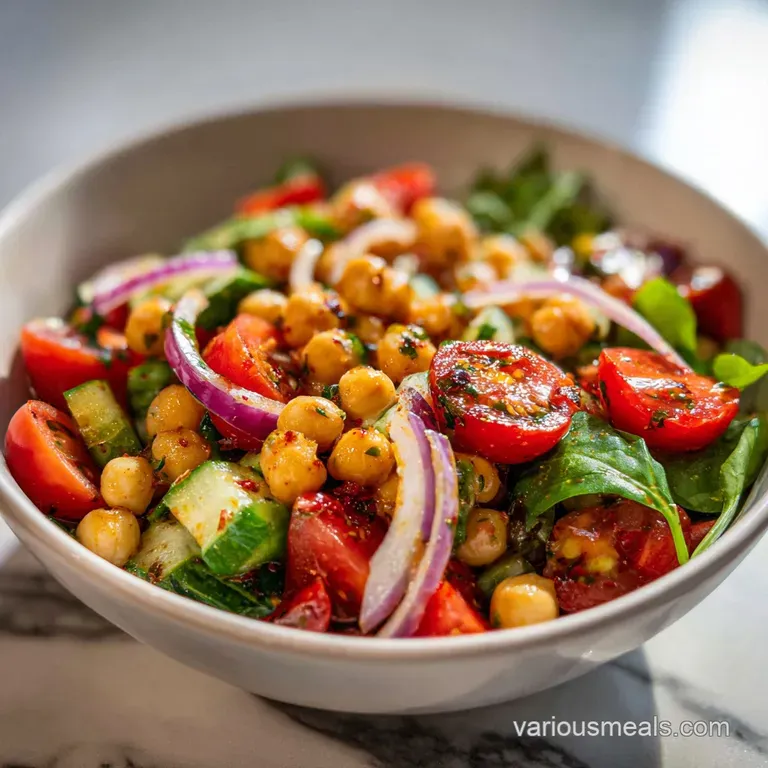
- Prep the chickpeas. Drain both cans and rinse them thoroughly under cold water until the foam disappears. Note: Rinsing removes excess sodium and the "beany" liquid taste.
- Dice the cucumbers. Chop the 350g of English cucumbers into 1cm cubes until they look like uniform green jewels.
- Halve the tomatoes. Slice the 250g of cherry tomatoes in half lengthwise to expose the juicy interior.
- Mince the aromatics. Finely mince the red onion and dice the red bell pepper until the pieces are roughly the size of a chickpea.
- Create the dressing base. In a small jar, combine the 1/4 cup olive oil, 3 tbsp lemon juice, 1 tsp Dijon, and 1 tsp dried oregano.
- Emulsify the sauce. Add the grated garlic, 1/2 tsp sea salt, and 1/4 tsp black pepper to the jar and shake vigorously until the liquid is opaque and creamy.
- Combine the vegetables. Place the chickpeas, cucumbers, tomatoes, onion, pepper, and Kalamata olives into your large mixing bowl.
- Add the herbs. Fold in the 1/2 cup of chopped fresh Italian parsley until the green is evenly distributed.
- Toss and coat. Pour the dressing over the salad and stir gently until every surface has a velvety sheen.
- Finish with cheese. Sprinkle the 1/2 cup of crumbled feta over the top and fold once or twice to keep the cheese chunks intact.
If you're looking for another way to prep salads for the week, check out my Mason Jar Salad recipe for a great layering technique that keeps things fresh.
Solving Common Texture and Flavor Balance Issues
Why Your Salad is Too Watery
This usually happens if you use standard cucumbers with large seeds or if the tomatoes are too soft. The salt in the dressing draws moisture out of the vegetables over time. If you're prepping this more than 24 hours in advance, the water release is inevitable but can be managed.
| Problem | Root Cause | Solution |
|---|---|---|
| Soggy Vegetables | High water content in seeds | Use English or Persian cucumbers and remove tomato seeds if very ripe |
| Bland Flavor | Lack of acidity or salt | Add a tiny splash of red wine vinegar or an extra pinch of salt |
| Oily Bottom | Poor emulsion or too much oil | Shake the dressing longer and ensure the mustard is fresh |
Common Mistakes Checklist: ✓ Rinsing chickpeas too quickly (ensure they are completely dry before adding dressing) ✓ Using dried parsley (fresh is mandatory for that "bistro" flavor) ✓ Cutting vegetables in wildly different sizes (uniformity helps with the perfect bite) ✓
Adding feta too early (it can break down and turn the dressing cloudy) ✓ Skipping the black pepper (it provides the necessary heat to balance the lemon)
Customizing Your Bowl for Different Dietary Needs
If you want to turn this mediterranean chickpea salad bowl into a more substantial dinner, you've got options. I often add a scoop of quinoa or farro to the bottom of the bowl. The grains soak up any extra dressing and add a nice chewy contrast to the crunchy vegetables.
- For the Vegan Crowd: Swap the feta for a handful of toasted pine nuts or a dollop of creamy hummus. You still get that fat content without the dairy.
- For the Protein Seekers: Add grilled chicken breast or even canned tuna. The lemon oregano dressing pairs beautifully with almost any lean protein.
- For the Carb Conscious: Double the cucumbers and bell peppers while halving the chickpeas to reduce the total carbohydrate count while keeping the volume high.
| Feature | Fresh Produce | Shortcut/Canned | Impact |
|---|---|---|---|
| Lemon Juice | Bright, zesty | Muted, slightly metallic | Fresh is always superior for raw salads |
| Chickpeas | Firmer, better texture | Softer, convenient | Canned is fine if rinsed and dried well |
| Garlic | Pungent, spicy | Sweet, less intense | Fresh grated garlic is the secret to the "zing" |
Storing and Using Leftovers to Reduce Waste
This salad is a meal prep champion. In an airtight container, it stays great for up to 4 days. In fact, I think it tastes better on day two because the chickpeas have had time to really absorb the garlic and oregano. Just give it a quick stir before eating to redistribute the oils.
- Onion Scraps
- Save the ends of the red onion and the bell pepper cores in a bag in the freezer for your next batch of vegetable stock.
- Lemon Zest
- Before you juice the lemon, zest it! You can dry the zest or use it to brighten up a pasta dish later in the week.
- Parsley Stems
- Don't toss them! Finely mince the tender upper stems and include them in the salad; they have even more flavor than the leaves.
Whatever you do, don't freeze this salad. The high water content in the cucumbers and tomatoes means they will turn into mush once thawed. If you find yourself with too much, try stuffing the leftovers into a pita pocket with a little extra tahini.
Garnishing and Plating for a Professional Look
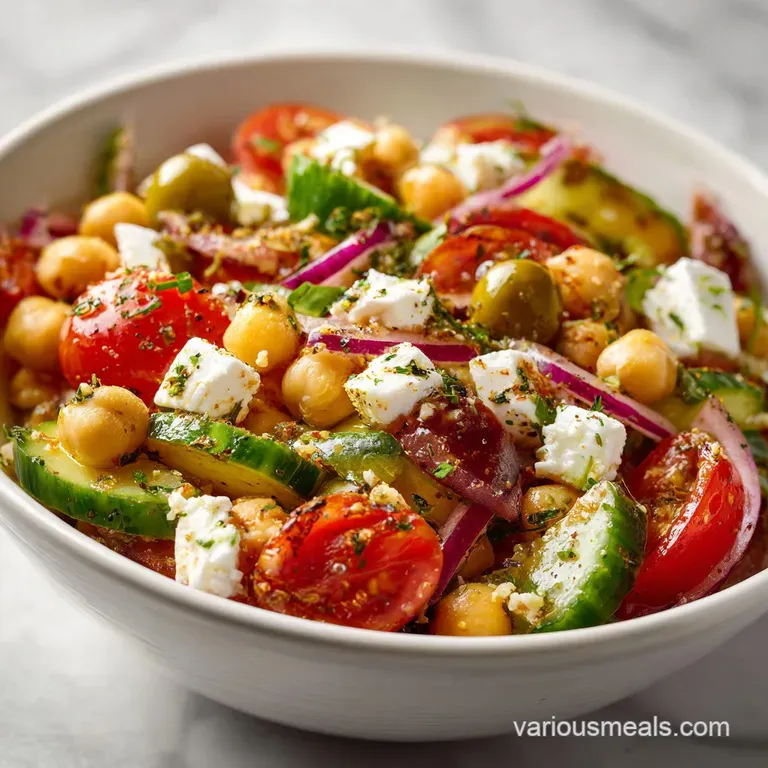
To make your mediterranean chickpea salad bowl look like it came from a high end cafe, pay attention to the colors. I like to keep a few whole parsley leaves and some larger chunks of feta aside to sprinkle on top right before serving. It gives the bowl a "finished" look.
If you are serving this for guests, use a wide, shallow bowl rather than a deep one. This allows the various colors the red of the peppers, the purple of the onions, and the white of the feta to be seen clearly.
A final crack of fresh black pepper and a tiny drizzle of your best extra virgin olive oil right at the table adds a glossy, professional touch that makes a huge difference. Trust me, people eat with their eyes first, and this bowl is a total stunner.
Debunking Common Salad Preparation Myths
- Myth: You must peel cucumbers. In reality, the skin of English cucumbers is thin and packed with fiber and nutrients. Keeping the skin on also provides a better structural crunch that prevents the salad from feeling "mushy."
- Myth: Chickpeas from a can are "unhealthy." While they can be high in sodium, a thorough rinse removes up to 40% of the salt content. They are an incredible, budget friendly source of plant based protein and complex carbs.
- Myth: Dressing should be made in the bowl. Mixing the dressing separately ensures a stable emulsion. If you just pour oil and lemon juice over the veggies, the oil will coat the vegetables first, creating a waterproof barrier that prevents the lemon and salt from seasoning the actual food.

HIGH in Sodium
975 mg mg of sodium per serving (42% % of daily value)
The American Heart Association recommends limiting sodium intake to about 2,300mg per day for overall cardiovascular health.
Easy Tips to Reduce Sodium in Your Cucumber Salad
-
Choose Low-Sodium Chickpeas-20%
Opt for no-salt added canned chickpeas, or cook dried chickpeas from scratch. This simple swap can significantly reduce the overall sodium content of the salad.
-
Reduce or Omit Feta-15%
Feta cheese is a major source of sodium. Use half the amount of feta, or replace it with a lower sodium cheese like fresh mozzarella (packed in water, then drained), or a sprinkle of goat cheese.
-
Reduce Added Salt-25%
Cut back on the added salt. Start by using only 1/4 teaspoon of fine sea salt, tasting, and adding more only if absolutely needed. The other ingredients contribute sodium as well.
-
Rinse Thoroughly-5%
Even if using no-salt added chickpeas, rinse them thoroughly under running water for at least one minute before adding them to the salad. This helps to remove any residual sodium.
-
Spice It Up!
Enhance the flavor of the salad with fresh herbs and spices like dill, mint, or red pepper flakes instead of relying on salt. Experiment with different flavor combinations to find what you enjoy.
Recipe FAQs
Are chickpeas okay on a Mediterranean Diet?
Yes, absolutely. Chickpeas are a cornerstone of the Mediterranean diet, providing plant based protein, fiber, and essential nutrients. They are a versatile legume that fits perfectly into the region's emphasis on whole, unprocessed foods.
How to make a Mediterranean chickpea salad bowl?
Drain and rinse canned chickpeas thoroughly. Dice fresh vegetables like English cucumbers, cherry tomatoes, red onion, and bell pepper. Prepare a simple dressing by emulsifying olive oil, lemon juice, Dijon mustard, and seasonings in a jar.
Combine all ingredients in a large bowl, toss gently with the dressing, and finish with feta cheese and fresh parsley.
What is the difference between a Greek salad and a Mediterranean salad?
A Greek salad typically includes lettuce, tomatoes, cucumbers, olives, feta cheese, and a simple vinaigrette, often with oregano. A broader Mediterranean salad can incorporate a wider variety of ingredients, including legumes like chickpeas, grains, and different herbs and vegetables from across the Mediterranean region.
What to eat with Mediterranean chickpea salad?
It's a complete meal on its own, but also great served with warm pita bread for dipping. For added substance, consider serving it alongside grilled chicken or fish, or as a side dish to a lentil soup or a grain bowl like quinoa or farro.
Can I make this salad ahead of time?
Yes, this salad is ideal for meal prep. It can be stored in an airtight container in the refrigerator for up to 4 days. The flavors actually meld and deepen overnight, making it even more delicious on the second day.
Why is my chickpea salad watery?
This is likely due to the water content in the vegetables, especially if standard cucumbers with large seeds or very ripe tomatoes were used. Using English or Persian cucumbers and removing excess seeds from tomatoes can help prevent this.
Ensuring the dressing is well emulsified also helps bind the ingredients.
What's the best way to dress a chickpea salad?
Emulsify the dressing separately in a jar or bowl before adding it to the salad. This creates a stable mixture of oil and acid (like lemon juice or vinegar), often with a binder like Dijon mustard, which coats the ingredients evenly.
Pouring the dressing over the salad and tossing gently ensures every chickpea and vegetable is seasoned.
Mediterranean Chickpea Bowl
Ingredients:
Instructions:
Nutrition Facts:
| Calories | 458 kcal |
|---|---|
| Protein | 14.8 g |
| Fat | 21.4 g |
| Carbs | 41.2 g |
| Fiber | 11.9 g |
| Sugar | 6.2 g |
| Sodium | 975 mg |
