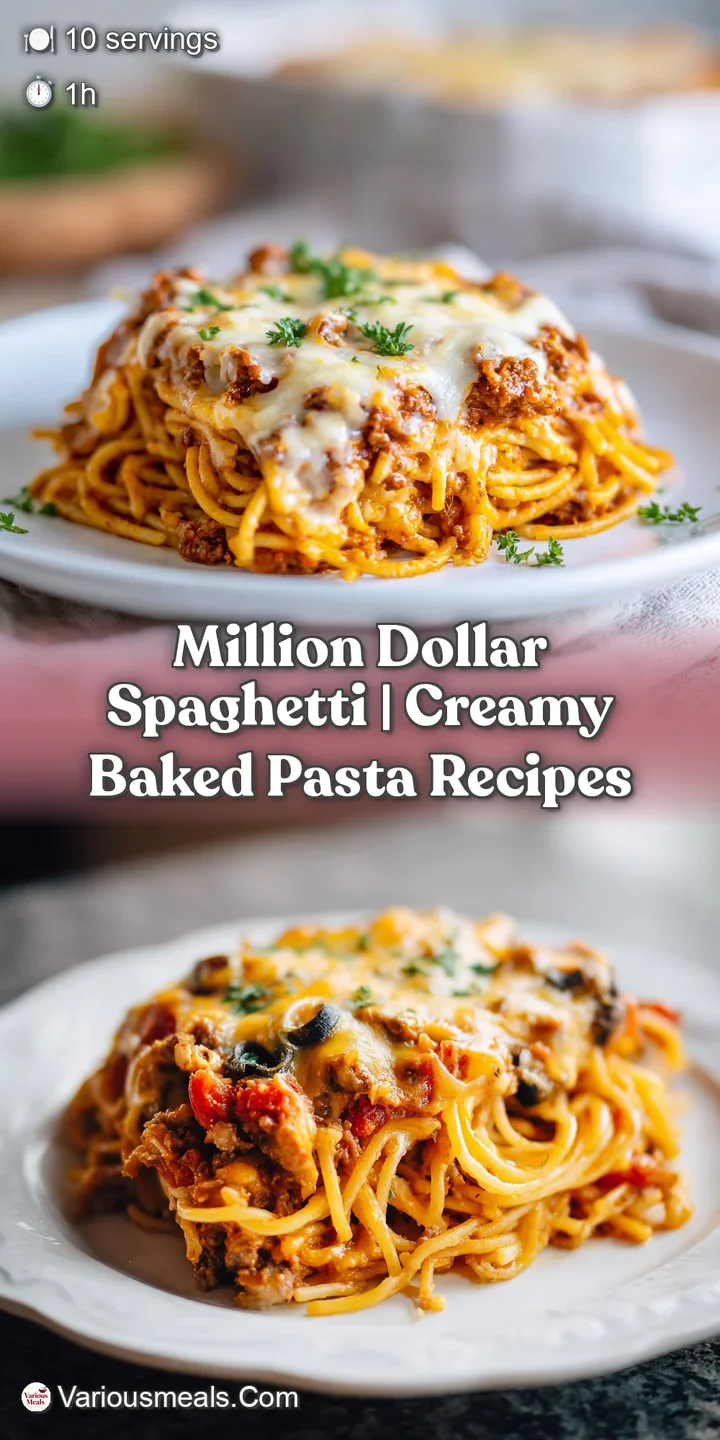
Million Dollar Spaghetti: Creamy and Baked
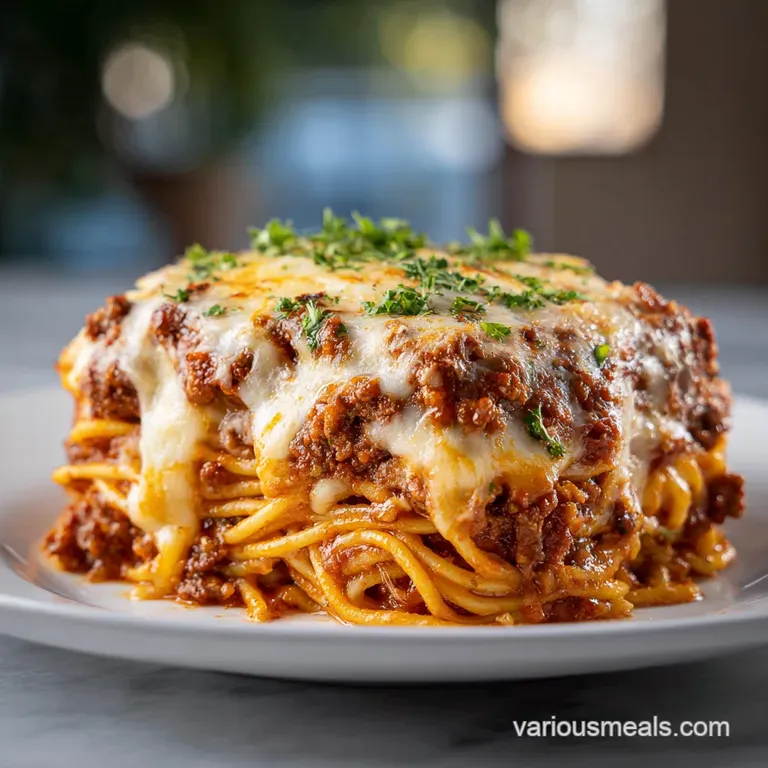
- Time: Active 15 minutes, Passive 45 minutes, Total 60 minutes
- Flavor/Texture Hook: A velvety, melt in-your mouth cheese core hidden beneath a crispy mozzarella crust and savory meat sauce.
- Perfect for: Sunday family dinners, potlucks where you want the dish returned empty, and ultimate comfort food cravings.
- Master the Ultimate Million Dollar Spaghetti for Family Dinners
- Why This Works
- Choosing the Right Serving Scale
- Component Analysis
- Selecting Your Elements
- Essential Tools
- From Prep to Plate
- How to Fix Common Problems
- Creative Twists and Swaps
- Scalable Adjustment Guidelines
- Myths About Baked Pasta
- Storage & Reheating
- How to Serve and Enjoy
- Recipe FAQs
- 📝 Recipe Card
Master the Ultimate Million Dollar Spaghetti for Family Dinners
Forget everything you know about standard baked spaghetti because the common myth that this is just "lasagna for lazy people" is completely wrong. While it shares some DNA with its layered cousin, this dish has a totally different soul.
The first time I pulled this out of the oven, the kitchen was filled with that specific, heady aroma of toasted garlic and bubbling whole milk mozzarella. My family didn't just eat it; they went silent, which in our house is the highest form of praise.
You don't need a four hour slow simmered ragu to make this work, but you do need to understand the contrast between the sharp marinara and that cloud like middle layer.
What makes this specific version stand out is the interplay of textures. You have the "shatter" of the golden brown cheese on top, the silky "velvety" mouthfeel of the cream cheese center, and the "tender crisp" bite of pasta that hasn't been turned into mush.
I used to think the cottage cheese was a weird addition I actually tried to skip it once but that was a massive mistake. The cottage cheese provides the structural integrity that keeps the middle from becoming a puddle of liquid.
It’s the secret to that "million dollar" bite that feels heavy and rich but balanced.
We’re going for deep, nostalgic comfort here. We want those crispy edges where the spaghetti strands meet the hot baking dish and turn almost like a snack. We want a meat sauce that is thick enough to hold its own, not a watery mess that sinks to the bottom.
If you've ever had a pasta bake that felt dry or bland, I promise this recipe is the antidote. It's about building layers of flavor from the butter tossed noodles all the way to the final sprinkle of fresh parsley. Let's get into why this works so well and how you can nail it on your first try.
Why This Works
- Fat Emulsification: Combining sour cream with full fat cream cheese creates a stable, heat resistant barrier that keeps the pasta moist without letting it get soggy.
- Starch Protection: Coating the spaghetti in melted butter and Parmesan before layering creates a hydrophobic seal, preventing the noodles from absorbing too much sauce and losing their texture.
- The Fond Factor: Browning the beef and sausage together creates a "fond" on the skillet, which we deglaze with the marinara to infuse the entire sauce with deep, roasted meat notes.
- Structural Moisture: The small curd cottage cheese acts as a natural thickener during the bake, holding the "Million Dollar" layer together while releasing just enough steam to keep the pasta tender.
Choosing the Right Serving Scale
Before we get into the nitty gritty of the components, you need to know how much to make. Whether you're feeding a small group or the entire neighborhood, getting the proportions right is the difference between having great leftovers and running out mid meal.
| Servings | Ingredient Adjustments | Pan Size | Cook Time |
|---|---|---|---|
| 5 people | 8 oz pasta, 0.75 lb meat, 12 oz sauce | 8x8 inch square | 30 minutes |
| 10 people | 16 oz pasta, 1.5 lb meat, 24 oz sauce | 9x13 inch rectangle | 45 minutes |
| 20 people | 32 oz pasta, 3 lb meat, 48 oz sauce | Two 9x13 pans | 50 minutes |
When you're scaling up for a crowd, remember that the middle cheese layer is what everyone hunts for. If you are making a double batch, I actually recommend adding an extra 4 ounces of cream cheese just to ensure that "velvety" texture is present in every single square inch of the pans. The way the fats interact with the starches in the pasta is quite interesting; much like a creamy pasta recipe, the goal is a sauce that clings rather than a sauce that runs.
Component Analysis
Selecting your ingredients for Million Dollar Spaghetti isn't about buying the most expensive items, but about choosing the ones that play their roles effectively. The interaction between the cottage cheese and the cream cheese is particularly vital for that signature texture.
| Component | Science Role | Pro Secret |
|---|---|---|
| Full fat Cream Cheese | Texture Stabilizer | Use brick style only; tub style has too much air and water for a stable bake. |
| Italian Sausage | Flavor Catalyst | Choose "Hot" sausage to cut through the richness of the three cheese center. |
| Buttered Spaghetti | Moisture Barrier | The butter prevents the starch from bonding, keeping individual strands distinct. |
I've learned that using low-fat versions of these dairy products is a recipe for disaster. low-fat sour cream and cottage cheese have a much higher water content and use gums or thickeners that can break down under the high heat of the oven, leading to a "weeping" casserole.
Stick to the full fat versions to ensure the middle layer stays thick and luxurious.
Selecting Your Elements
Here is everything you'll need to gather for your Million Dollar Spaghetti. I’ve included my favorite swaps for when the pantry is looking a little bare, though the classic combo is hard to beat.
- 16 oz dry spaghetti: Why this? The long strands create structural "mesh" that holds the heavy cheese and meat layers.
- Substitute: Penne or Rigatoni (similar volume, but a different "bite").
- 4 tbsp unsalted butter, melted: Why this? Prevents pasta sticking and adds a rich, silky mouthfeel to the bottom layer.
- Substitute: Extra virgin olive oil (fruttier flavor, less creamy).
- 1/2 cup freshly grated Parmesan cheese: Why this? Adds a salty, nutty "umami" punch to the noodles themselves.
- Substitute: Pecorino Romano (sharper and saltier).
- 8 oz full fat cream cheese, softened: Why this? The anchor of the "million dollar" layer; provides a thick, spreadable base.
- Substitute: Mascarpone (even richer and slightly sweeter).
- 1 cup full fat sour cream: Why this? Adds a necessary tang to balance the heavy fats in the beef and cheese.
- Substitute: Plain Greek Yogurt (tangy but slightly more prone to curdling).
- 1 cup small curd cottage cheese: Why this? Provides texture and "lift" so the middle layer isn't a solid block.
- Substitute: Ricotta (smoother, more traditional Italian profile).
- 1 lb lean ground beef (90/10): Why this? Provides bulk and beefy flavor without excessive grease.
- Substitute: Ground Turkey (leaner, needs more seasoning).
- 0.5 lb Italian sausage, casings removed: Why this? Fennel and garlic notes in sausage provide complexity the beef lacks.
- Substitute: Ground pork with 1 tsp fennel seeds.
- 24 oz marinara sauce: Why this? The acidic tomato base cuts through the richness of the dairy.
- Substitute: Crushed tomatoes with 1 tbsp Italian seasoning.
- 2 cups shredded whole milk mozzarella: Why this? High fat content ensures a perfect melt and "cheese pull."
- Substitute: Provolone or Monterey Jack.
Don't forget the aromatics! A small yellow onion, 3 cloves of minced garlic, dried oregano, garlic powder, and red pepper flakes round out the flavor profile. These little additions are what take the dish from "good" to "restaurant quality."
Essential Tools
You don't need a professional kitchen, but a few specific items will make your life much easier. A heavy bottomed skillet (like a Lodge cast iron or a thick stainless steel pan) is non negotiable for getting that deep brown sear on the meat. You’ll also need a 9x13 inch glass or ceramic baking dish.
I prefer glass because you can actually see the layers through the side, which is part of the charm.
A sturdy colander is essential for draining the pasta, and a medium mixing bowl is needed for whipping together that creamy center. Finally,, a good microplane or cheese grater will make a world of difference.
Pre shredded cheese is coated in potato starch to keep it from clumping in the bag, but that starch prevents it from melting into a "velvety" blanket. Grate your own mozzarella and Parmesan for the best results.
From Prep to Plate
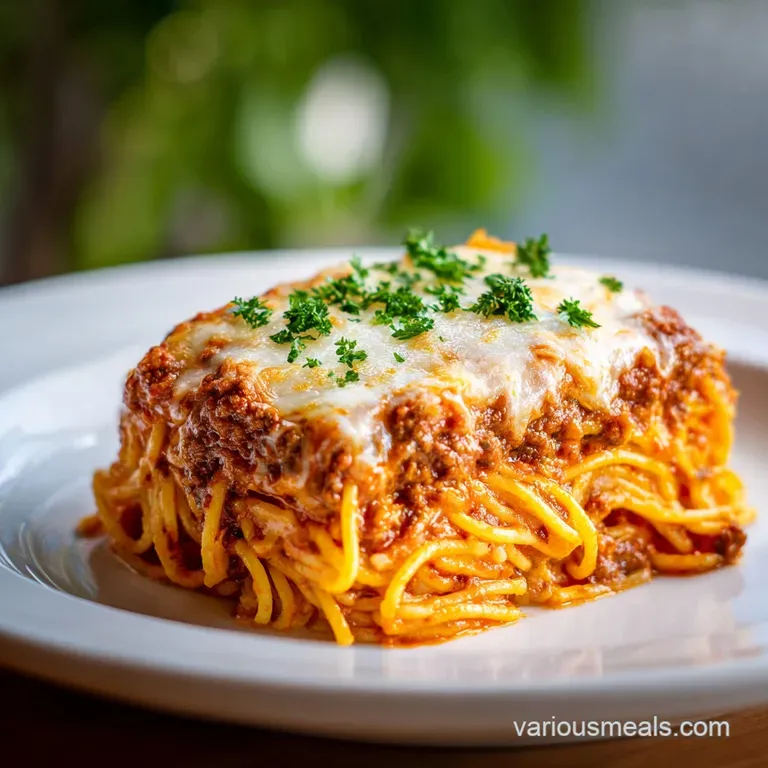
- Preheat your oven to 350°F (175°C). Bring a large pot of heavily salted water to a rolling boil.
- Cook the 16 oz spaghetti for exactly 2 minutes less than the package directions for al dente. Note: The pasta will finish cooking in the oven as it absorbs the sauce.
- Drain the pasta thoroughly and return it to the pot. Toss immediately with the 4 tbsp melted butter and 1/2 cup grated Parmesan until the strands are glossy and coated.
- In your heavy skillet over medium high heat, brown the 1 lb beef and 0.5 lb sausage with the diced onion. Cook until the meat is deeply caramelized and no longer pink.
- Stir in the 3 cloves of minced garlic and 1/2 tsp red pepper flakes. Cook for 60 seconds until the garlic is fragrant but not browned.
- Pour in the 24 oz marinara sauce. Simmer for 5 minutes, using a wooden spoon to scrape up all the flavorful browned bits from the pan bottom.
- In a separate bowl, whisk together the 8 oz softened cream cheese, 1 cup sour cream, 1 cup cottage cheese, 1 tsp oregano, and 1/2 tsp garlic powder until smooth.
- Grease your 9x13 dish. Layer half of the buttered spaghetti on the bottom, then spread the entire cream cheese mixture over it in an even layer.
- Top with the remaining spaghetti, then pour the meat sauce over the top, spreading it to the very edges of the dish.
- Sprinkle the 2 cups of mozzarella over the top. Bake for 35-40 minutes until the cheese is bubbly and the edges are golden brown. Garnish with parsley and let it rest for 10 minutes.
How to Fix Common Problems
Even with a reliable recipe, things can go sideways in the kitchen. Understanding why a dish fails is the first step toward becoming a better cook. The most common issue people have with Million Dollar Spaghetti is "pooling," where a layer of liquid sits at the bottom of the dish.
Why Your Casserole Is Watery
Usually, this is a result of one of two things: under drained pasta or using "wet" cottage cheese. If you don't let the spaghetti sit in the colander for a full minute, that clinging water dilutes your cream cheese layer. Plus,, some brands of cottage cheese are very liquidy.
If yours looks soupy, you can actually strain it through a fine mesh sieve for 5 minutes before mixing it with the cream cheese. This ensures the middle layer stays thick and "velvety" instead of runny.
Preventing a Dry Top Layer
If your cheese is browning too fast but the center isn't hot yet, your oven might be running hot. This can lead to the top layer of noodles becoming crunchy and dry. To prevent this, make sure your meat sauce goes all the way to the edges of the pan, acting as a lid for the pasta beneath.
If the mozzarella is getting too dark before the 35 minute mark, simply tent the dish loosely with aluminum foil for the remainder of the bake.
| Problem | Root Cause | Solution |
|---|---|---|
| Greasy Sauce | Meat wasn't drained properly. | Drain cooked meat in a colander before adding marinara. |
| Grainy Cheese Layer | Dairy was cold or low-fat. | Ensure cream cheese is completely softened to room temperature before mixing. |
| Mushy Noodles | Pasta was overcooked in the pot. | Boil pasta for 2-3 minutes less than "al dente" instructions. |
When you're dealing with pasta textures, it's always better to undercook slightly. Much like the technique used in Spaghetti Carbonara, the residual heat is your friend. The pasta will continue to hydrate while it sits in the oven, soaking up the flavorful fats from the butter and the steam from the sauce.
Common Mistakes Checklist
- ✓ Don't skip browning the meat deeply; that color equals flavor.
- ✓ Always use full fat dairy to prevent the middle layer from breaking.
- ✓ Salt your pasta water generously (it should taste like the sea).
- ✓ Let the dish rest for at least 10 minutes after baking to set the layers.
- ✓ Grate your own cheese for a superior melt and "shatter" texture.
Creative Twists and Swaps
Once you've mastered the classic version, you can start playing with the flavors. One of the most popular variations is the "Viral TikTok" version, which replaces the bottom layer of buttered noodles with a layer of frozen garlic bread.
You simply line the bottom of the dish with the bread, then top with the cheese mixture, more pasta, and sauce. It is intensely decadent and incredibly filling.
If you want a lighter profile, you can swap the ground beef for ground chicken or turkey. If you do this, I highly recommend adding a splash of Worcestershire sauce or a teaspoon of "Better Than Bouillon" beef base to the meat while it browns.
This compensates for the lack of fat and adds back that "million dollar" richness. For a vegetarian version, replace the meat with a mix of sautéed mushrooms (cremini and shiitake work well) and chopped spinach. The mushrooms provide a similar "meaty" texture and a lot of umami.
Scalable Adjustment Guidelines
When you're cooking for one or two people, a 9x13 pan is a lot of food. You can easily halve this recipe. Use an 8x8 inch square baking dish and reduce the bake time to about 25-30 minutes.
Since you can't really use "half an egg" easily (though this recipe doesn't call for one), scaling is mostly about the volume. For the cheese layer, use 4 oz of cream cheese, 1/2 cup of sour cream, and 1/2 cup of cottage cheese.
If you are scaling up for a big party, don't just double the salt and spices. Spices can become overwhelming when doubled. Start with 1.5 times the amount of oregano and red pepper flakes, then taste your meat sauce and adjust.
When baking two pans at once, rotate them halfway through the cooking time top to bottom and front to back to ensure they both get that "golden brown" crust.
| Servings | Method | Texture Goal | Best For |
|---|---|---|---|
| Individual | Ramekins | Crispy all over | Date night |
| Family | 9x13 Dish | Soft center, crispy top | Weeknight dinner |
| Crowd | Chafing Dish | Uniformly creamy | Potlucks/Parties |
This dish is remarkably forgiving. If you find yourself with slightly less meat or a little less cheese, just spread it a bit thinner. The real magic is in the layering process itself.
Myths About Baked Pasta
There is a long standing myth that you must use ricotta cheese for any "Italian style" baked pasta. While ricotta is traditional in lasagna, Million Dollar Spaghetti actually thrives on the cream cheese and cottage cheese combo.
Ricotta can sometimes become grainy or dry when baked for 45 minutes, whereas the fat content in the cream cheese ensures a "velvety" finish every single time.
Another common misconception is that you need to rinse your pasta after boiling to "stop the cooking." Never rinse your pasta for a bake! You want that surface starch to remain on the noodles so the butter and Parmesan can cling to them.
Rinsing also cools the pasta down, which means it will take longer for the center of your casserole to reach the safe temperature of 165°F in the oven.
Storage & Reheating
This is one of those rare dishes that might actually taste better the next day. As it sits in the fridge, the flavors of the garlic, oregano, and sausage meld into the cheese layer. You can store leftovers in an airtight container in the refrigerator for 3 to 4 days.
When reheating, I suggest adding a tiny splash of water or extra marinara to the plate and covering it with a damp paper towel. This creates steam in the microwave and prevents the spaghetti from drying out.
For long term storage, Million Dollar Spaghetti freezes beautifully. You can freeze the entire dish (unbaked) for up to 3 months. Wrap it tightly in a double layer of plastic wrap followed by heavy duty aluminum foil.
To bake from frozen, let it thaw in the fridge overnight, then bake as directed, adding about 10-15 minutes to the total time. For zero waste, if you have leftover meat sauce that didn't fit in the pan, save it!
It makes a fantastic topping for baked potatoes or a quick dipping sauce for mozzarella sticks.
How to Serve and Enjoy
To truly enjoy this "Million Dollar" experience, don't serve it straight out of the oven. If you cut into it immediately, the cheese layer will be too fluid and will run all over the plate.
Give it 10 to 15 minutes to "rest." This allows the proteins in the cheese to firm up slightly, giving you those clean, beautiful layers when you slice into it.
I love serving this with a very simple, bright side dish to cut through the richness. A crisp arugula salad with a sharp lemon vinaigrette is perfect. The peppery bite of the greens balances the "velvety" creaminess of the pasta.
Of course, a side of thick, buttery garlic bread is the traditional choice, and it's perfect for swiping up any extra sauce left on the plate. Pour a glass of a medium bodied red wine, like a Chianti or a Merlot, and you have a meal that truly feels like a million dollars.
Enjoy the process, the aromas, and especially that first, cheesy bite!
Recipe FAQs
What is the million dollar spaghetti?
It is a decadent, layered baked pasta dish. The recipe combines buttered spaghetti with a rich, creamy cheese middle layer, a savory meat sauce, and a bubbly mozzarella topping.
Why is it called million dollar pasta?
It refers to the luxurious, rich mouthfeel of the dish. The combination of cream cheese, sour cream, and cottage cheese creates a velvety, expensive tasting filling that elevates simple spaghetti into a comfort food masterpiece.
What is the most luxurious pasta?
Million dollar spaghetti is arguably the most luxurious version of baked pasta. By using full fat dairy and a blend of ground beef and Italian sausage, it achieves a deep, complex flavor profile that feels much more indulgent than standard baked ziti or basic spaghetti.
What is a million dollar lasagna?
No, this is a common misconception. While people often confuse the two, this dish is actually a layered spaghetti bake, not a lasagna, as it uses spaghetti strands rather than flat pasta sheets.
How to ensure the middle layer doesn't turn watery?
Always use full fat dairy ingredients for the filling. Avoid low-fat or non-fat substitutes, as they contain higher water content that can cause the creamy middle layer to break down or separate during the 35-40 minute baking time.
How to prevent the spaghetti from drying out during reheating?
Place a damp paper towel over the dish before microwaving. This creates steam inside the container, which rehydrates the pasta and helps maintain the creamy texture of the internal sauce layers.
How to get the best melt on the mozzarella?
Grate your own cheese from a block instead of using pre-shredded bags. Pre-shredded varieties are coated in anti caking agents that prevent a smooth, consistent melt, whereas freshly grated whole milk mozzarella creates a superior, golden brown crust.
Million Dollar Spaghetti
Ingredients:
Instructions:
Nutrition Facts:
| Calories | 635 kcal |
|---|---|
| Protein | 32.2 g |
| Fat | 36.2 g |
| Carbs | 44.7 g |
| Fiber | 2.5 g |
| Sugar | 5.2 g |
| Sodium | 785 mg |
