Neapolitan Pizza Dough: Traditional High Hydration
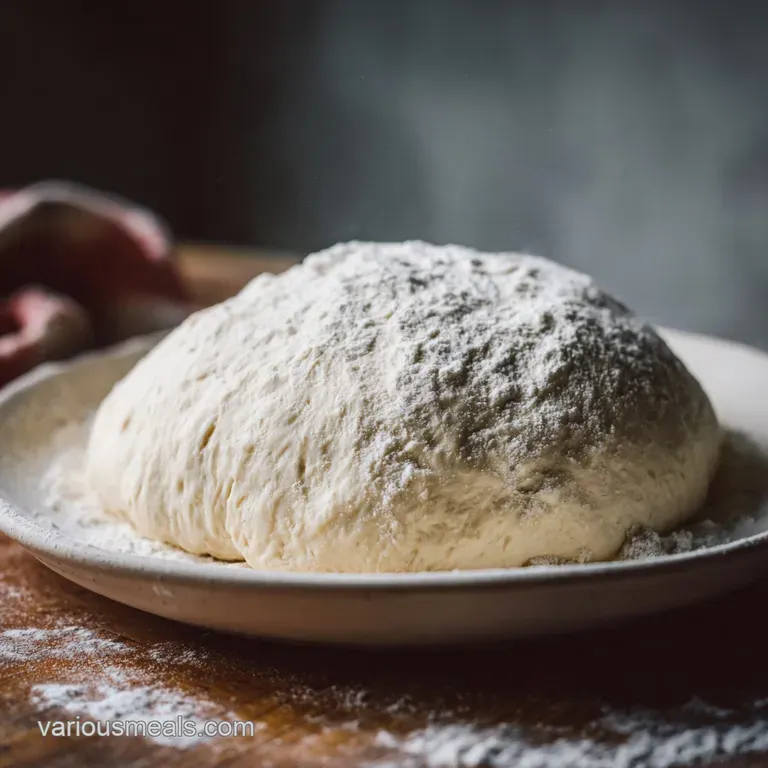
- Time: Active 20 minutes, Passive 8 hours, Total 8 hours 22 minutes
- Flavor/Texture Hook: Charred, smoky edges with a velvety, light crumb
- Perfect for: Slow weekend afternoons and authentic family pizza nights
- Mastering the Art of Neapolitan Pizza Dough
- Why This Fermented Dough Works
- Component Analysis of Pizza Ingredients
- Essential Ingredients and Smart Substitutes
- Kitchen Tools for Great Crust
- The Step by Step Process
- Fixing Common Dough Problems Fast
- Delicious Variations for Your Dough
- Storage and Reheating Advice
- Best Ways to Serve Pizza
- Very High in Sodium
- Recipe FAQs
- 📝 Recipe Card
Mastering the Art of Neapolitan Pizza Dough
I still remember the first time I truly "smelled" a proper pizza. I was standing in a tiny alley in Naples, and the air didn't just smell like bread, it smelled like a campfire mixed with a brewery. It was earthy, slightly tangy, and completely intoxicating.
When I finally got my hands on a slice, the crust didn't just crunch, it seemed to shatter into a thousand airy shards before melting away. I spent the next three years trying to recreate that exact sensation in my own kitchen, failing more times than I care to admit.
My early attempts were either like chewing on a rubber tire or so sticky they ended up as a literal floor to ceiling mess. I realized that the secret wasn't some expensive wood fired oven, though it helps, but the patience we put into the Neapolitan Pizza Dough itself.
It is all about the relationship between the flour, the water, and time. We aren't just making a base for cheese; we are cultivating a living thing that needs to breathe and stretch.
We are going to skip the shortcuts today. You don't need a degree in chemistry, but you do need to trust the process. This recipe uses a 65% hydration level, which is the "sweet spot" for a home oven.
It is wet enough to get those beautiful bubbles, but manageable enough that you won't lose your mind trying to shape it. Let's get into why this specific ratio changes everything for your crust.
Why This Fermented Dough Works
Developing a world class crust is about more than just mixing ingredients. It is about managing the biological and chemical changes that happen over several hours. When we allow the dough to rest, we are letting nature do the heavy lifting for us.
- Long Fermentation: The 8 hour rest period allows the yeast to consume sugars slowly, producing CO2 and organic acids that create a complex, nutty aroma.
- Enzymatic Breakdown: Time allows enzymes in the flour to break down complex starches into simpler sugars, which leads to better browning (the Maillard reaction) even at lower temperatures.
- Hydration Tension: Using 390g of water for 600g of flour creates a 65% hydration rate, which provides enough steam during baking to "blow up" the crust like a balloon.
- Gluten Alignment: A slow rise ensures the protein strands align naturally, resulting in a dough that is incredibly elastic and easy to stretch without tearing.
| Method | Total Time | Texture | Best For |
|---|---|---|---|
| Fast Method | 1 hour | Denser, bread like | Last minute hunger |
| Neapolitan Classic | 8+ hours | Airy, shatter crisp | Authentic experience |
| Cold Ferment | 24-72 hours | Tangy, very bubbly | Professional results |
Similar to the patience required for a good Focaccia Recipe Fun, the slow rise here is non negotiable if you want that iconic "cornicione" or puffed up rim. If you rush the yeast, you end up with a flat, lifeless disc that tastes more like a cracker than a cloud.
Component Analysis of Pizza Ingredients
Understanding your ingredients is the first step toward consistency. In Neapolitan cooking, the quality of your base elements determines the success of the entire dish.
| Ingredient | Science Role | Pro Secret |
|---|---|---|
| Italian Tipo 00 Flour | High protein with fine grind | Provides the "silky" feel and extreme elasticity |
| Filtered Water | Hydrates proteins to form gluten | Use room temp (21°C) to keep yeast activity steady |
| Fine Sea Salt | Tightens gluten and controls yeast | Add it last to prevent it from "stalling" the yeast |
The flour is the backbone of this recipe. Unlike all purpose flour, "00" is milled to a powder like consistency, which allows it to absorb water differently and create a more delicate crumb.
If you use standard bread flour, the pizza will still be good, but it will lose that signature "melt in-your mouth" quality that defines a true Neapolitan Pizza Dough.
Essential Ingredients and Smart Substitutes
To get started, gather these specific items. Accuracy matters here, so I highly recommend using a digital scale rather than measuring cups.
- 600g Italian Tipo 00 Flour: Why this? The fine mill creates a supple dough that stretches without breaking easily.
- 390g Filtered water: Why this? Water quality affects yeast; filtered water ensures no chlorine interferes with fermentation.
- 18g Fine Sea Salt: Why this? It enhances the wheat flavor and regulates the fermentation speed.
- 1g Instant Yeast: Why this? A tiny amount allows for a slow, flavorful rise without a "yeasty" aftertaste.
| Original Ingredient | Substitute | Why It Works |
|---|---|---|
| Tipo 00 Flour | Bread Flour | High protein content maintains structure, but texture will be slightly chewier. |
| Fine Sea Salt | Kosher Salt | Use 1.5x the volume if measuring by spoons; provides similar flavor control. |
| Instant Yeast | Active Dry Yeast | Same quantity, but must be bloomed in the 390g water for 5 mins first. |
If you find yourself making a variety of doughs, you might notice that the salt content seems high, but it is necessary for both flavor and structural integrity. It prevents the dough from becoming too slack during the long 8 hour wait.
Kitchen Tools for Great Crust
You don't need a $1000 pizza oven to make this work, but a few specific tools will make your life significantly easier. Precision is your best friend when working with 1g of yeast.
- Digital Scale: This is mandatory. Measuring 1g of yeast by eye is nearly impossible and can ruin your rise.
- Large Mixing Bowl: Something with enough room for the dough to double in size without hitting the lid.
- Pizza Stone or Steel: These hold heat much better than a standard baking sheet, helping you get that "sizzle" on the bottom.
- Bench Scraper: Perfect for dividing the dough balls and cleaning the counter afterward.
- Dough Container: A proofing box or individual round containers help the dough balls maintain their shape.
The step-by-step Process

Now, let's get our hands floury. Follow these steps closely, and pay attention to how the dough smells and feels at each stage.
- Whisk the dry. Combine 600g Tipo 00 flour and 1g instant yeast in your large bowl. Note: This ensures the tiny amount of yeast is evenly distributed.
- Add the water. Pour in 390g of room temperature filtered water. Mix by hand until no dry flour remains and a shaggy mass forms.
- Incorporate the salt. Sprinkle 18g of fine sea salt over the dough. Fold the dough over itself repeatedly until the salt crystals no longer feel gritty.
- Initial knead. Transfer to a clean surface and knead for about 8 minutes. You want to see the dough transform until it looks smooth and bounces back when poked.
- Bulk fermentation. Place the dough in a lightly oiled bowl, cover with a damp cloth, and let sit for 6 hours. The room should be about 20°C.
- Check the aroma. Open the bowl and smell. It should have a nutty, slightly floral scent with a hint of fresh bread.
- Divide and shape. Turn the dough out and cut into 4 equal pieces (about 250g each). Tension is key; roll them until the surface is taut and round.
- Final proofing. Place the balls in separate containers or a proofing tray. Let them rest for another 2 hours until they have nearly doubled and look soft.
- Preheat the oven. Crank your oven to its highest setting (usually 260°C) with your pizza stone inside for at least 45 minutes.
- Stretch and bake. Gently press the center of a dough ball outward, leaving a thick rim. Top and bake for 2 minutes until the crust is charred and the cheese is bubbling.
Hydrating the Flour
When you first add the water, the dough will look like a mess. Don't panic. The "shaggy mass" stage is where the flour starts to absorb moisture. Let it sit for 5 minutes before the heavy kneading; this "autolyse" shortcut makes the gluten much easier to work with later.
Incorporating the Salt
Adding salt too early can sometimes dehydrate the yeast cells before they get to work. By mixing the flour, yeast, and water first, you create a protective buffer. The salt's role is to strengthen those gluten walls so they can hold the air bubbles produced during the rise.
Managing the Bulk Fermentation
This is the longest part of the journey. Keep the bowl away from direct sunlight or cold drafts. If your house is very cold, the top of the refrigerator is often the perfect warm spot. You are looking for a slow, steady expansion, not a rapid explosion of air.
Shaping the Dough Balls
When you shape the balls, tuck the edges under themselves to create a "skin." This surface tension is what allows the pizza to puff up uniformly in the oven. If the ball is loose, the air will escape sideways rather than pushing the crust upward.
Achieving the Final Rise
The final 2 hours are crucial for "relaxing" the dough. If you try to stretch it immediately after shaping, it will keep snapping back like a rubber band. This rest period allows the gluten to loosen up just enough for that effortless, hand stretched thinness.
Fixing Common Dough Problems Fast
Even experienced bakers run into issues sometimes. Neapolitan Pizza Dough is sensitive to humidity and temperature, so you have to be ready to pivot if things look off.
Why Your Dough Shrinks
If you try to stretch the dough and it immediately pulls back into a smaller circle, the gluten is too tight. This usually happens if the dough hasn't rested long enough after being balled up.
Chef's Tip: If the dough is "snapping back," cover it with a towel and let it rest for another 20 minutes. Don't fight it; you'll only tear the delicate structure.
Fixing a Sticky Mess
If the dough is clinging to your fingers and refusing to form a ball, it might be due to high humidity in your kitchen.
| Problem | Root Cause | Solution |
|---|---|---|
| Dough won't stretch | Cold dough or tight gluten | Let it sit at room temp for 30 more minutes. |
| Bottom is soggy | Oven stone not hot enough | Preheat the stone for a full hour before baking. |
| Large holes/tearing | Over proofing | Be more gentle when stretching; use the "knuckle" method. |
Common Mistakes Checklist:
- ✓ Never use a rolling pin - it crushes the air bubbles you worked 8 hours to create.
- ✓ Don't use cold water; it slows the yeast down too much for this same day schedule.
- ✓ Always use a scale; a few grams of extra water can turn dough into soup.
- ✓ Don't over flour the work surface - excess flour burns in the oven and tastes bitter.
- ✓ Avoid "peek a-boo" baking - keep the oven door closed to maintain maximum heat.
Delicious Variations for Your Dough
While the classic Neapolitan Pizza Dough is a masterpiece on its own, you can tweak the base to suit different moods or flavor profiles.
Infusing with Roasted Garlic
For a subtle, savory kick, you can mash two cloves of roasted garlic into a paste and work it into the dough during the final minutes of kneading. It won't affect the rise much, but the aroma when it hits the hot oven is absolutely incredible.
Using Whole Wheat "Tipo 0"
If you want a more rustic, earthy flavor, replace 100g of the "00" flour with 100g of Whole Wheat "Tipo 0." This adds a beautiful speckled look to the crust and a slightly nutty finish that pairs perfectly with sharp cheeses or bitter greens like arugula.
Storage and Reheating Advice
If you aren't going to eat all four pizzas at once, you have options. This dough actually improves with a little extra time in the fridge.
- Fridge Storage: Place shaped dough balls in oiled, airtight containers. They will stay fresh for up to 3 days. The flavor will become more "sourdough like" as time passes.
- Freezer Storage: Wrap individual balls tightly in plastic wrap and place in a freezer bag. They last for 2 months. Thaw in the fridge overnight before using.
- Reheating Pizza: Never use the microwave. To get that "shatter" back, heat a dry skillet over medium heat. Place the slice in the pan for 2 minutes, then add a drop of water to the pan (away from the pizza) and cover with a lid for 30 seconds to melt the cheese.
Zero Waste Tip: If you have a leftover dough ball that you don't want to turn into a pizza, stretch it out, dimple it with your fingers, and douse it in olive oil and rosemary. Bake it as a quick flatbread to dip into our Six Dumpling Sauces recipe for a fusion snack!
Best Ways to Serve Pizza
A true Neapolitan pizza should be the star of the show. Keep the sides simple so they don't compete with the complex flavors of the fermented crust. A crisp green salad with a sharp lemon vinaigrette is usually all you need to cut through the richness of the cheese.
If you are hosting a larger gathering, consider making these pizzas as appetizers. You can slice them into thin wedges and serve them alongside a platter of Italian cured meats and olives. The dough is so light that people won't feel weighed down before the main course. For dessert, if you have any leftover heat in the oven, you could even bake a batch of Pecan Pie Bars recipe to end the night on a sweet, crunchy note.
Right then, you have the blueprint. The yeast is waiting, the flour is ready, and that 8 hour timer is just a series of small, rewarding steps. Trust your senses, watch for the "shatter" of the crust, and don't forget to enjoy that incredible brewery fresh aroma filling your home. Happy baking!

Very High in Sodium
1744 mg mg of sodium per serving (76% % of daily value)
The American Heart Association recommends limiting sodium intake to no more than 2,300mg per day for most adults.
Tips to Reduce Sodium in Your Bread
-
Reduce Salt by Half-25%
Carefully reduce the fine sea salt from 18g to 9g. This will significantly lower the sodium content while still contributing to the bread's flavor and structure.
-
Kosher Salt Substitution-10%
Replace fine sea salt with kosher salt, using it by weight. Due to its larger crystal size, it may provide the same flavor with less sodium.
-
Filtered Water Note
Ensure that your filtered water doesn't add sodium to your recipe. Check the sodium content on the packaging to ensure that it is 0mg.
-
Enhance with Herbs
Experiment with dried herbs like rosemary, thyme, or oregano to boost the bread's flavor profile, allowing you to further reduce the salt without sacrificing taste.
Recipe FAQs
Is Neapolitan pizza dough different from regular pizza dough?
Yes, significantly so. Neapolitan dough strictly requires Type 00 flour, high hydration (around 60-65%), and a very long, slow fermentation (8+ hours) to achieve its airy, slightly charred, and delicate crust.
What dough is used for Neapolitan pizza?
The dough used is strictly Neapolitan style, adhering to AVPN standards. This means minimal ingredients: Type 00 flour, water, salt, and yeast, fermented slowly to develop complex flavor and structure.
What is the 55 rule for pizza dough?
The 55 rule generally refers to hydration percentage, but Neapolitan is higher. While some recipes use 55% hydration, authentic Neapolitan dough often runs between 60% and 65% water to flour ratio for a lighter final texture.
Can I make Neapolitan pizza in a normal oven?
Yes, but you must maximize heat retention. Preheat a pizza stone or steel at your oven's highest setting (260°C/500°F+) for a full hour to mimic the intense bottom heat of a wood fired oven.
Why does my Neapolitan dough not stretch without snapping back?
The gluten network is too tight, usually due to insufficient rest. Allow the dough balls to rest at room temperature for an additional 20 minutes after dividing; this relaxes the strands so you can stretch them easily.
Is it true that I must add salt last when mixing pizza dough?
No, this is a common misconception used as a precaution. It is best to incorporate the salt once the water and flour have slightly combined, ensuring it dissolves fully without directly inhibiting the yeast during initial mixing.
How can I achieve the airy "cornicione" (puffed rim) on my crust?
Focus on slow fermentation and careful shaping to trap gas. The long, slow rise develops strong gluten that holds the CO2, and the shaping must leave a distinct, untouced rim to allow for maximum oven spring. If you enjoyed mastering this dough handling here, see how the same principle of surface tension applies in our Fruit Christmas Tree recipe structure.
Neapolitan Pizza Dough Recipe

Ingredients:
Instructions:
Nutrition Facts:
| Calories | 547 kcal |
|---|---|
| Protein | 18.1 g |
| Fat | 1.5 g |
| Carbs | 114.6 g |
| Fiber | 4.1 g |
| Sugar | 0.5 g |
| Sodium | 1744 mg |
