Pan Seared Steak with Roasted Vegetables
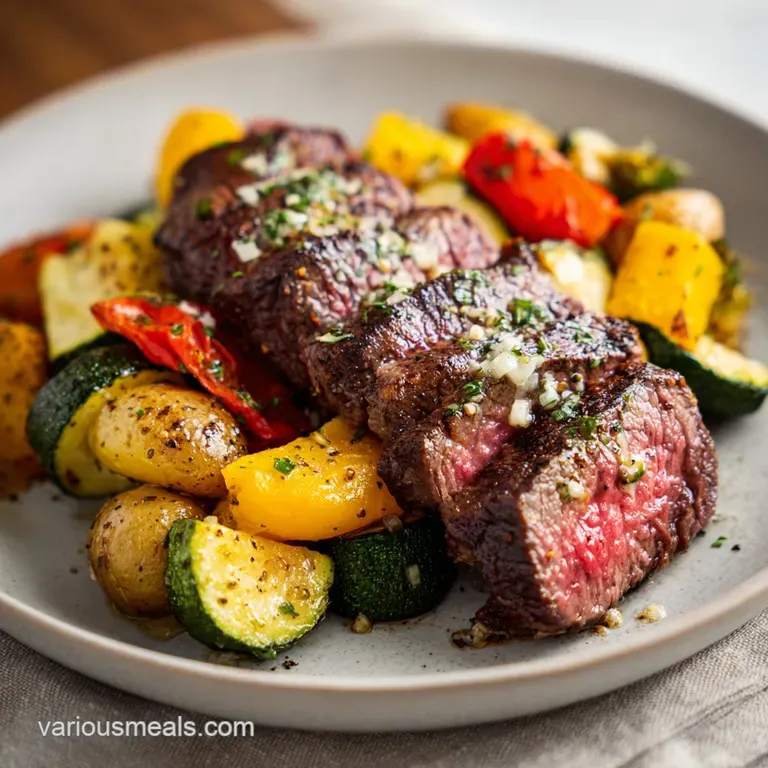
- Mastering Your Pan Seared Steak with Roasted Vegetables
- Why This Steak and Veggie Combo Actually Works
- A Deep Dive into the Steakhouse Pantry Components
- The Essential Tools for a Professional Home Sear
- Step-by-Step Guide from Kitchen Prep to Plate
- Solving Common Kitchen Hurdles and Cooking Mishaps
- Creative Ways to Personalize Your Steak Dinner
- Storage Tips for Keeping Your Leftovers Fresh
- Presentation Ideas for Serving Your Culinary Creation
- Very High in Sodium
- Recipe FAQs
- 📝 Recipe Card
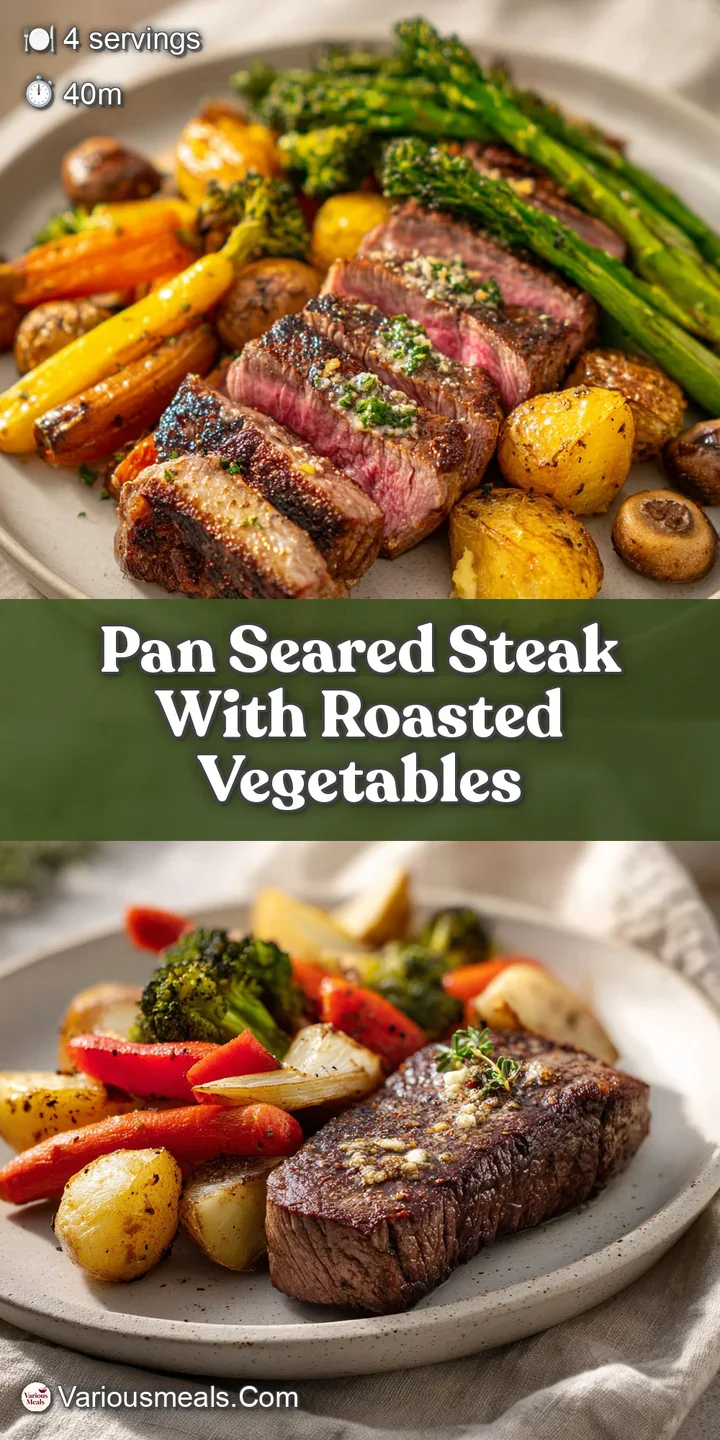
Mastering Your Pan Seared Steak with Roasted Vegetables
There is nothing quite like that aggressive sizzle when a cold, salted steak hits a cast iron pan that is just starting to wisps of smoke. It’s a sound that promises a succulent dinner, followed quickly by the aroma of smashed garlic and woody rosemary swimming in bubbling butter.
I remember the first time I tried this; I was so worried about overcooking the meat that I ended up with something gray and sad, while my broccoli turned into mush. It took a few "learning opportunities" (and a lot of smoke alarms) to realize that the secret isn't just heat it's timing and contrast.
This recipe delivers a delicious and easy pan seared steak meal prep idea with garlic butter and roasted vegetables for the week ahead. We are aiming for that glorious intersection of textures: a crust that offers a slight crunch, a velvety center, and vegetables that are charred on the outside but still have a snappy bite.
It’s the kind of traditional comfort food that feels like a steakhouse treat but fits perfectly into a busy family schedule.
I’ve learned that the best meals are built on these little victories getting the carrots just sweet enough to balance the savory steak. We aren't just making dinner; we are creating a plate where every element supports the other. Let's get into how we make that happen without the stress.
Why This Steak and Veggie Combo Actually Works
- Maillard Reaction: High heat transforms the proteins and sugars on the steak surface into hundreds of flavor compounds, creating that iconic brown crust.
- Aromatic Infusion: Fat is a flavor carrier; the butter picks up the volatile oils from the rosemary and garlic, coating the meat in a fragrant, silky finish.
- Caramelization: Roasting the 2 large carrots at high heat breaks down their natural starches into sugars, providing a sweet contrast to the salty, savory beef.
- Carryover Cooking: Internal energy continues to cook the steak even after it leaves the heat, which is why we pull it 5 degrees early to ensure it doesn't dry out.
| Steak Thickness | Target Internal Temp | Rest Time | Visual/Touch Cue |
|---|---|---|---|
| 1 inch | 130°F (Medium Rare) | 5 minutes | Firm like the base of your thumb |
| 1.25 inches | 135°F (Medium) | 7 minutes | Bouncy with slight resistance |
| 1.5 inches | 145°F (Medium Well) | 8 minutes | Very firm, no "give" when pressed |
Understanding your meat's thickness is the fastest way to stop guessing and start knowing when dinner is ready. This seared steak meal prep idea with garlic butter and roasted vegetables relies heavily on that 1.25 inch cut of top sirloin or ribeye to hold up against the high heat of the pan. Much like the technique used in my favorite one pan roasted recipe, giving the ingredients enough space to breathe in the oven ensures they roast rather than steam.
A Deep Dive into the Steakhouse Pantry Components
Ingredient Deep Dive
| Ingredient | Science Role | Pro Secret |
|---|---|---|
| Top Sirloin/Ribeye | Structural Protein | Take it out of the fridge 30 mins early to ensure even heat penetration. |
| Unsalted Butter | Emulsifier & Flavor | Use unsalted so you can control the seasoning perfectly without surprises. |
| Grapeseed Oil | High Smoke Point | This oil won't break down or taste bitter under the intense heat of a sear. |
| Kosher Salt | Moisture Drawer | Larger grains provide a better "crust" than fine table salt. |
To get the best results for this steak meal prep idea with garlic butter and roasted vegetables, you'll need these specific amounts. For the vegetables, grab 1 lb of broccoli florets, 2 large carrots (about 200g total), and 1 red bell pepper chopped into squares.
You’ll toss these with 2 tbsp extra virgin olive oil, 1 tsp kosher salt, and 0.5 tsp cracked black pepper.
For the main event, use 1.5 lbs of top sirloin or ribeye steak, ideally 1.25 inches thick. You'll need 1 tbsp of grapeseed or avocado oil for the over high heat sear, plus 2 tsp kosher salt and 1 tsp coarse black pepper specifically for the meat.
To finish, have 4 tbsp unsalted butter, 4 cloves of smashed garlic, and 3 sprigs of fresh rosemary or thyme ready to go.
| Original Ingredient | Substitute | Why It Works |
|---|---|---|
| Top Sirloin | Boneless Pork Chops | Similar cook time; just ensure they reach 145°F. |
| Broccoli | Brussels Sprouts | Adds a nuttier flavor. Note: Halve them so they cook through at the same rate as the carrots. |
| Grapeseed Oil | Ghee (Clarified Butter) | High smoke point with a rich, buttery flavor profile. |
The Essential Tools for a Professional Home Sear
You don't need a kitchen full of gadgets, but a few heavy hitters make a massive difference. A large sheet pan is non negotiable for the vegetables; if they are crowded, they will steam and turn gray instead of getting those beautiful charred edges.
For the steak, a cast iron skillet is the gold standard because it holds onto heat like a champ, which is exactly what you need for a consistent sear.
Chef's Tip: To get an even better crust, place a heavy smaller pan (or a foil wrapped brick) on top of the steak for the first 2 minutes of searing to ensure maximum surface contact.
You’ll also want a reliable meat thermometer. While the "touch test" works for some, a digital probe takes the anxiety out of the process, especially when you're working with a thick 1.5 lbs of beef.
Finally,, a pair of long tongs will keep your hands safe from the oil splatter that inevitably happens when the steak meets the pan.
step-by-step Guide from Kitchen Prep to Plate
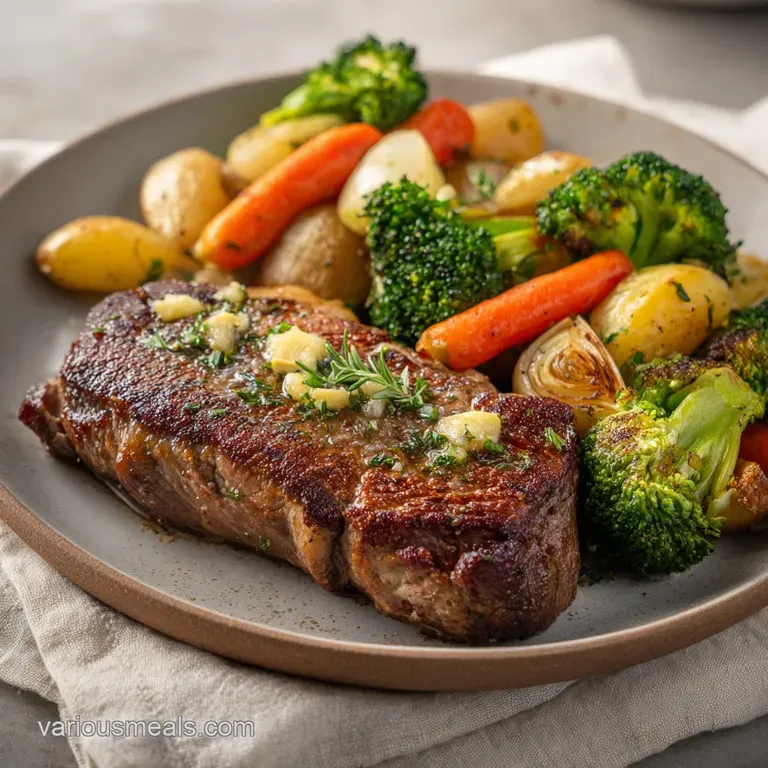
- Preheat oven to 400°F (200°C). Note: This temperature ensures the carrots soften while the broccoli crisps up.
- Toss vegetables. Combine 1 lb broccoli, sliced carrots, and 1 red bell pepper on a sheet pan with 2 tbsp olive oil and seasonings until every piece is glossy.
- Roast the mix. Slide the tray into the oven for 20-25 minutes until the broccoli edges are dark and crispy.
- Dry the steak. Pat the 1.5 lbs of steak with paper towels until the surface is completely matte. Note: Moisture is the enemy of a good sear.
- Season heavily. Press the 2 tsp kosher salt and 1 tsp coarse pepper into both sides of the meat.
- Heat the skillet. Add 1 tbsp grapeseed oil to a heavy pan over high heat until the oil shimmers and barely smokes.
- Sear the meat. Lay the steak in the pan (away from you!) and cook for 4-5 minutes until a deep brown crust forms.
- Flip and butter baste. Turn the steak over, then drop in 4 tbsp butter, 4 cloves smashed garlic, and the rosemary until the butter foams and smells nutty.
- Baste constantly. Tilt the pan and spoon the hot garlic butter over the steak for the final 3-4 minutes of cooking.
- The Mandatory Rest. Move the steak to a cutting board for at least 8 minutes until the juices settle back into the fibers.
Solving Common Kitchen Hurdles and Cooking Mishaps
Why Your Steak Stays Gray
If your meat looks boiled instead of seared, the pan wasn't hot enough, or the steak was too wet. When moisture sits on the surface of the meat, it has to evaporate before the Maillard reaction can start. By the time that happens, the inside is overcooked. Always use paper towels to get that meat bone dry.
| Problem | Root Cause | Solution |
|---|---|---|
| Burnt Garlic | Added too early | Add garlic only after the flip when the butter goes in. |
| Tough Steak | Sliced too soon | Let the meat rest for the full 8 minutes to allow fibers to relax. |
| Soggy Veggies | Overcrowded pan | Use two sheet pans or a larger one so veggies don't touch. |
Common Mistakes Checklist
- ✓ Never use extra virgin olive oil for the steak sear; it will smoke and taste bitter.
- ✓ Don't move the steak around once it hits the pan; let it sit to build that crust.
- ✓ Avoid using "table salt" for the crust; the fine grains make the meat too salty without the crunch.
- ✓ Always slice against the grain to ensure every bite is tender rather than chewy.
- ✓ Ensure the butter is foaming but not black before you start basting.
Creative Ways to Personalize Your Steak Dinner
If you want to change the flavor profile, you can easily swap the rosemary for thyme or even a bit of sage. For those who enjoy a bit of heat, adding a pinch of red pepper flakes to the garlic butter creates a lovely warmth that lingers.
This steak meal prep idea with garlic butter and roasted vegetables is a fantastic base for experimentation.
The Pan Seared Steak Then Oven Method
If you find your steak is getting too dark on the outside before the middle is ready, you can sear it for 2 minutes per side and then pop the whole cast iron skillet into the oven with the vegetables for the last 5-8 minutes.
This is a great way to handle thicker cuts of meat without burning the exterior.
For those looking for more traditional comfort, you might enjoy trying a Beef Bourguignon recipe for a slower, saucier approach to beef. But for a weeknight, this pan seared version is king.
Storage Tips for Keeping Your Leftovers Fresh
Storing this meal is simple. Keep the steak and vegetables in airtight containers in the fridge for up to 4 days. If you're using this for a seared steak meal prep idea with garlic butter and roasted vegetables, I recommend slicing the steak before storing it. This makes reheating much faster and more even.
When it comes to reheating, avoid the microwave if you can. It tends to turn the steak rubbery. Instead, flash fry the steak slices in a hot pan for 30 seconds per side, or put the whole meal in a 350°F (180°C) oven for about 10 minutes.
For zero waste, take any leftover vegetable scraps or steak trimmings and toss them into a morning omelet or a quick beef barley soup.
Presentation Ideas for Serving Your Culinary Creation
To serve this like a pro, slice the steak into 1/2 inch strips and fan them out across the plate. Pour any of those resting juices and leftover garlic butter directly over the meat right before serving that’s liquid gold!
Pile the roasted vegetables high on the side, making sure to include some of those crispy broccoli "dust" bits from the pan.
If you’re hosting a family dinner, serve everything on a large wooden board in the center of the table. It invites everyone to dig in and keeps the meal feeling approachable and warm. This recipe is all about the contrast of the bright, sweet vegetables against the rich, salty steak. It’s a meal that feels special every single time you make it. For a completely different vibe, you might also like the flavors in a Middle Eastern Roasted recipe, which also uses over high heat roasting to achieve incredible textures.
Very High in Sodium
1480 mg mg of sodium per serving (64% of daily value)
The American Heart Association recommends limiting sodium intake to about 2,300mg per day.
Sodium Reduction Tips for this Recipe
-
Reduce Salt by Half-25%
Halve the amount of kosher salt used for both the vegetables and steak. This simple change can significantly lower the sodium content without drastically affecting the flavor profile. Consider using 0.5 tsp for vegetables and 1 tsp for steak.
-
Unsalted Butter-15%
Ensure that the butter used is unsalted. Salted butter can add a considerable amount of sodium. Choose unsalted varieties and adjust salt to taste if needed, but do so sparingly.
-
Skip Brining or Salting Steak Early-10%
Avoid brining the steak or heavily salting it far in advance of cooking. This practice draws moisture from the meat while allowing the salt to penetrate deeply. Only add salt just before cooking.
-
Increase Vegetable Portion-10%
Increasing the amount of vegetables (broccoli, carrots, bell pepper) proportionally to the steak naturally reduces the overall sodium per serving. Add another half pound of vegetables, maintaining the same amount of salt for the full vegetable portion.
-
Enhance Flavor with Herbs and Spices
Instead of relying heavily on salt, experiment with different herbs and spices like smoked paprika, garlic powder (use fresh smashed garlic in this recipe), onion powder, or chili flakes to enhance the flavor of the vegetables and steak. These add depth and complexity without increasing sodium.
Recipe FAQs
What to do with garlic butter on steak?
Use it for basting immediately after flipping the steak. Tilt the pan and spoon the foamy, aromatic garlic butter mixture repeatedly over the steak's surface during the last few minutes of cooking to infuse flavor.
Do you put garlic butter on steak before or after cooking?
Add the butter after the initial sear is complete. Adding butter too early causes it to burn before the steak finishes cooking; it is meant to be an aromatic basting agent, not a cooking fat for the high heat sear.
What is the 3 3 3 3 rule for steaks?
This specific rule is not standard for pan-searing; use time based searing instead. While many cooks use simple timing rules, rely on visual cues, internal temperature, and a resting period instead, as steak thickness varies greatly.
What is the 3 3 2 2 rule for steaks?
This likely refers to a 3-minute sear per side, followed by 2 minutes of resting per inch of thickness. However, always prioritize reaching your target internal temperature over strict timing, especially when dealing with different cuts or oven finishing.
How to ensure roasted vegetables don't steam in the oven?
Spread vegetables in a single layer with space between each piece on the sheet pan. Overcrowding traps moisture released during roasting, leading to steaming rather than caramelization; if you have too many, use two pans.
How to incorporate the garlic butter flavor into vegetables?
Toss the vegetables with residual butter and pan drippings after the steak rests. If you prefer a richer flavor profile for your sides, consider adapting the savory components of our Slow Cooker Honey recipe for a sweeter vegetable glaze.
When should I slice the steak after cooking?
Rest the steak for a minimum of 5 to 8 minutes before slicing against the grain. Cutting immediately releases all the flavorful internal moisture, resulting in dry meat; resting allows the muscle fibers to relax and reabsorb the juices.
Pan Seared Steak Veggies
Ingredients:
Instructions:
Nutrition Facts:
| Calories | 618 kcal |
|---|---|
| Protein | 41g |
| Fat | 44g |
| Carbs | 16g |
| Fiber | 5g |
| Sugar | 6g |
| Sodium | 1480mg |
