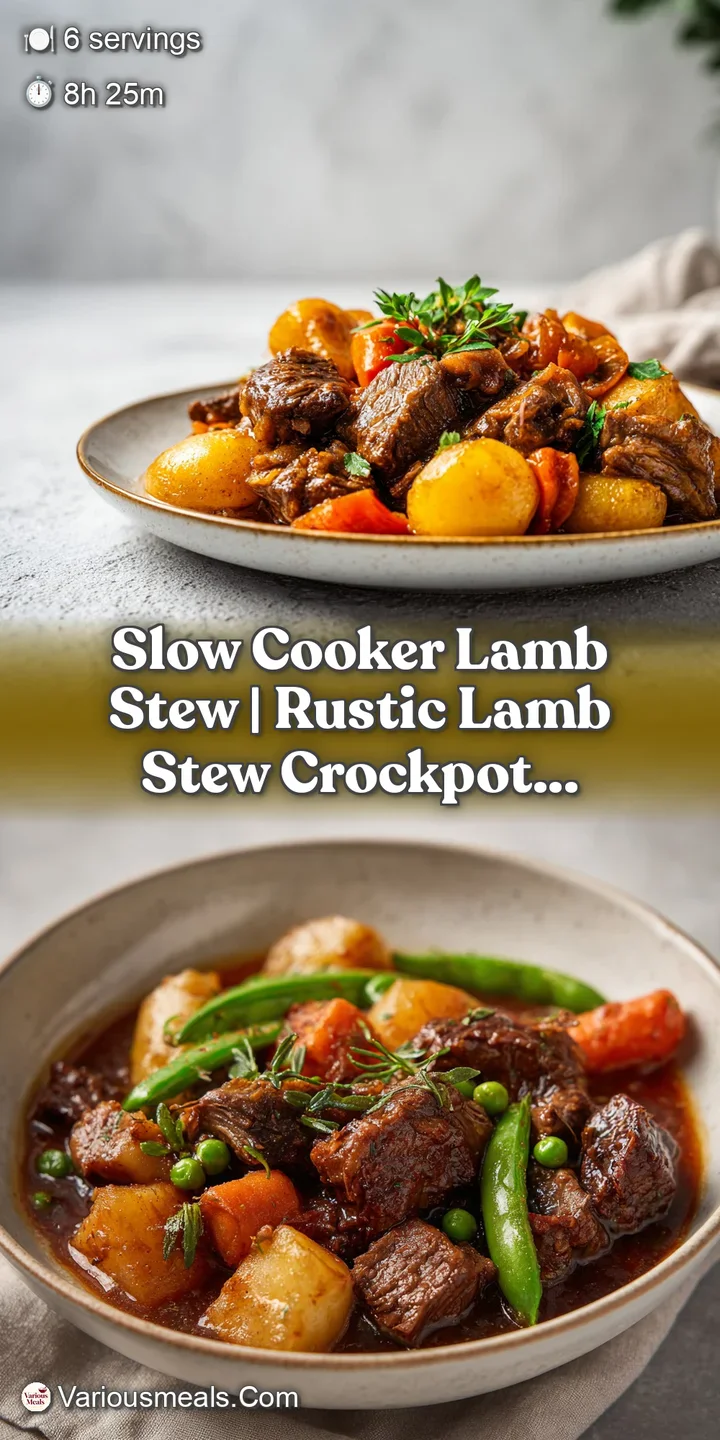
Slow Cooker Lamb Stew: Tender and Rich
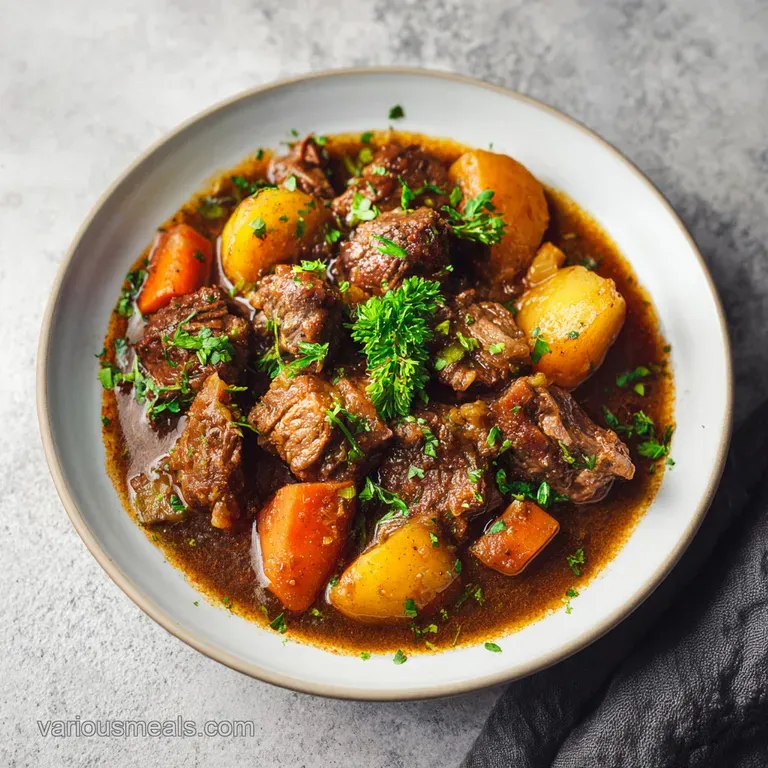
- Time: Active 25 minutes, Passive 8 hours, Total 8 hours 25 mins
- Flavor/Texture Hook: Earthy rosemary and rich wine paired with melt in-your mouth lamb.
- Perfect for: A cozy Sunday family dinner or a rainy day comfort meal.
- Why This Works
- Precision Recipe Specs
- Ingredient Deep Dive
- The Alchemy of Elements
- Essential Tools for Success
- Bringing Your Hearty Meal Together
- Avoiding Common Kitchen Disasters
- Scaling and Mix It Up
- Debunking Stew Myths
- Keeping Your Leftovers Fresh
- Perfect Complements for Your Table
- Recipe FAQs
- 📝 Recipe Card
Why This Works
Building a great stew is actually a bit of a dance between temperature and time. When we cook lamb shoulder, we are dealing with a lot of connective tissue. That tissue is tough as nails if you cook it fast, but it’s a goldmine of flavor if you’re patient.
- Collagen Conversion: The long, 8 hours cook time at a low temperature slowly melts collagen into gelatin, which gives the stew that luxurious, lip smacking mouthfeel.
- The Maillard Magic: Searing the meat first creates new flavor molecules that aren't present in raw meat, which then infuse the entire liquid as it simmers.
- Starch Stabilization: Using Yukon Gold potatoes is a deliberate choice because their medium starch content helps thicken the sauce without them completely disintegrating into mush.
- Acidity Balance: The red wine provides necessary acid to cut through the fatty richness of the lamb, brightening the overall flavor profile.
| Method | Time | Texture | Best For |
|---|---|---|---|
| Slow Cooker | 8 hours | Shatteringly tender, deep melded flavors | Hands off, busy days |
| Stovetop | 3 hours | Firm but tender, bright vegetable notes | When you have an afternoon home |
| Dutch Oven | 3 hours 30 mins | Caramelized edges, very thick sauce | Maximum flavor development |
You really have to decide what kind of day you’re having. If I’m heading out for a long walk or have a mountain of laundry to tackle, the slow cooker is my best friend. The way the flavors meld over those eight hours is something you just can't rush with higher heat.
It's that slow, gentle heat that keeps the meat juicy rather than squeezing the moisture out.
Precision Recipe Specs
When we talk about cooking meat for this long, people often worry about it getting dry. It sounds counterintuitive, right? How can meat in liquid get dry? But if the heat is too high, the muscle fibers tighten up and squeeze out their juices. That’s why we aim for that "Low" setting.
It keeps the temperature just below a rolling boil, which is the sweet spot for lamb shoulder.
| Thickness | Internal Temp | Rest Time | Visual Cue |
|---|---|---|---|
| 1.5 inch chunks | 195°F - 205°F | 10 minutes | Meat flakes apart with a dull spoon |
| 2 inch chunks | 195°F - 205°F | 10 minutes | Center is completely soft and dark |
| 1 inch chunks | 190°F - 200°F | 5 minutes | Pieces may lose shape but stay moist |
Chef's Tip: Use a thermometer if you're unsure. While we usually think of 145°F for medium rare lamb, for a stew, we need to hit that higher range to ensure the "shred ability" we're after.
Ingredient Deep Dive
Every single item in this pot has a specific job to do. We aren't just filling space; we are building layers of flavor. From the choice of oil to the specific type of potato, it all matters for the final result.
| Ingredient | Science Role | Pro Secret |
|---|---|---|
| Lamb Shoulder | Provides fat and collagen for body | Trim the hard white fat but leave the marbled bits for flavor |
| Dry Red Wine | Acids break down proteins and add tannins | Use a wine you'd actually drink; if it tastes bad in a glass, it'll taste bad in the pot |
| Yukon Gold Potatoes | Medium starch acts as a natural thickener | Keep the skins on for extra nutrients and to help them hold their shape |
| Tomato Paste | Adds glutamates for "umami" depth | Sauté it for 30 seconds with the garlic to remove the "tinny" raw taste |
I’ve found that using a high-quality beef stock makes a world of difference. If you use something too thin or salty, the stew loses its soul. If you’re feeling adventurous, you could even try a Turkish Cabbage Stew another time if you enjoy these hearty, traditional flavors.
The Alchemy of Elements
Before we start searing, let's look at our lineup. We are using 2 lbs of lamb shoulder. This is the king of stew meats. Don't let anyone talk you into using leg of lamb; it’s too lean and will end up stringy after eight hours.
For the Foundation
- 2 lbs Lamb shoulder: Cut into 1.5 inch chunks. Why this? High fat/collagen content ensures tenderness.
- Substitute: Beef chuck roast. It has a similar fat to meat ratio.
- 3 tbsp All purpose flour: For dredging. Why this? Helps with browning and thickens the sauce later.
- Substitute: Cornstarch (use half the amount) for a gluten-free option.
- 1 tsp Sea salt & 1/2 tsp Black pepper: Seasoning basics.
- 2 tbsp Avocado oil: High smoke point. Why this? Prevents burning during the over high heat sear.
- Substitute: Grapeseed oil or vegetable oil.
For the Deglaze and Liquids
- 1 cup Dry red wine: Use Cabernet or Syrah. Why this? Adds complexity and acidity.
- Substitute: Extra beef stock with a splash of balsamic vinegar.
- 2 cups high-quality beef stock: The liquid base.
- 2 tbsp Tomato paste: For body and color.
- 1 tbsp Worcestershire sauce: The secret umami punch.
For the Hearty Aromatics
- 1.5 lbs Yukon Gold potatoes: 2 inch chunks. Why this? They stay creamy without falling apart.
- Substitute: Red bliss potatoes.
- 3 Large carrots: Thick coins. Why this? Adds natural sweetness to balance the wine.
- 1 Large yellow onion: Diced.
- 3 Garlic cloves: Smashed and minced.
- 2 Stalks celery: Sliced.
- Fresh Herbs: 2 sprigs rosemary, 3 sprigs thyme, 1 bay leaf.
For the Final Flourish
- 1 cup Frozen peas: Added at the end. Why this? Adds a pop of bright color and sweetness.
- 2 tbsp Fresh parsley: Chopped for garnish.
Essential Tools for Success
You don't need a kitchen full of gadgets, but a few specific items will make your life much easier. First and foremost, you need a reliable slow cooker. I use a standard 6 quart model, which is plenty of room for 6 servings.
You also really need a heavy bottomed skillet. A cast iron pan is my go to for searing the lamb. It holds heat so well that the meat gets that beautiful "mahogany" crust without cooling the pan down. If you use a thin pan, the meat will just steam and turn grey, which is a tragedy for flavor.
Finally,, a good wooden spoon is vital for "deglazing." When you pour that wine into the hot pan after browning the meat, you need to scrape up every single bit of that "fond." That’s where the magic is hidden.
Bringing Your Hearty Meal Together
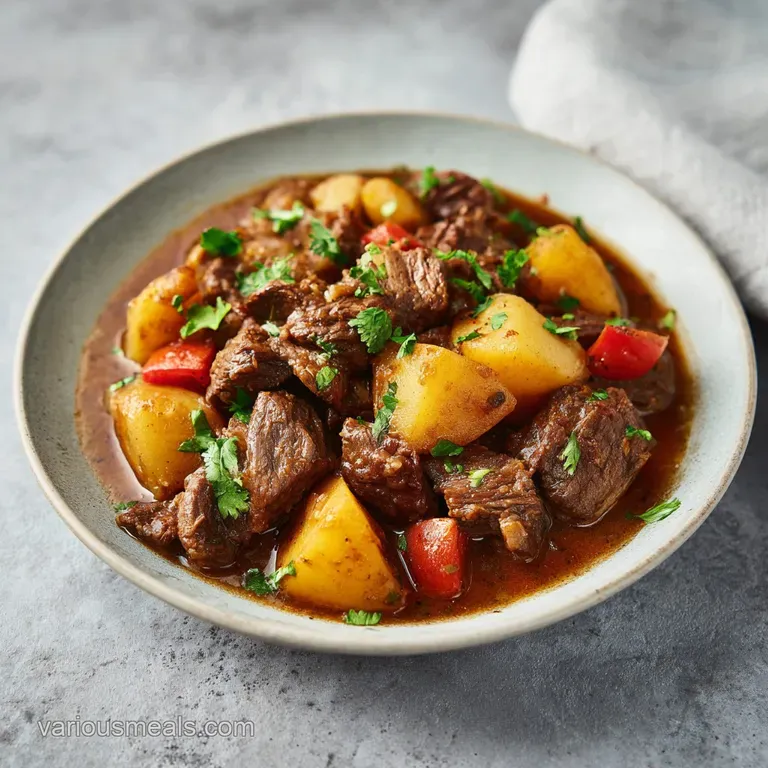
- Dredge the lamb. Toss your 2 lbs of lamb chunks with the flour, salt, and pepper in a large bowl. Ensure every side is coated; this flour is going to be our thickening agent later.
- Sear in batches. Heat the avocado oil in your skillet until it's shimmering. Add the lamb, but don't crowd the pan! If you put too much in at once, the temperature drops and the meat won't brown. Look for a dark mahogany crust. Transfer the browned pieces to the slow cooker.
- Deglaze the pan. Pour that cup of red wine into the hot skillet. It will hiss and steam that’s good! Use your wooden spoon to scrape the bottom. Let it bubble for 2 minutes until it reduces slightly.
- Combine the liquids. Pour the wine reduction, beef stock, tomato paste, and Worcestershire sauce into the slow cooker. Give it a gentle stir to wake everything up.
- Layer the vegetables. Add the potatoes, carrots, onion, garlic, and celery. Don't worry if they aren't fully submerged; they will release moisture as they cook.
- Add the aromatics. Place the rosemary, thyme, and bay leaf right on top. This allows their oils to infuse the steam and drip back down into the stew.
- Set and forget. Cover the pot. Cook on Low for 8 hours. If you're in a rush, you can do High for 4 hours, but Low truly gives the best texture.
- The final touch. Once the timer is up, fish out the herb sprigs and the bay leaf. Stir in the frozen peas. Let them sit for 5 minutes in the residual heat.
- Garnish and serve. Ladle the thick, steaming stew into deep bowls and top with fresh parsley.
Avoiding Common Kitchen Disasters
Even with a slow cooker, things can go sideways if you aren't careful. The most common issue I see is people adding too much liquid. Remember, vegetables like onions and celery are mostly water, and they will release all of that into the pot over eight hours.
If you start with too much broth, you’ll end up with soup, not stew.
Why Your Stew is Watery
If you open the lid and it looks too thin, don't panic. The easiest fix is to take about half a cup of the liquid, whisk in a tablespoon of flour or cornstarch, and stir it back in for the last 30 minutes.
Also, make sure you didn't skip the flour coating on the meat that's your primary insurance policy against a thin sauce.
To Prevent Mushy Vegetables
The size of your vegetable cuts matters immensely. If you cut your carrots into tiny thin rounds, they will be gone by hour six. I like "thick coins" for carrots and big 2 inch chunks for potatoes. This ensures they have enough structure to survive the long haul.
| Problem | Root Cause | Solution |
|---|---|---|
| Tough Lamb | Wrong cut of meat or undercooked | Use shoulder and ensure it hits 195°F internally |
| Bland Flavor | Didn't sear the meat or deglaze | Never skip the browning step; it's the foundation of flavor |
| Greasy Surface | Too much untrimmed fat on the lamb | Trim the hard exterior fat before dicing |
Common Mistakes Checklist
- ✓ Pat the lamb dry with paper towels before flouring (helps the crust form).
- ✓ Don't peek! Opening the lid lets out heat and can add 15-20 minutes to the cook time each time you do it.
- ✓ Use "Low" heat whenever possible for the most tender fiber breakdown.
- ✓ Add the peas only at the very end to keep them bright green and "snappy."
Scaling and Mix It Up
If you are cooking for a crowd, you can easily double this recipe, but you’ll need a large 7 or 8 quart slow cooker. When scaling up, keep the spices at about 1.5x rather than a full double to avoid over seasoning, and you might need to reduce the total liquid by about 10% since less evaporation occurs in a fuller pot.
For a smaller household, you can halve everything. Use a smaller 3 quart slow cooker if you have one, or just keep an eye on it it might cook a bit faster, maybe around 6 hours on low. If you're looking for other easy slow cooker ideas, you might love this Sloppy Joes recipe which is another crowd pleaser that handles scaling beautifully.
For an Irish Lamb Stew Twist
Traditional Irish versions often skip the red wine and use extra stock or even a splash of stout beer (like Guinness). You can also add pearl barley for a thicker, more porridge like consistency. Just add 1/2 cup of rinsed pearl barley at the start of the cook.
For Lamb Stew with Dumplings
About 45 minutes before the stew is done, you can drop spoonfuls of biscuit dough (homemade or store-bought) right onto the surface of the stew. Put the lid back on and don't touch it! The steam will cook the dumplings until they are fluffy and light.
Debunking Stew Myths
One of the biggest myths is that "searing seals in the juices." Science tells us that's just not true; moisture is lost regardless of the sear. However, we sear for the flavor.
The crust creates complex sugars and proteins that make the gravy taste like it came from a five star restaurant instead of a plastic bag.
Another myth is that you can't overcook meat in a slow cooker. While it's hard to "burn" it, you can definitely overcook it to the point where the fibers turn to mush and lose all their pleasant texture. Stick to that 8 hour window for the best results. Finally, don't believe that you have to use expensive wine.
A decent $10 bottle of Cabernet is perfect the long cook time will mellow out any harshness anyway.
Keeping Your Leftovers Fresh
This stew is actually better the next day. As it sits in the fridge, the flavors continue to marry and the sauce thickens even further. I usually store it in airtight glass containers. It will stay good in the fridge for up to 4 days.
Freezing Guidelines
If you want to freeze it, this stew handles it quite well for about 3 months. Just be aware that potatoes can sometimes get a slightly grainy texture after being frozen and thawed. To reheat, I recommend putting it back in a pot on the stove over low heat.
Add a splash of water or broth to loosen the sauce back up.
Zero Waste Tips
Don't throw away those herb stems! You can keep them in a bag in the freezer to use next time you're making a homemade bone broth. Also, if you have leftover sauce but no meat, it makes an incredible "gravy" over a pile of mashed cauliflower or even tossed with some thick pappardelle pasta.
Perfect Complements for Your Table
When it comes to serving, this stew is a meal in itself, but a few sides can really round it out. A thick slice of crusty sourdough bread is non negotiable in my house you need something to mop up every last drop of that red wine gravy.
If you want something a bit lighter, a simple arugula salad with a sharp lemon vinaigrette provides a nice peppery contrast to the rich, heavy stew. And if you're really going for the ultimate comfort experience, serving this over a bed of extra creamy mashed potatoes (yes, even though there are potatoes in the stew) is a total pro move.
It’s a double potato delight that nobody ever complains about!
Recipe FAQs
How to make a lamb stew in a slow cooker?
Coat lamb in seasoned flour, sear in a hot skillet, and combine with liquids and vegetables in the slow cooker. Cook on Low for 8 hours or High for 4 hours until tender, finishing with peas stirred in at the very end.
What are common mistakes in slow cooking lamb?
Skipping the sear or opening the lid repeatedly are the biggest errors. Patting meat dry before dredging in flour ensures a deep mahogany crust, while keeping the lid closed maintains the necessary thermal stability.
How to cook lamb for diabetics?
Focus on lean portions of lamb shoulder and increase the ratio of non-starchy vegetables like celery and carrots. This recipe uses nutrient dense Yukon Gold potatoes in controlled portions, similar to how we manage starch levels in our silky Tuscan orzo.
What are common mistakes in lamb stew?
Overcooking the peas or failing to deglaze the skillet properly ruins the depth of flavor. Always scrape the fond from the pan with red wine to capture the rich juices before adding your aromatics to the slow cooker.
Is it necessary to use a very expensive cut of lamb?
No, this is a common misconception. Lamb shoulder is actually the preferred cut for this method because its connective tissue breaks down during the 8-hour low-heat cycle to create a superior, fork tender texture.
Can I speed up the cooking time on High?
Yes, you can cook on High for 4 hours instead of 8. While the flavor profile remains consistent, using the Low setting is generally recommended to allow the fibers to relax more gradually for the most succulent result.
How do I ensure the stew thickens properly?
The flour coating on the lamb chunks acts as a natural thickening agent for the beef stock and red wine base. Tossing the meat in the flour salt-pepper mixture before searing is the critical step to creating a velvety consistency without needing additional starches.
Slow Cooker Lamb Stew
Ingredients:
Instructions:
Nutrition Facts:
| Calories | 608 calories |
|---|---|
| Protein | 29.8 grams |
| Fat | 34.2 grams |
| Carbs | 33.5 grams |
| Fiber | 5.4 grams |
| Sugar | 4.8 grams |
| Sodium | 585 milligrams |
