Spaghetti Carbonara: Traditional Italian Recipe
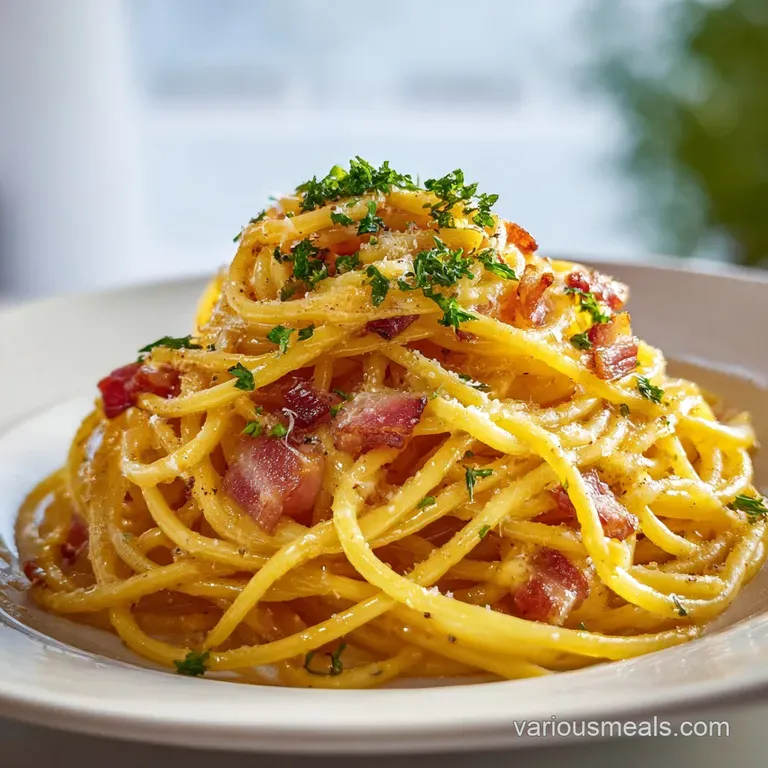
- Time: Active 10 mins, Passive 15 mins, Total 25 mins
- Flavor/Texture Hook: Savory, velvety sauce with crispy, golden pork
- Perfect for: Cozy date nights or a rewarding solo dinner
- Achieving the Velvety Texture of Authentic Spaghetti Carbonara
- Key Timing and Technical Specs for Italian Comfort
- Essential Ingredients for Building Layers of Savory Flavor
- The Right Tools for a Smooth Emulsion Process
- Layering Flavors Step by Step for a Glossy Finish
- How to Fix a Broken Sauce and Other Hurdles
- Smart Swaps While Keeping the Traditional Soul Intact
- Best Ways to Keep Leftovers Silky and Warm
- Side Dishes to Balance This Rich Roman Classic
- Critical in Sodium
- Recipe FAQs
- 📝 Recipe Card
Achieving the Velvety Texture of Authentic Spaghetti Carbonara
The first time I tried to make this, it was a disaster. I was standing in my tiny kitchen, the smell of sizzling pork filling the air, and I felt like a pro. Then, I tossed the eggs into the hot pan. Within seconds, I didn't have a sauce; I had spaghetti with scrambled eggs. It was a gritty, dry mess.
I almost gave up on the dish entirely until an Italian friend told me the secret: the heat is your friend until it isn't. You have to treat the eggs like a delicate custard, not an omelet.
Now, whenever I hear that distinct sizzle of guanciale hitting a cold pan, I get excited. It’s the sound of fat rendering out, turning into a liquid gold that will eventually bind everything together.
When you get it right, the sauce isn't just "wet" it's a shimmering, glossy coat that clings to every strand of pasta. There’s a specific aroma that hits you right at the end the sharp tang of Pecorino Romano mixed with the woodsy heat of toasted black pepper. It’s pure comfort.
We’ve all been there with the scrambled egg fail, but honestly, it’s a rite of passage. Once you understand the dance between the boiling pasta water and the residual heat of the pan, you'll never look back.
This isn't just about eating; it’s about that moment when you twirl your fork and see that velvety emulsion. Trust me, once you nail this technique, you’ll be making it at least once a week. It’s approachable, soulful, and honestly better than most restaurant versions I've paid far too much for.
Key Timing and Technical Specs for Italian Comfort
Emulsification: The combination of pasta starch and egg proteins creates a stable, creamy sauce without needing dairy.
Fat Rendering: Slow heating the guanciale allows the cellular structure of the fat to break down without burning the meat.
Starch Gelatinization: Using a small amount of highly concentrated pasta water provides the "glue" that keeps the oil and water from separating.
Residual Heat Utilization: The sauce cooks using only the heat retained by the pasta and the pan, preventing the egg proteins from curdling.
| Method | Time | Texture | Best For |
|---|---|---|---|
| Stovetop (Classic) | 15 minutes | Silky and emulsified | Maximum flavor and tradition |
| Oven (Fat Rendering) | 20 minutes | Uniformly shatter crisp | Larger batches of guanciale |
| Microwave (Quick) | 12 minutes | Often gritty or dry | Emergency hunger only |
The stovetop method is the undisputed champion for Spaghetti Carbonara because it gives you total control over the emulsion. While you can render pork in the oven to get that perfectly even, "shatter" texture, you lose the ability to toss the pasta directly into the rendered fat while it’s at its peak temperature.
The stovetop allows the pasta to absorb the pork flavor while it finishes its last minute of cooking.
Essential Ingredients for Building Layers of Savory Flavor
| Component | Science Role | Pro Secret |
|---|---|---|
| Egg Yolks | Emulsifier & Fat | Use room temp eggs to avoid shocking the sauce |
| Pecorino Romano | Salt & Protein | Grate it "cloud fine" so it melts instantly |
| Guanciale | Flavor & Liquid Fat | Start in a cold pan to render maximum oil |
| Black Peppercorns | Aromatic Heat | Toast whole berries before crushing for depth |
The soul of a traditional spaghetti alla carbonara lies in the quality of the ingredients. Since there are so few, each one has to pull its weight.
- 400g (14 oz) high-quality dried Spaghetti: Why this? Rougher surfaces (bronze cut) hold the velvety sauce much better than smooth pasta.
- 200g (7 oz) Guanciale: Why this? Cured pork jowl has a higher fat to meat ratio than pancetta, providing the sauce base.
- 1 tbsp Black peppercorns: Why this? Freshly crushed pepper provides a floral heat that pre ground dust simply lacks.
- 4 Large egg yolks: Why this? Yolks provide the rich, custardy mouthfeel and deep golden color.
- 1 Large whole egg: Why this? The extra white adds a bit of moisture to keep the sauce from becoming too thick.
- 60g (2 oz) Pecorino Romano: Why this? Its sharp, salty profile is the primary seasoning for the entire dish.
- 20g (0.7 oz) Parmigiano Reggiano: Why this? Adds a nutty sweetness that balances the saltiness of the Pecorino.
- 2 tbsp Sea salt: Why this? Essential for seasoning the pasta water, which flavors the noodles from the inside.
The Right Tools for a Smooth Emulsion Process
You don't need a kitchen full of gadgets, but a few specific items make the "emulsion window" much easier to hit. A large stainless steel or carbon steel skillet is better than non stick here because the pasta needs to "grip" the pan to create friction for the sauce.
I usually reach for my 12 inch skillet to ensure there's plenty of room for tossing.
A fine grater, such as a Microplane, is also non negotiable. If your cheese is in thick shreds, it won't melt into the eggs; it will just clump together into a chewy mess. You want the cheese to look like fallen snow. Finally, a sturdy set of tongs will be your best friend for moving the pasta from the pot to the pan.
Don't worry about draining the pasta perfectly that extra bit of water is actually a secret weapon.
Chef's Tip: Freeze your guanciale for about 10 minutes before slicing. It firms up the fat, allowing you to cut those 1/2 inch batons with precision so they cook evenly.
Layering Flavors step-by-step for a Glossy Finish
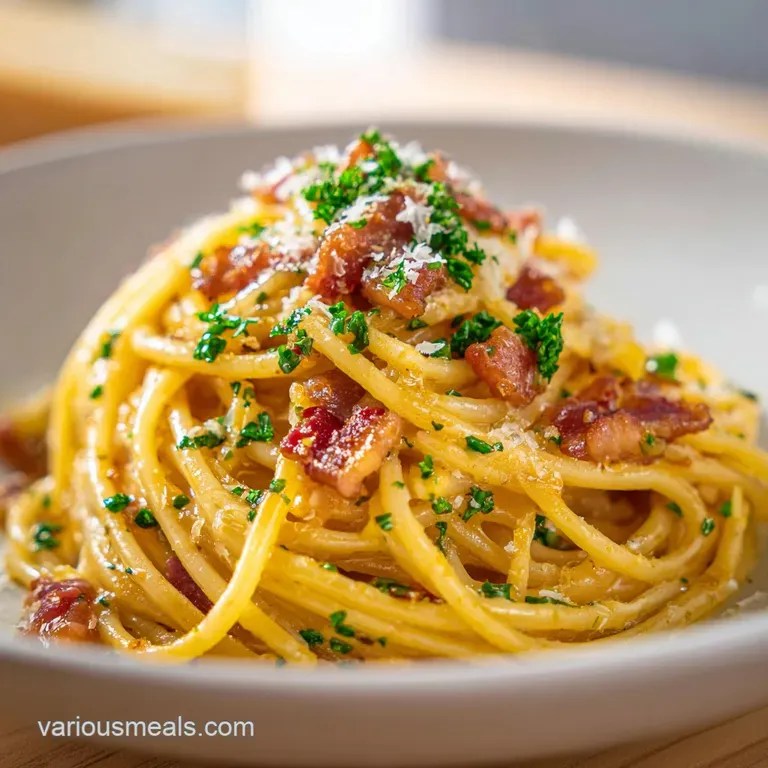
- Prep the pork. Slice the 200g guanciale into 1/2 inch batons. Note: This size ensures the outside gets crispy while the inside stays chewy.
- Boil the water. Fill a large pot with water and add the 2 tbsp sea salt. Wait until it's a rolling boil before adding the 400g spaghetti.
- Render the fat. Place guanciale in a cold skillet over medium heat. Cook until the fat is translucent and the edges are mahogany (about 8-10 mins).
- Toast the pepper. While the pork cooks, crush 1 tbsp peppercorns. Add them to the skillet with the pork for the last 2 minutes until you smell a toasted, spicy aroma.
- Mix the "Cremina." In a separate bowl, whisk 4 yolks, 1 whole egg, 60g Pecorino, and 20g Parmigiano. Whisk until it forms a thick, pale paste.
- Temper the eggs. Ladle about 2 tablespoons of starchy pasta water into the egg mixture while whisking constantly. Note: This prevents the eggs from scrambling when they hit the hot pasta.
- Combine pasta and pork. Use tongs to transfer the spaghetti directly into the skillet with the rendered guanciale. Toss for 1 minute so the pasta is fully coated in fat.
- The Off Heat Marriage. Remove the skillet from the heat entirely. Wait 30 seconds for the pan to cool slightly.
- Emulsify the sauce. Pour the egg and cheese mixture over the pasta. Toss vigorously and constantly, adding splashes of pasta water as needed.
- Final adjustment. Continue tossing until the sauce thickens into a glossy, velvety coating that clings to the noodles.
How to Fix a Broken Sauce and Other Hurdles
Even if you're careful, things can go sideways. The most common issue is the sauce "breaking," where the fat separates from the eggs. This usually happens because the pan was too hot or there wasn't enough pasta water to bridge the gap between the fat and the protein.
If you see oily streaks instead of a creamy sauce, don't panic.
The fix is almost always more pasta water and more movement. This is similar to the emulsification technique I talk about in my Seafood Pasta recipe. The starch in that water acts as a stabilizer. If the eggs have already started to scramble, there's no going back to "silky," but you can save the flavor by adding a bit more cheese and a splash of water to turn it into a rustic, chunky sauce. It'll still taste great, I promise.
Fixing Scrambled Egg Clumps
This happens when the egg proteins denature too quickly due to high heat. To prevent this, always take the pan off the burner and let it rest for a moment. If it’s already happening, you can try to whisk in a tablespoon of cold pasta water to lower the temperature immediately, but results vary.
Thickening a Thin Sauce
If your sauce looks more like soup than silk, you likely added too much water or didn't use enough cheese. The solution is simple: add a handful of finely grated Pecorino and keep tossing. The cheese acts as a thickening agent.
Balancing Excess Salt
Guanciale and Pecorino are both very salty. If the final dish is overwhelming, a tiny squeeze of lemon juice (though not traditional) or a bit more black pepper can help cut through the saltiness.
| Problem | Root Cause | Solution |
|---|---|---|
| Gritty Sauce | Cheese wasn't grated fine enough | Use a Microplane and whisk cheese into eggs thoroughly before adding to pasta |
| Dry Pasta | Not enough pasta water added during tossing | Reserved water is key; add 1 tbsp at a time until it glimmers |
| Bland Flavor | Not enough pepper or poor quality pork | Toast the pepper in the rendered fat and use authentic guanciale if possible |
Common Mistakes Checklist
- ✓ Never use cold eggs; let them reach room temperature to ensure they emulsify smoothly.
- ✓ Don't throw away all the pasta water; it’s the most important ingredient for the sauce texture.
- ✓ Avoid using pre grated cheese; the anti clumping agents will prevent it from melting properly.
- ✓ Always remove the pan from the heat source before adding the egg mixture.
- ✓ Be generous with the black pepper; it’s meant to be a prominent flavor, not a garnish.
Smart Swaps While Keeping the Traditional Soul Intact
| Original Ingredient | Substitute | Why It Works |
|---|---|---|
| Guanciale | Pancetta or thick cut bacon | Similar fat content. Note: Bacon adds a smoky flavor not found in traditional versions |
| Pecorino Romano | Extra Parmigiano Reggiano | Milder and less salty. Note: Use more salt in the pasta water to compensate |
| Spaghetti | Rigatoni or Bucatini | Great for catching sauce. Note: Bucatini offers a fun, hollow texture |
If you are looking for a lighter vibe or a different pasta shape altogether, you might enjoy my Orzo Pasta Salad recipe. While it's a completely different flavor profile, it uses similar principles of balancing fat and acid.
Substituting Traditional Guanciale
If you can't find guanciale, pancetta is the next best thing. It’s cured belly instead of jowl, so it's a bit meatier and less "funky." If you use bacon, try to find a non smoked variety so the smoke doesn't mask the delicate cheese flavors.
Just remember to adjust your salt levels, as bacon is often less salty than the Italian cured meats.
Vegetarian Adaptation Guidelines
To make this vegetarian, you'll need to replace the umami from the pork. Smoked salt or a tiny bit of liquid smoke added to sautéed mushrooms (like Shiitake or King Oyster) works surprisingly well.
You won't have the rendered pork fat, so you'll need to use a high-quality extra virgin olive oil to create the base for the sauce.
Best Ways to Keep Leftovers Silky and Warm
Storage: Carbonara is best eaten immediately, but it will keep in the fridge for up to 2 days. The sauce will thicken and "set" as it cools, so it won't be as creamy when you pull it out. Keep it in an airtight container to prevent the cheese from picking up fridge odors.
Reheating: This is the tricky part. If you microwave it, the eggs will cook and become rubbery. Instead, put the pasta in a skillet with a splash of water or milk over very low heat. Stir constantly just until it’s warmed through and the sauce loosens up again.
Zero Waste: If you have leftover guanciale skin, don't throw it away! Drop it into a simmering pot of beans or a vegetable soup to add a rich, salty depth of flavor. Any leftover egg whites can be used for a quick meringue or added to your morning scrambled eggs.
Side Dishes to Balance This Rich Roman Classic
Since Spaghetti Carbonara is quite heavy and fatty, you want sides that offer contrast. A simple arugula salad with a sharp lemon vinaigrette is my go to. The bitterness of the greens and the acidity of the lemon help "reset" your palate between bites of the rich, creamy pasta.
Roasted broccoli with a pinch of red pepper flakes also works beautifully. The charred edges of the broccoli mimic the crispiness of the guanciale, while the vegetable itself provides some much needed fiber. If you're looking for more inspiration for balanced meals, check out my Cottage Cheese Alfredo recipe which uses a similar "creamy without cream" philosophy.
Myth: Traditional Carbonara uses heavy cream. Truth: Real carbonara relies entirely on the emulsion of egg yolks, cheese, and pasta water. Adding cream is often done in restaurants to make the sauce more "stable" for holding, but it masks the sharp flavor of the Pecorino and the richness of the pork.
Myth: You should rinse your pasta after boiling. Truth: Never rinse your pasta for carbonara! You need the starch on the surface of the noodles to help the sauce stick. Rinsing also cools the pasta down, making it impossible to melt the cheese and create that velvety emulsion.
Myth: The whole egg is better than just yolks. Truth: While some recipes use whole eggs, using a higher ratio of yolks (like the 4:1 ratio here) provides a much richer, more stable sauce. The whites can sometimes make the sauce feel "bubbly" or thin rather than creamy.
Critical in Sodium
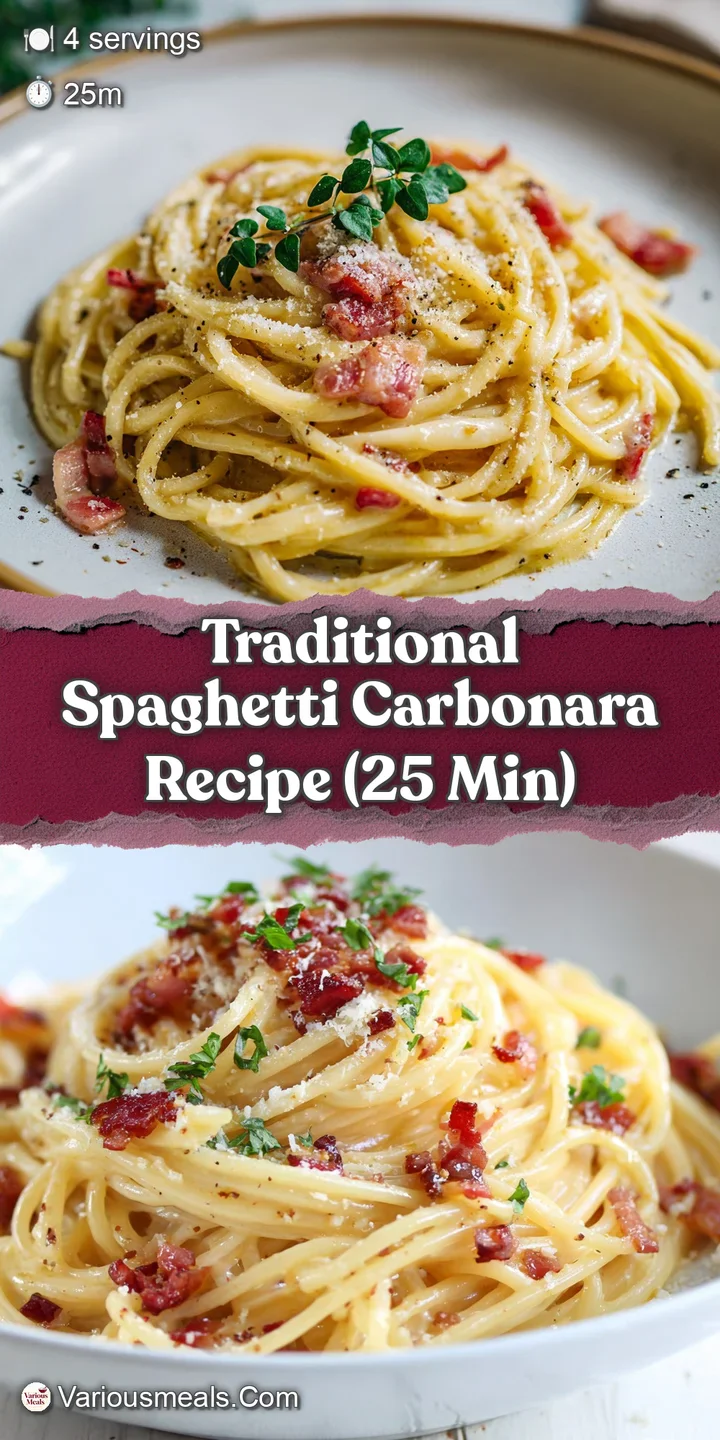
1240 mg of sodium per serving (54% of daily value)
The American Heart Association recommends a daily sodium limit of about 2,300mg.
Tips to Reduce Sodium in your Carbonara
-
Reduce Guanciale-25%
Guanciale is a significant source of sodium. Reduce the amount by 25% (to 150g) or substitute with a lower sodium cured pork product like pancetta or even lean bacon, keeping in mind that pancetta and bacon have different flavor profiles and will alter the dish's overall taste.
Always check the sodium content on the product's nutrition label and choose options with lower sodium per serving.
-
Lower Sodium Cheese-15%
Pecorino Romano is very high in sodium. Reduce the amount of Pecorino by 50% (to 30g) and substitute it with an equal amount of Parmigiano Reggiano or Grana Padano, which have a slightly milder flavor and less sodium.
Alternatively, consider using a lower sodium Parmesan, like domestic Parmesan, checking nutrition labels for the lowest sodium content. Be mindful of the change in flavor profile.
-
Reduce Added Salt-10%
Eliminate the added sea salt completely. The Pecorino Romano and Guanciale already provide a substantial amount of sodium. Taste the dish before adding any additional salt at the end. You might be surprised that no extra salt is needed.
-
Enhance Flavor with Spices
Instead of relying on salt for flavor, experiment with other spices and herbs to enhance the taste of your carbonara. A pinch of red pepper flakes can add a touch of heat, while fresh parsley or chives can bring brightness to the dish. Freshly ground black pepper is already present and will add a punch.
These additions won't add sodium but will boost the flavor profile.
Recipe FAQs
What is spaghetti alla carbonara?
It is a classic Roman pasta dish. It achieves its rich, velvety coating through the emulsification of egg yolks, Pecorino Romano cheese, rendered pork fat, and starchy pasta water no cream is used.
What ingredients are in spaghetti carbonara?
The core ingredients are spaghetti, guanciale, egg yolks, Pecorino Romano, and black pepper. A whole egg is often added for a slight volume increase.
What is carbonara sauce made of?
The sauce is an emulsion of high-quality egg yolks, finely grated Pecorino Romano, rendered guanciale fat, and hot, starchy pasta water. The heat of the pasta cooks the eggs into a silky sauce.
What are the 5 ingredients in carbonara?
The strict five are spaghetti, guanciale, eggs, Pecorino Romano, and black pepper. These ingredients form the traditional foundation, though some modern interpretations include Parmigiano.
How do I prevent the eggs from scrambling when making carbonara sauce?
Remove the pan completely from the heat source before adding the egg mixture. Toss vigorously while immediately incorporating small amounts of starchy pasta water to temper the proteins.
Is it true that using cream makes the carbonara sauce more stable?
No, this is a common misconception. Traditional carbonara relies on emulsification; cream adds dairy fat that mutes the sharp flavor of the Pecorino and is not authentic to the recipe.
How do I properly prepare the guanciale for maximum flavor release?
Start the cubed guanciale in a cold skillet over medium heat. Slowly render the fat until the meat is crispy and mahogany, allowing the fat to fully liquify into the sauce base.
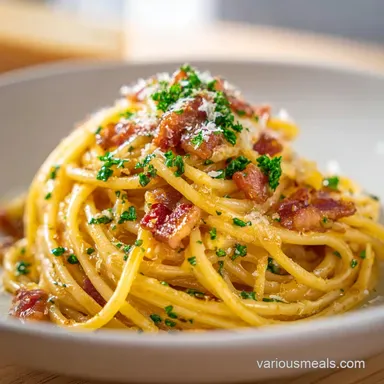
Spaghetti Carbonara Classic Italian
Ingredients:
Instructions:
Nutrition Facts:
| Calories | 728 kcal |
|---|---|
| Protein | 25.8 g |
| Fat | 35.2 g |
| Carbs | 75.6 g |
| Fiber | 3.2 g |
| Sugar | 2.1 g |
| Sodium | 1240 mg |
