Strawberry Mango Sangria: Crisp and Bright
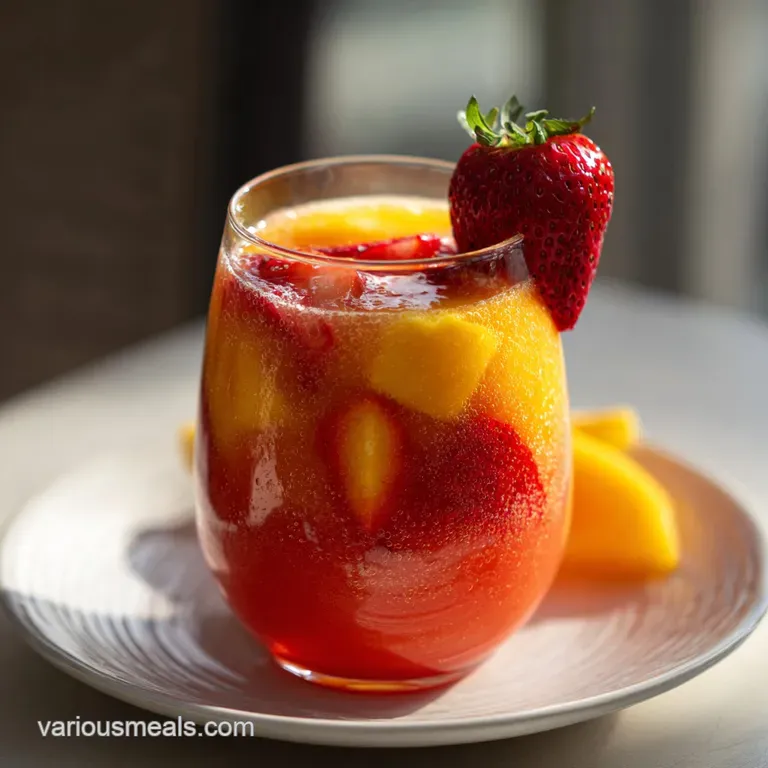
- Time: Active 10 minutes, Passive 5 minutes, Total 15 minutes
- Flavor/Texture Hook: Effervescent, syrupy, and bright
- Perfect for: Backyard barbecues and summer brunches
- Crafting the Best Strawberry Mango Sangria Ever
- The Molecular Science of Maceration
- Recipe Specs and Batch Sizes
- Gathering the Fruit and Wine
- Essential Tools for Mixing Drinks
- Step-by-Step Mixing Instructions
- Troubleshooting Flavor and Texture Issues
- Customizing Your Summer Fruit Blend
- Storage and Zero Waste Tips
- Best Ways to Serve Sangria
- Myths About Making Sangria
- Recipe FAQs
- 📝 Recipe Card
Crafting the Best Strawberry Mango Sangria Ever
The first time I served this Strawberry Mango Sangria, I didn't realize how much the aroma would take over my entire patio. As I sliced into those heavy, perfume laden mangoes, the scent was so thick and floral it felt like a tropical heatwave had settled right in my kitchen.
Then came the strawberries bright, tart, and smelling like pure sunshine mixing with the sharp, citrusy snap of the lime rounds.
It was one of those rare moments where everything clicked. I remember watching the wine hit the fruit, turning a pale, shimmering gold as it started to soak up all those natural juices.
Honestly, the best part isn't even the drink itself, it's that first "thwack" of the wooden spoon against the fruit to wake up the flavors. We skipped the beer that day and never looked back.
Since then, I've learned that you don't need a fancy mixologist degree to get this right. It’s all about how the fruit interacts with the wine. We aren't just making a fruit salad in a pitcher; we’re creating a balanced, velvety infusion that hits every corner of your palate.
If you've got ten minutes and a big jug, you're halfway to the best drink of your summer.
The Molecular Science of Maceration
Osmotic Extraction: The agave and mango nectar create a high sugar environment that draws water and aromatic compounds out of the fruit cells. This process, known as maceration, transforms the wine into a concentrated fruit essence without needing heat.
| Comparison | Fresh Fruit | Frozen Fruit |
|---|---|---|
| Texture | Maintains structure and "crunch" | Becomes soft and velvety |
| Flavor | Bright, acidic, and sharp | More concentrated and syrupy |
| Aroma | High impact floral notes | Subtle, muted scent |
Recipe Specs and Batch Sizes
Before you start chopping, it helps to know how much you're actually making. Sangria is notoriously easy to drink, so I always recommend checking your pitcher size against these proportions.
| Servings | Wine Quantity | Fruit Volume | Club Soda |
|---|---|---|---|
| 4 people | 375 ml | 0.5 lb berries, 1 mango | 1 cup |
| 8 people | 750 ml | 1 lb berries, 2 mangoes | 2 cups |
| 16 people | 1500 ml | 2 lb berries, 4 mangoes | 4 cups |
This Strawberry Mango Sangria recipe is remarkably forgiving. If you find your mangoes are smaller than usual, just toss in an extra one; the nectar will do the heavy lifting for the flavor anyway.
Gathering the Fruit and Wine
You’ll want to pick ingredients that play well together. Since we’re using a dry wine, the sweetness needs to come from the fruit and the liqueur to keep things from tasting like flat juice.
- 750 ml dry white wine: Choose a Sauvignon Blanc for its citrus notes or a Pinot Grigio for a crisp finish. Why this? Its acidity balances the sugar. (Substitute: Dry Rosé for a pinker hue).
- 0.5 cup orange liqueur: Something like Cointreau or Triple Sec works brilliantly here. Why this? Adds depth and a punch of citrus oils. (Substitute: Brandy).
- 1 lb fresh strawberries: Hulled and sliced thin to maximize surface area. Why this? Releases juice faster when sliced. (Substitute: Raspberries).
- 2 large ripe mangoes: Peeled and cubed into bite sized pieces. Why this? Provides a buttery texture and tropical aroma. (Substitute: Peaches).
- 1 lime: Sliced into rounds to add a necessary bitter tart edge. Why this? Cuts through the heavy sugar. (Substitute: Lemon).
- 1 cup mango nectar: This is the secret to that thick, luscious mouthfeel. Why this? Bridges the gap between wine and fruit. (Substitute: Peach nectar).
- 2 tbsp agave nectar: A liquid sweetener that dissolves instantly in cold liquid. Why this? Doesn't leave a grainy residue. (Substitute: Simple syrup).
- 2 cups club soda: Keep this chilled until the very last second. Why this? Provides the "fizz" and lightens the alcohol. (Substitute: Ginger ale for more spice).
Chef's Tip: Before adding your lime rounds to the pitcher, rub them with a little bit of the agave nectar. It helps pull the essential oils out of the zest, making the whole drink smell incredible the moment it hits the glass.
Essential Tools for Mixing Drinks
You don't need a full bar setup, but a few basics make this easier. Use a glass pitcher so everyone can see the beautiful fruit colors. A long handled wooden spoon is essential for stirring and gently bruising the fruit to release its juices.
If you have a vegetable peeler, it’s actually the fastest way to peel a mango without losing too much of the flesh.
For another fresh fruit experience that uses similar prep skills, try my Strawberry Ricotta Bruschetta recipe as a side snack.
step-by-step Mixing Instructions
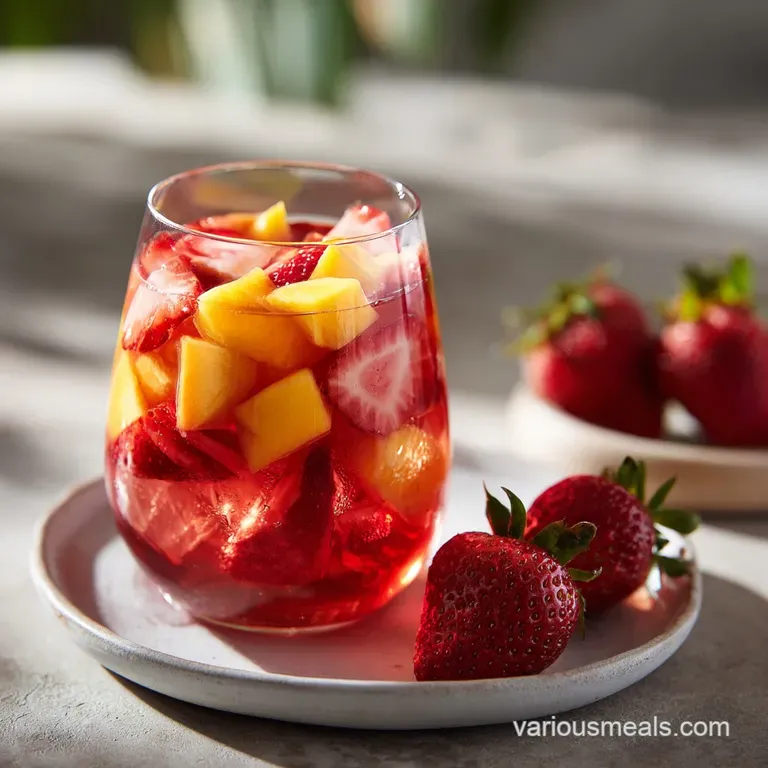
- Prep the mangoes. Peel and cube 2 large ripe mangoes, discarding the pit. Note: Keep cubes small so they fit into a wine glass easily.
- Slice the strawberries. Hull and slice 1 lb fresh strawberries into 3mm thick rounds until you have a pile of red discs.
- Macerate the fruit. Place mangoes, strawberries, and 1 sliced lime into a large pitcher.
- Add the sweetener. Drizzle 2 tbsp agave nectar over the fruit and stir gently.
- Infuse with liqueur. Pour in 0.5 cup orange liqueur and 1 cup mango nectar until the fruit looks glossy and coated.
- Incorporate the wine. Pour the 750 ml dry white wine over the mixture.
- Stir gently. Use a long spoon to combine until the nectar swirls disappear into the wine.
- Wait (optional but better). Let it sit for 5 minutes until the wine takes on a slight pinkish orange tint.
- Finish with bubbles. Pour in 2 cups club soda just before serving to maintain the carbonation.
- Taste and adjust. Sip a small amount and add a drop more agave if the wine was exceptionally dry.
Troubleshooting Flavor and Texture Issues
Why Your Sangria Tastes Bitter
If you let the lime rounds sit for more than 24 hours, the pith (the white part) will start to release bitter tannins. This happens most often when people make the drink too far in advance.
| Problem | Root Cause | Solution |
|---|---|---|
| Too tart | Wine acidity is too high | Add 1 tsp agave at a time |
| Diluted flavor | Ice melted too fast | Use frozen mango chunks as ice |
| No "fizz" | Soda was added too early | Add club soda only when pouring |
If you love these tropical flavors but want something with a bit more kick, you'll enjoy the heat in my Mango Habanero Honey recipe.
Common Mistakes Checklist
- ✓ Never use "cooking wine"; if you wouldn't drink it in a glass, don't put it in the pitcher.
- ✓ Don't skip the nectar; plain juice is too thin and won't give that velvety finish.
- ✓ Avoid over mashing the fruit; you want a clear drink, not a smoothie.
- ✓ Ensure the club soda is ice cold; warm soda loses bubbles instantly.
- ✓ Slice the strawberries thin; thick chunks don't release flavor as effectively.
Customizing Your Summer Fruit Blend
Scaling this recipe down is simple. If you only want a few glasses, use half the wine (375ml) and just one mango. The ratios stay the same, but you’ll want to use a smaller carafe so the fruit stays submerged in the liquid.
If you’re scaling up for a wedding or big bash, keep the fruit at the same ratio but reduce the club soda slightly (by about 10%) to ensure the flavor stays punchy even as people add ice to their cups.
For a tropical twist, replace the orange liqueur with coconut rum. It changes the profile entirely, making it feel more like a punch. You can also add a pinch of chili powder to the rim of the glasses if you want to lean into that classic mango chili flavor profile.
Storage and Zero Waste Tips
This Strawberry Mango Sangria stays fresh in the fridge for about 2 days. After that, the strawberries start to look a bit "mushy," though they still taste fine. I always remove the lime rounds if I’m storing it overnight to prevent that bitterness we talked about earlier.
If you have leftover fruit at the bottom of the pitcher, don't throw it away! Those booze soaked mangoes and strawberries are incredible over vanilla ice cream or blended into a "grown up" smoothie the next morning.
You can also freeze the leftover liquid in ice cube trays to use as flavor bombs for your next glass of sparkling water.
Best Ways to Serve Sangria
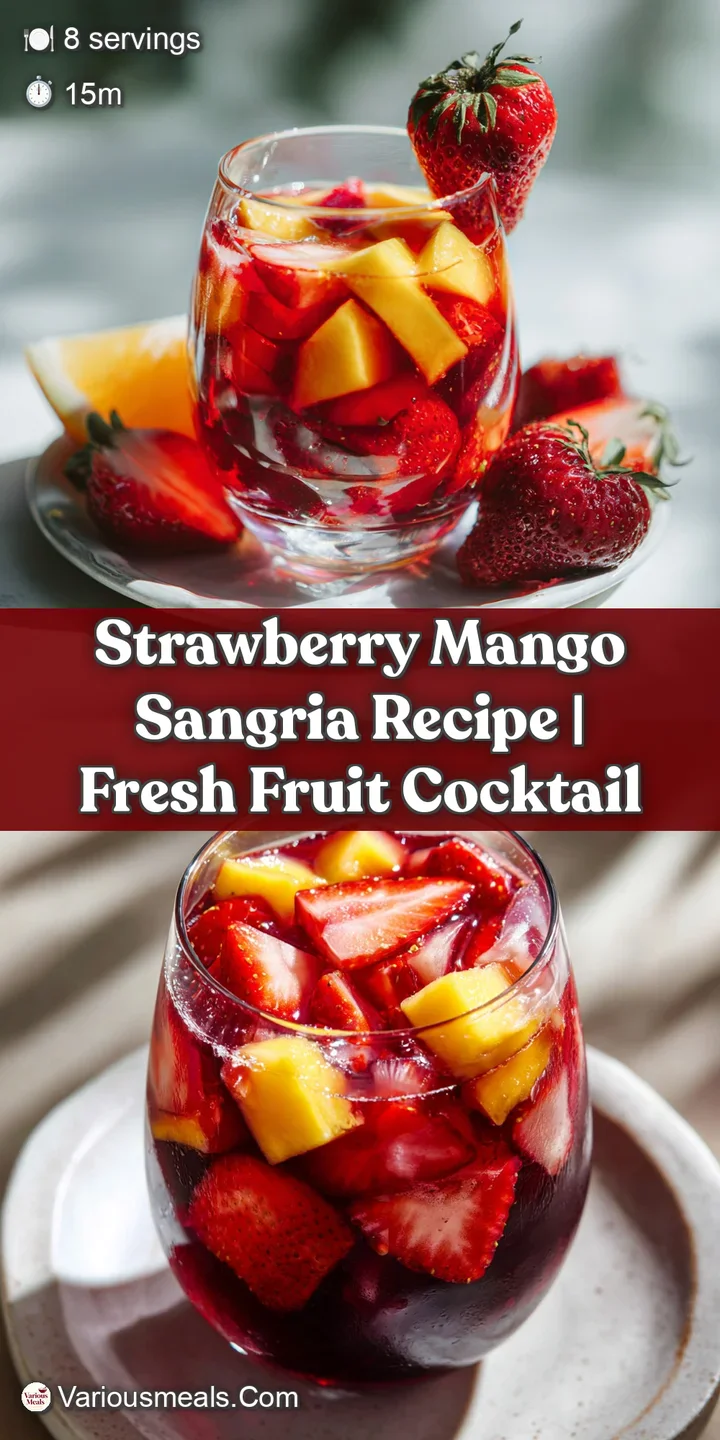
Presentation is everything with a drink this colorful. Serve it in large wine glasses or highball glasses filled with plenty of ice. Make sure every glass gets a generous scoop of the macerated fruit.
If you’re feeling fancy, garnish with a sprig of fresh mint or a basil leaf; the herbal scent pairs perfectly with the strawberry.
If you want X, do Y
- If you want a sweeter finish, use a Moscato instead of a dry white wine.
- If you want more bubbles, swap the club soda for a bottle of sparkling Prosecco.
- If you want a deeper color, add a handful of blackberries to the maceration step.
This recipe is also a great companion to a Marinated Tomato Salad recipe if you’re doing a full Mediterranean style spread. The acidity in the tomatoes mirrors the bright notes in the wine beautifully.
Myths About Making Sangria
A common misconception is that you need expensive wine to make a good sangria. In reality, the fruit and liqueurs will mask the nuances of a high end bottle. You just need a solid, middle of-the road dry wine that provides a clean canvas for the fruit.
Another myth is that you must let it sit for 24 hours. While a few hours helps, this specific combination of mango nectar and agave creates a "quick infuse" effect.
You can have a drink that tastes fully developed in just 15 minutes because the nectar provides the body that usually takes hours to extract from whole fruit. Finally, don't believe that you can't use frozen fruit.
While fresh smells better, frozen mango is often picked at peak ripeness and works as a fantastic "ice substitute" that won't water down your drink.
Recipe FAQs
Can I use frozen strawberries and mangoes instead of fresh fruit?
No, stick with fresh for the best flavor integration. Frozen fruit releases excess water when thawing, which dilutes the wine base and mutes the vibrant tropical aromas we aim for in this sangria.
How long does this Strawberry Mango Sangria need to macerate before serving?
Wait a minimum of 5 minutes, but 30 minutes is ideal. Because we use nectar and agave, the osmotic extraction happens rapidly; however, giving it time allows the wine to fully absorb the mango's floral essence.
How do I prevent the finished sangria from tasting bitter?
Remove the lime rounds after 12 hours of infusion. The pith of the citrus fruit releases bitter tannins when left soaking too long, overpowering the sweetness of the mango.
What kind of wine works best for a balanced sweet tart profile?
Use a dry, crisp white wine like Sauvignon Blanc or Pinot Grigio. The natural acidity in these wines cuts through the sugar from the liqueur and nectar, preventing the final product from tasting syrupy.
How to substitute the club soda for a different finishing texture?
Swap club soda for chilled Prosecco for a richer finish. Using sparkling wine rather than plain soda introduces a bit more alcohol and a different, often more persistent, bubble structure.
What should I do with the leftover fruit soaking in the wine mixture?
Freeze the leftover fruit cubes in ice cube trays with some liquid. This creates flavorful additions for future drinks, similar to how we prepare flavor bombs for water in other recipes.
Is it true you need to use expensive liqueur for a quality sangria?
No, this is a common misconception about masking flavors. While good quality matters, the strong fruit flavors and citrus components in this blend mean a mid-range Triple Sec or Cointreau performs excellently, leaving you more budget for fresh mango.
Strawberry Mango Sangria
Ingredients:
Instructions:
Nutrition Facts:
| Calories | 226 kcal |
|---|---|
| Protein | 1.1 g |
| Fat | 0.5 g |
| Carbs | 32 g |
| Fiber | 2.5 g |
| Sugar | 25 g |
| Sodium | 12 mg |
