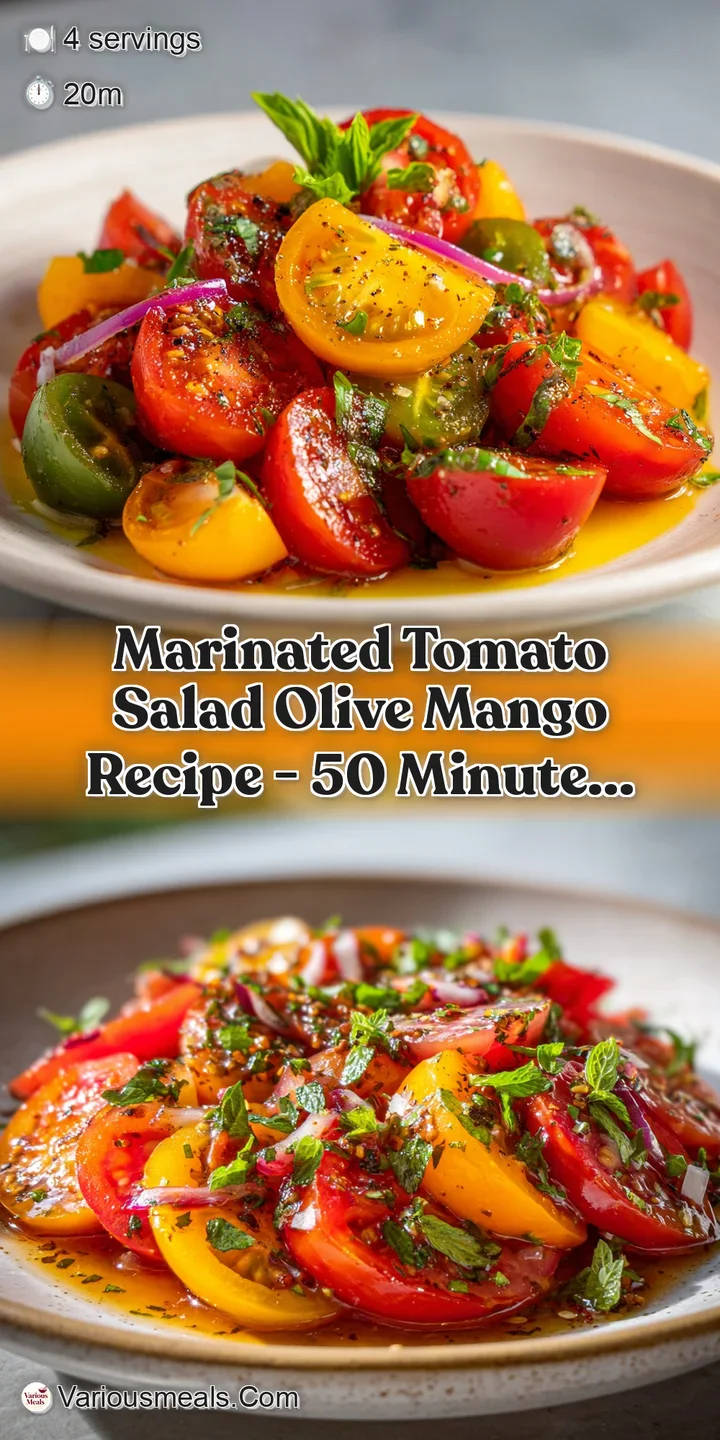
Marinated Tomato Salad Olive Mango
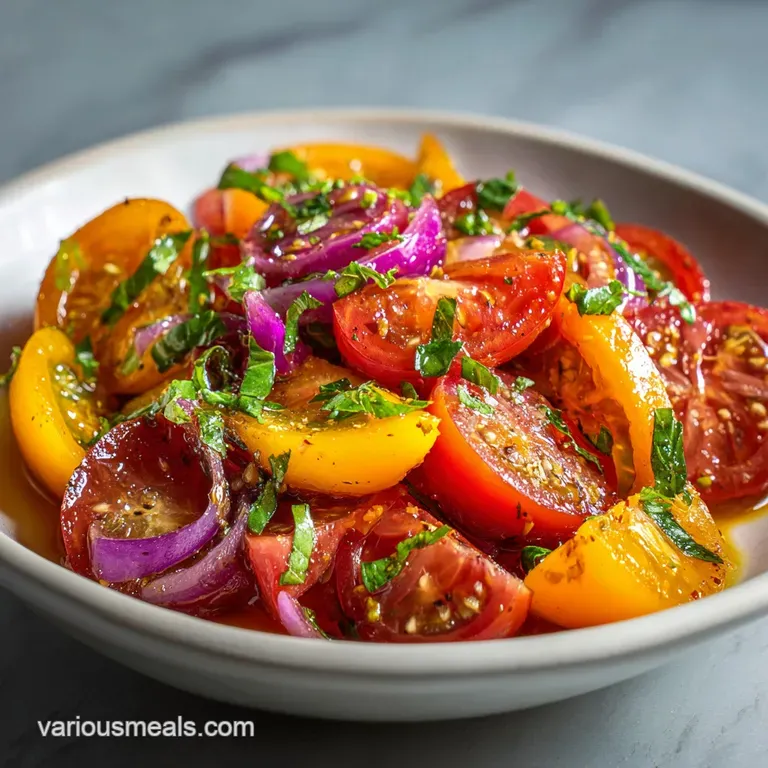
- Time: Active 20 minutes, Passive 30 minutes, Total 50 minutes
- Flavor/Texture Hook: Tangy sweet fruit with a salty olive finish
- Perfect for: Backyard barbecues or a refreshing summer lunch
- Master My Marinated Tomato Salad Olive Mango
- The Magic of Molecular Marination
- Essential Quick Recipe Facts
- Essential Salad Ingredient Analysis
- Simple Tools For Success
- Simple Steps For Assembly
- Fixing Common Salad Mistakes
- Fun Variations to Explore
- Smart Storage and Saving
- Perfect Pairing and Plating
- Recipe FAQs
- 📝 Recipe Card
Master My Marinated Tomato Salad Olive Mango
I still remember the first time I accidentally dropped a slice of mango into a bowl of salted tomatoes. I was prepping two different dishes for a family cookout, and my toddler "helped" by merging the fruit bowls. I almost tossed it out, but then I caught a whiff of the basil mixing with that tropical sweetness.
I took a bite, and my kitchen world tilted just a little. The way the salt pulled the juice out of the heirloom tomatoes to create a syrupy glaze for the mango was nothing short of brilliant.
We’ve all had those basic garden salads that end up as a puddle of watery greens at the bottom of the bowl. This dish is the total opposite. It’s a study in contrasts: the velvety texture of a ripe mango against the briny, firm pop of a Castelvetrano olive.
It’s the kind of recipe that makes people stop talking and start asking for the "secret ingredient." Honestly, the secret is just patience and a little bit of chemistry that happens while you're busy doing something else.
If you are looking for that specific bite that feels like a Mediterranean vacation met a tropical island, you have found it. We aren't just tossing things in a bowl here; we are building layers of flavor that actually stay on the fork.
No sad, wilted leaves in sight just bright, punchy ingredients that hold their own. Let's get into how we make this magic happen in your own kitchen.
The Magic of Molecular Marination
Understanding how these ingredients interact is the difference between a soggy mess and a cohesive masterpiece. We are essentially using salt and acid to "cook" the vegetables without heat.
- Osmotic Extraction: Salt draws water out of the tomato cell walls, which creates a concentrated "tomato water" that serves as the base for our dressing.
- Acidic Maceration: The balsamic vinegar softens the fibers of the mango and onion, making them tender while intensifying their natural sugars.
- Emulsification Stability: The Dijon mustard acts as a bridge, binding the oil and vinegar together so the dressing coats every crevice of the torn olives.
- Lipid Infusion: The extra virgin olive oil absorbs the essential oils from the torn basil and mint, carrying those herbal notes through every bite.
| Method | Fresh Mango | Frozen Thawed |
|---|---|---|
| Texture | Firm, buttery, and holds its shape | Softer, slightly fibrous, and may weep |
| Flavor Profile | Bright, floral, and complex | Consistent sweetness but lacks "zing" |
| Best For | Showstopper dinner parties | Quick weeknight family meals |
The texture difference is the most notable trade off when choosing your fruit. Fresh mango provides a structural "snap" that pairs beautifully with the olives, whereas frozen mango tends to meld into the dressing more quickly. Both are acceptable, but if you want that "shatter" of freshness, go with the whole fruit.
Essential Quick Recipe Facts
Before you start chopping, let's look at the numbers that make this dish work. Precision is your friend when you're balancing salt, fat, and acid. You don't want to guestimate the salt here, or you'll end up with a bowl of brine instead of a balanced salad.
| Servings | Tomato/Mango Ratio | Rest Time | Visual Cue |
|---|---|---|---|
| 2 People | 0.75 lb / 1 Mango | 20 minutes | Light juices pooling |
| 4 People | 1.5 lbs / 2 Mangoes | 30 minutes | Glossy, vibrant coating |
| 8 People | 3 lbs / 4 Mangoes | 45 minutes | Deep, syrupy consistency |
Getting the timing right is crucial. If you serve it too early, the flavors are disjointed. If you wait too long (like over 6 hours), the tomatoes can start to lose their structural integrity and become grainy. Stick to the 30 minute window for the best results.
Essential Salad Ingredient Analysis
Selecting your components is where the real cooking happens. You want tomatoes that feel heavy for their size and mangoes that give just a little bit when squeezed, like a ripe avocado.
- 1.5 lbs heirloom or cherry tomatoes: These provide the acidic backbone. Why this? Heirlooms offer varied textures and a deeper, more complex umami than standard hothouse varieties.
- 2 large fresh mangoes: Adds the tropical sweetness. Why this? Mango sugar balances the balsamic acidity perfectly without needing excessive added sweeteners.
- 0.5 cup Castelvetrano or Kalamata olives: The salty punch. Why this? Torn olives release more oil and create more surface area for the dressing to cling to.
- 3 tbsp aged balsamic vinegar: The primary acid. Why this? Aged balsamic is thicker and sweeter, preventing the salad from becoming too thin and watery.
| Ingredient | Science Role | Pro Secret |
|---|---|---|
| Fine Sea Salt | Moisture Regulator | Apply to tomatoes first to jumpstart the marination process. |
| Dijon Mustard | Natural Emulsifier | Helps the oil and vinegar stay "bonded" rather than separating on the plate. |
| Fresh Mint | Aromatic Contrast | Don't chop too finely; large torn pieces prevent the herb from turning black. |
Simple Tools For Success
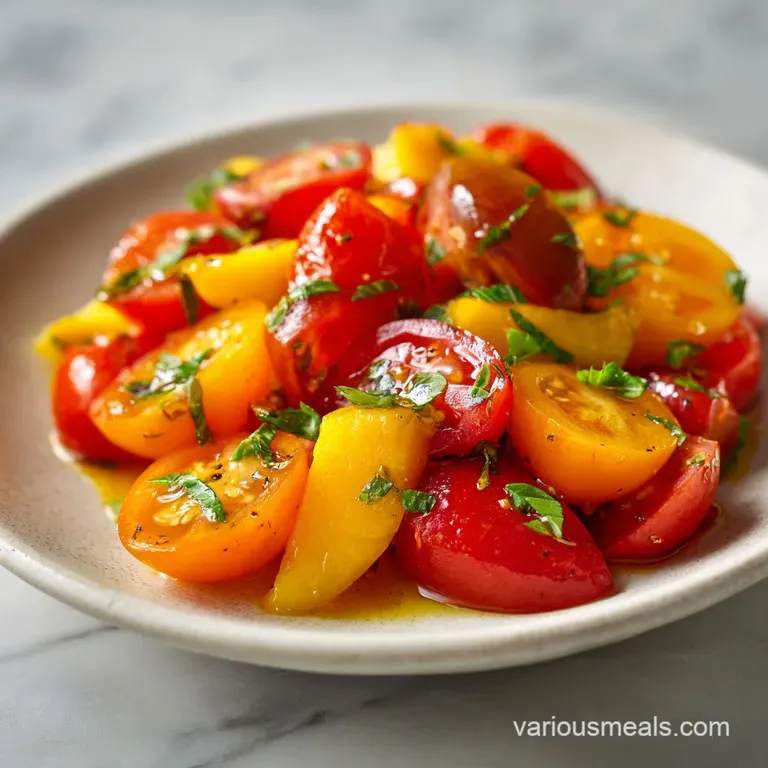
You don't need a pantry full of gadgets, but a few specific items will make the job much easier. I always reach for my heavy wooden bowl for this not just because it looks great, but because the wide surface area helps with even marination.
A sharp chef's knife is non negotiable. You want to slice through those tomato skins like butter rather than crushing them. If your knife is dull, you'll squeeze out all the juice onto your cutting board instead of keeping it in the salad bowl.
I also highly recommend using a small glass jar with a tight lid for the dressing. It’s the most efficient way to get a velvety, emulsified texture without whisking your arm off.
For the onions, a mandoline is a total lifesaver. You want them "shaved" so they become translucent and lose that harsh bite. If you're doing it by hand, take your time and aim for paper thin half moons. Thick chunks of raw red onion can easily overpower the delicate sweetness of the mango.
Simple Steps For Assembly
Follow these steps in order. The sequence matters because we are building a chemical reaction that peaks right as you sit down to eat. Trust the process, especially the waiting part.
1. The Moisture Extraction Phase
Place your 1.5 lbs of halved tomatoes in a large bowl and sprinkle with 1 tsp fine sea salt. Toss gently and let them sit for at least 10 minutes. Note: This creates the "mother juice" for your entire salad.
2. The Balsamic Infusion
Add the shaved 0.5 red onion to the tomatoes. Pour over 2 tbsp of the aged balsamic vinegar and toss again. This "pickles" the onion slightly, removing the sharp sulfurous sting.
3. Emulsifying the Dressing
In a separate jar, combine the remaining 1 tbsp balsamic, 0.25 cup EVOO, 1 tsp honey, 0.5 tsp Dijon, and 0.5 tsp black pepper. Shake vigorously until the mixture is thick and shimmering.
4. The Final Assembly
Add the cubed 2 large mangoes and 0.5 cup torn olives to the tomato mixture. Drizzle the dressing over the top and toss with a large spoon, ensuring every piece of fruit is coated.
5. The Herb Finish
Scatter the 0.5 cup of basil and mint chiffonade over the bowl. Gently fold them in just before serving until the aroma of fresh herbs fills the room.
6. The Final Rest
Let the completed Marinated Tomato Salad Olive Mango sit at room temperature for another 15 minutes. This allows the mango to absorb the salty tangy juices from the bottom of the bowl.
7. The Quality Check
Taste a piece of tomato and a piece of mango together. If it's too tart, add a tiny pinch of extra honey. If it's flat, a tiny splash of vinegar will wake it up.
8. Serving the Dish
Transfer to a shallow serving platter rather than a deep bowl. This prevents the weight of the ingredients from crushing the tomatoes at the bottom.
Fixing Common Salad Mistakes
We've all been there you follow a recipe and somehow it just doesn't look like the photo. Usually, it's a small detail that’s easily fixed. If your salad looks a bit lackluster, it's often a matter of temperature or timing.
Why Your Salad Is Watery
If you find a lake at the bottom of your bowl, you likely skipped the initial salting step or used tomatoes with very high water content, like standard beefsteaks. The salt needs time to work its magic before the other ingredients are added. If it's already watery, don't panic.
Use a slotted spoon to serve the solids, then whisk a little more oil into the leftover juice to make a bread dipping sauce.
To Fix a Dressing That Is Too Thin
A thin dressing happens when the oil and vinegar haven't properly bonded. This is usually because the mustard was left out or the shaking wasn't aggressive enough. To fix this, pour the liquid back into your jar, add another 1/4 tsp of Dijon, and shake it like you mean it for a full 30 seconds.
It should look like a velvety, opaque ribbon.
| Problem | Root Cause | Solution |
|---|---|---|
| Onions are too sharp | Pieces are too thick | Soak shaved onions in ice water for 5 mins first |
| Herbs turned black | Chopped too early | Only add herbs 30 seconds before serving |
| Mango is mushy | Fruit was over ripe | Use "firm ripe" mangoes that hold their shape |
Common Mistakes Checklist:
- ✓ Never refrigerate the tomatoes before making this; cold kills their flavor.
- ✓ Don't use "light" balsamic; it lacks the sugar needed to balance the olives.
- ✓ Tear the olives by hand instead of slicing; the jagged edges catch more dressing.
- ✓ Ensure your basil is bone dry before cutting to prevent bruising and browning.
- ✓ Resist the urge to add the herbs too early, as the acid will wilt them.
Fun Variations to Explore
Once you've mastered the base, you can start playing with the "vibe" of the dish. I love adding a little kick to mine when I'm serving it with something heavy like grilled steak.
- Spicy Mediterranean Twist: Add a teaspoon of red pepper flakes or a finely diced Fresno chili to the dressing. The heat against the cold mango is incredible.
- Creamy Finish: Top the finished salad with torn pieces of fresh burrata or dollops of goat cheese. The creaminess acts as a foil to the sharp balsamic.
- Added Crunch: Sprinkle 2 tbsp of toasted pine nuts or sunflower seeds over the top just before serving. It adds a necessary textural break.
- Tropical Heat: If you really want to lean into the mango, try swapping the standard dressing for a version of my Mango Habanero Honey recipe for a serious flavor punch.
If you are cooking for a crowd, scaling this recipe is quite simple. When doubling the batch, you don't actually need to double the salt. Use about 1.5x the salt to avoid over seasoning, but go ahead and double the tomatoes, mangoes, and vinegar.
For the oil, I usually reduce it by about 10% on larger batches to keep the salad from feeling greasy.
Smart Storage and Saving
This is one of those rare salads that actually tastes pretty good the next day, though it won't be as pretty. The mango will continue to soften and the herbs will definitely darken, but the flavor will be intense.
Store any leftovers in an airtight glass container in the fridge for up to 2 days. I don't recommend freezing this; the cell walls of the tomatoes and mangoes will shatter when frozen, leaving you with a literal soup when thawed. It's a "fresh use" dish through and through.
Zero Waste Tip: If you have a lot of leftover juice at the bottom of the bowl, don't you dare pour it down the sink! That liquid is liquid gold. It's essentially a pre made tomato mango vinaigrette. Use it the next day to marinate chicken breasts or toss it with some cold pasta for a quick lunch.
You can even use the herb stems finely mince them and add them to a stir fry or a soup base for a hit of concentrated herb flavor.
Perfect Pairing and Plating
When it comes to serving, think about balance. This salad is high in acid and sugar, so it loves fat and char. It’s the ultimate partner for anything that comes off a grill.
Pair with Charred Proteins
I love serving this alongside grilled halloumi or a simple piece of sea bass. The brightness of the Marinated Tomato Salad Olive Mango cuts right through the richness of the fish or the salty "squeak" of the cheese. It's also a fantastic side for a Mediterranean Chickpea Salad recipe if you're hosting a fully vegetarian spread. The chickpeas provide the protein "weight" that makes this feel like a full meal.
The Best Bread Choice
You absolutely need a vehicle for the juices. A charred baguette or a piece of sourdough rubbed with a raw garlic clove is the way to go. You want something with a sturdy crust that can stand up to being dunked in that balsamic tomato nectar.
Decision Shortcut: - If you want a light lunch, serve this over a bed of arugula with a side of toasted pita. - If you want a party appetizer, spoon the salad onto small crostini topped with a smear of ricotta.
- If you want a dinner side, pair it with grilled lamb chops or honey glazed chicken.
There's a common myth that you should peel tomatoes for salads like this. Honestly? Don't bother. The skins provide structure and fiber that keeps the salad from turning into a compote. Another myth is that you need "perfectly ripe" fruit.
In reality, a slightly under ripe mango works better here because it can stand up to the acidic marinade without falling apart. Trust your ingredients, give them some space to breathe, and I promise your friends will be asking for this recipe for years to come.
Recipe FAQs
Is it okay to use frozen mango instead of fresh in this salad?
No, fresh mango is highly recommended for the best texture. Frozen mango releases excess moisture upon thawing, which can dilute the concentrated tomato dressing.
How do I prevent the tomatoes from making the entire salad watery?
Salt the tomatoes separately for at least 10 minutes first. This initial salting step draws out excess moisture via osmosis before you introduce the other ingredients and the vinegar.
How to ensure the dressing emulsifies properly without separating?
Combine the oil, vinegar, and Dijon mustard in a jar and shake vigorously until thick and shimmering. This mechanical action forces the fat and water based liquids to bond temporarily, creating a stable coating for the ingredients.
What is the ideal resting time for the flavors to fully meld together?
Aim for a total resting time of 30 minutes at room temperature. This allows the salty tomato juices to mix with the balsamic and lightly coat the mango cubes, achieving the perfect flavor balance.
Is it true that I should avoid refrigerating this salad before serving?
Yes, avoid refrigeration until serving, if possible. Cold temperatures mute the complex flavors of the tomatoes and herbs; letting the ingredients reach room temperature maximizes aromatic impact.
What olive type works best to achieve the required salty "pop"?
Castelvetrano or Kalamata olives are the best choices for contrast. Castelvetrano olives offer a buttery texture, while Kalamata provides a deeper brine, and tearing them releases more flavor into the dressing.
Can I use the leftover dressing juices for another purpose?
Absolutely, the leftover liquid is excellent as a base for a light pasta dish. Whisk an extra splash of olive oil into the residual juices, and toss them with cold pasta for a quick version of a 15 Minute Pasta recipe.
Tomato Olive Mango Salad
Ingredients:
Instructions:
Nutrition Facts:
| Calories | 295 calories |
|---|---|
| Protein | 3.3 g |
| Fat | 16.4 g |
| Carbs | 37.2 g |
| Fiber | 4.1 g |
| Sugar | 30.5 g |
| Sodium | 648 mg |
