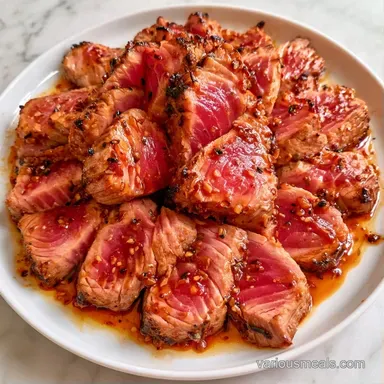
Grilled Tuna with Ginger Soy and Honey
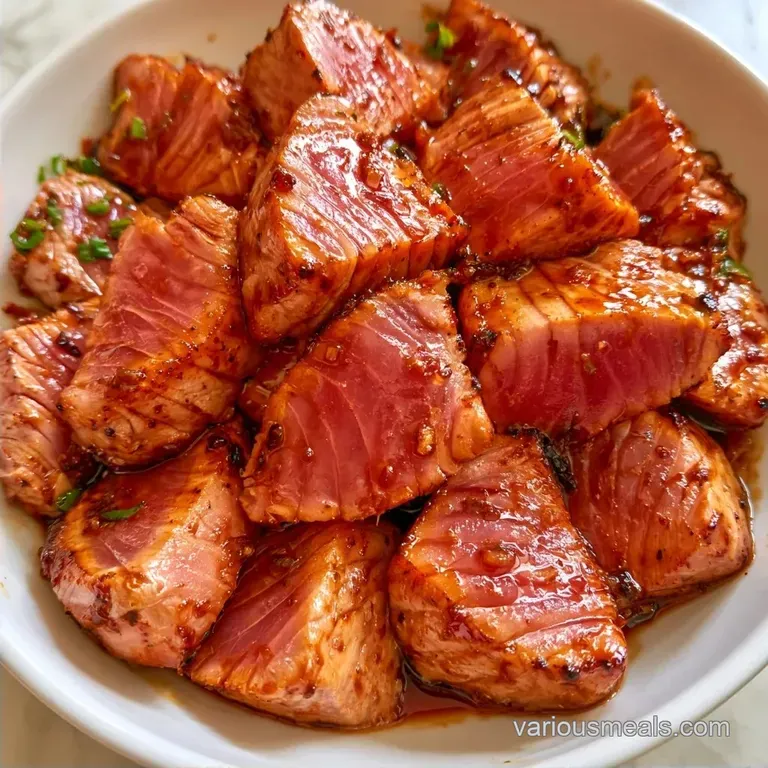
- Time: 10 minutes hands-on + 30 minutes refrigeration
- Key Appeal: A deep mahogany char contrasting a cool, succulent interior
- Perfect for: Impressive yet quick weeknight meals
There are few things more inviting than the sharp, zesty aroma of fresh ginger hitting a searing pan. It’s the signal that a vibrant meal is on the way. However, many home cooks are intimidated by tuna because it feels so easy to ruin.
The most common mistake is hitting "the grey zone." That's when the fish is cooked entirely through, losing its color and taking on the consistency of a rubber eraser. It's a disappointing end for such a premium ingredient.
This technique avoids that pitfall by prioritizing surface dryness and heat management. The goal is precise: a thin, seared exterior with a center that remains vivid and soft. Here is how to master Grilled Tuna with Ginger Soy without the rubbery results.
Why the Texture Fails
Many people treat tuna like a steak, but it's far leaner. If you leave it on the heat for even a minute too long, the proteins tighten up and squeeze out all the moisture.
High Heat: Searing at a very high temperature browns the outside before the heat can penetrate the center. This keeps the inside rare and juicy.
Sugar Balance: Using honey in the marinade creates a crust, but too much will burn before the fish is done. I've found that a small amount of honey combined with soy creates a glossy finish that doesn't turn bitter. If you enjoy this kind of flavor profile, you might also like my Soy Salmon Marinade, which uses a similar balance.
Choosing the right method depends on how you like your fish. Here is a quick look at the trade offs.
| Method | Time | Texture | Best For |
|---|---|---|---|
| over High heat Sear | 6 min | Charred crust, rare center | Med Rare lovers |
| oven roasted | 15 min | Uniform color, softer | Medium preference |
Quick Recipe Specs
To get this right, you need to stick to the timing. Tuna doesn't forgive mistakes.
- Target Internal Temp: 115°F (46°C) for medium rare.
- Sear Time: 1.5 to 2 minutes per side.
- Rest Time: 5 minutes exactly.
What Each Ingredient Does
I don't just throw things in a bowl. Every part of this marinade has a job to do.
| Component | Purpose | Substitute Notes |
|---|---|---|
| Low sodium soy sauce | Salt and umami base | Tamari (for gluten-free) |
| Honey | Caramelization | Maple syrup (slightly woodier) |
| Fresh Ginger | Zesty, sharp heat | Ginger paste (less punchy) |
| Sesame Oil | Nutty aroma | Grapeseed oil (neutral flavor) |
The combo of ginger and lime cuts through the richness of the tuna, keeping the dish feeling light and fresh.
The Main List
- 4 (6 oz / 170g) Ahi tuna steaks, sushi grade Why this? High fat content helps prevent drying.
- 1/3 cup (80ml) low sodium soy sauce
- 2 tbsp (30ml) honey
- 1 tbsp (15g) freshly grated ginger
- 1 tbsp (15ml) sesame oil
- 1 tbsp (15ml) fresh lime juice
- 2 cloves (6g) minced garlic
- 1/2 tsp (1g) red pepper flakes
- 1 tbsp (15g) toasted sesame seeds
- 2 stalks (10g) thinly sliced green onions
- 1 lime, cut into wedges
Necessary Kitchen Tools
You can use a grill, but a heavy cast iron skillet is actually my preference for this. It holds heat better, which is the only way to get that professional crust.
You'll also need a digital instant read thermometer. Guessing the temperature of tuna is a gamble you'll eventually lose. A Ziploc bag is the best way to marinade because it forces the liquid against every inch of the fish.
The Cooking Process
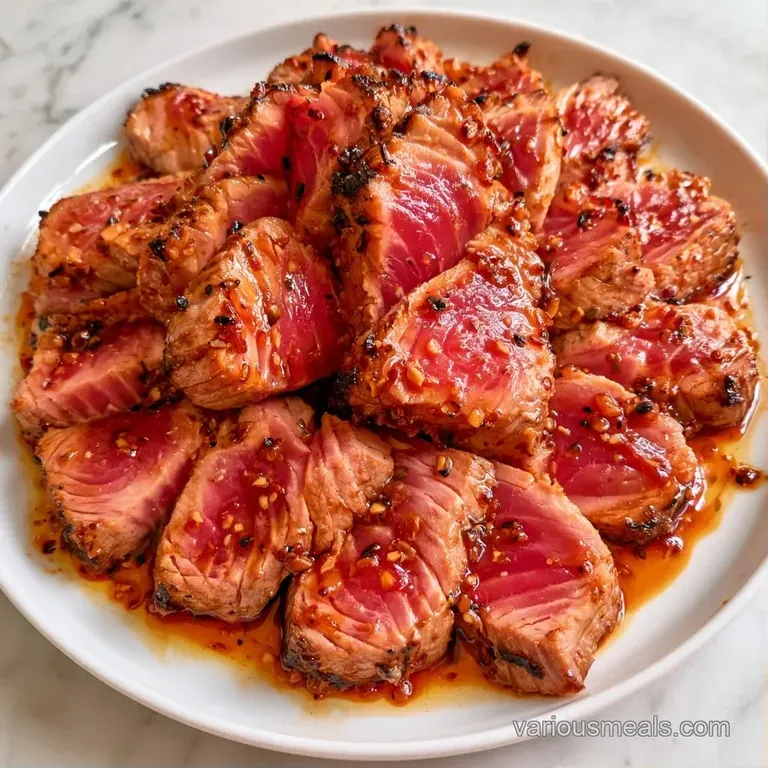
All right, let's get started. Keep a close eye on the aromas and the sound of your skillet.
Whisking the Flavor Base
Combine the soy sauce, honey, grated ginger, sesame oil, lime juice, minced garlic, and red pepper flakes in a Ziploc bag. Shake or whisk until the honey is fully blended and the sauce looks velvety.
Infusing the Tuna
Dab the tuna steaks until they are completely dry. This is a step many overlook, but wet fish will steam instead of searing. Slide the steaks into the bag, seal it tightly, and refrigerate for 30 minutes.
Chef's Note: Do not exceed 2 hours of marinating. The lime juice will begin to "cook" the tuna like ceviche, destroying the raw center.
Achieving the High Heat Sear
Preheat your skillet over high heat. It's ready once a drop of water dances and evaporates immediately. Take the tuna out of the marinade and wipe away any excess liquid.
Place the steaks in the pan; you should hear an immediate, aggressive sizzle. Sear for 1.5 to 2 minutes per side. Cook until you smell the honey and garlic caramelizing and a deep mahogany crust develops.
Resting for Juiciness
Move the steaks to a cutting board and let them rest for 5 minutes. This helps the juices redistribute so they stay in the fish when you slice it.
Final Garnish
Slice the tuna into thick strips. Garnish with the toasted sesame seeds and sliced green onions. Serve with lime wedges on the side.
Fixes for Common Issues
Even with a plan, things happen. Usually, it's a matter of heat or timing.
Fixing the Grey Center
If your tuna is grey all the way through, it's overcooked. This happens when the pan isn't hot enough, forcing you to leave the fish in longer to get a crust. Use a thermometer and pull the fish at 115°F.
Preventing Burnt Honey
If the marinade tastes bitter, the honey burnt. This occurs if the heat is too high for too long or if you didn't pat the excess marinade off the fish before searing.
Stopping Fish Sticking
Tuna sticks when the pan isn't fully preheated or if you try to flip it too early. Let the crust form; the fish will naturally release from the pan when it's ready to flip.
| Problem | Fix |
|---|---|
| Rubbery texture | Pull fish at 115°F (46°C) |
| Bitter taste | Pat off excess marinade before searing |
| Sticking to pan | Wait for the crust to form before flipping |
Best Ways to Serve
Grilled Tuna with Ginger Soy is a bold dish, so it needs sides that provide a clean contrast. I love serving this with a heap of steamed bok choy or a scoop of jasmine rice to soak up the extra juices.
For something lighter, a Classic Italian Tomato Salad works surprisingly well here. The acidity of the tomatoes and the freshness of the basil balance the salty soy glaze.
Decision Shortcut: Extra heat? → add 1/2 tsp more red pepper flakes. Sweeter glaze? → add 1 tbsp more honey. More zing? → add extra lime zest.
Keeping Leftovers Fresh
While this dish is best served fresh, any leftovers can be kept in an airtight glass jar in the refrigerator for 2 days.
Warming up tuna is difficult since it tends to overcook quickly. Instead, I suggest enjoying your leftover Grilled Tuna with Ginger Soy chilled, thinly sliced over a salad or inside a wrap.
If there is any marinade remaining in the bag, save it for later. Simmer the liquid in a small pan for 3 minutes until it thickens, then use it as a glaze for roasted broccoli or carrots.
Flavor Swaps and Twists
You can easily customize the flavor profile of this dish to suit your preferences.
Black Pepper Crust For a "pepper crusted" variation, press cracked black pepper into the sides of the tuna before searing. This adds an earthy heat that pairs beautifully with the ginger soy.
Adding Some Heat Replace the red pepper flakes with a tablespoon of Gochujang or Sriracha. This gives the marinade a thicker consistency and a more complex, fermented spiciness.
Gluten-free Version Simply swap the soy sauce for Tamari or coconut aminos. The taste remains nearly identical, and the caramelization works just as well.
A Note on Myths
You may have heard that searing "seals in the juices." This is actually a misconception; water evaporates during the cooking process no matter which technique you use. The crust is about flavor and texture, not about trapping moisture.
Another myth is that "sushi grade" tuna should not be cooked. While it is high-quality enough to eat raw, it is also fantastic when seared. The superior quality typically means more consistent fat distribution, making the Grilled Tuna with Ginger Soy even juicier.
Recipe FAQs
What is a good seasoning for grilled tuna?
A mix of soy sauce, honey, and fresh ginger. This combination creates a salty sweet glaze that caramelizes beautifully under high heat.
Is it true that soy sauce is too strong for tuna?
Actually, no. Soy sauce enhances the richness of the fish and works perfectly when balanced with honey and lime juice.
Do tuna and ginger go together?
Yes, they are a classic pairing. The sharp, spicy notes of ginger cut through the dense texture of the tuna steak.
Can I marinate tuna in soy sauce?
Yes, but keep it brief. Marinating for 30 minutes adds deep flavor without curing the fish or making it too salty.
Do you flip tuna when cooking it on the grill?
Yes, flip only once. Searing for 1.5 to 2 minutes per side ensures a mahogany crust forms without overcooking the center.
Should tuna be cooked all the way through to be safe?
No, this is a common misconception. Cooking it fully makes the meat rubbery and dry; aim for 115°F for a tender, medium rare result.
How should grilled tuna be cooked?
Use a cast iron skillet or grill to sear over high heat. Pat the steaks dry first to avoid steaming, then sear them quickly on each side. If you enjoyed this high heat technique, you might also like our bourbon BBQ sauce.
How to cook tuna steak in the oven?
Broil on high for a few minutes per side. This mimics the intense heat of a grill, though a skillet is preferred for a superior crust.
Grilled Tuna With Ginger Soy