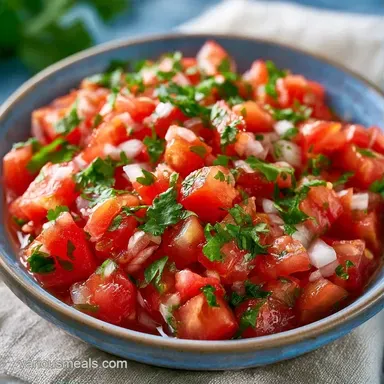
Raw Garden Tomato Salsa: Zesty and Chunky
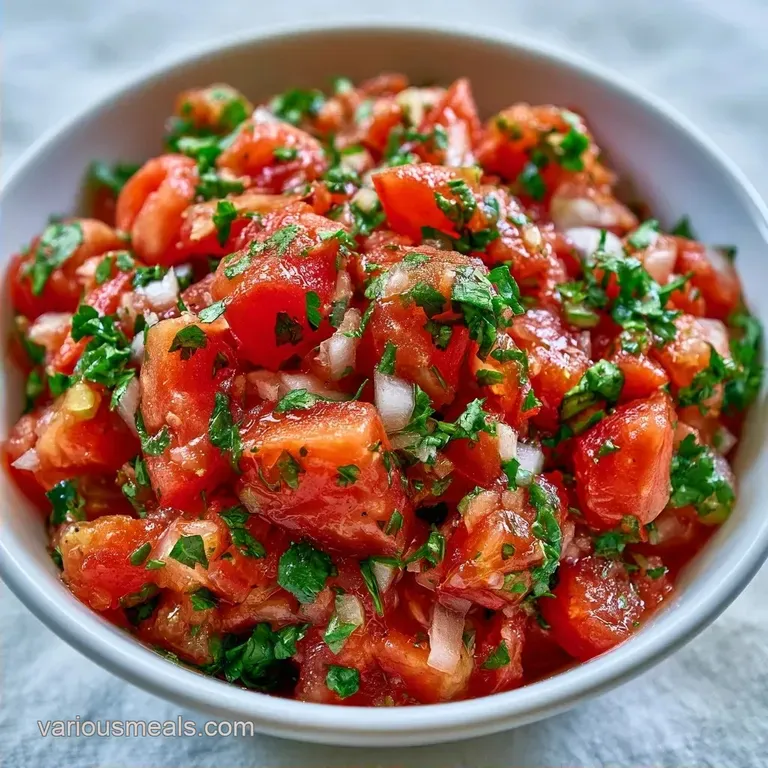
- Time: 10 min active + 10 min resting
- Flavor/Texture Hook: Zesty and chunky
- Perfect for: Summer BBQs or healthy meal prep
The sound of a sharp knife hitting a wooden board in a quiet kitchen is one of my favorite things. But for a long time, my salsa was a disaster. I would chop everything up, toss it in a bowl, and within twenty minutes, I had a bowl of tomato soup instead of a chunky dip.
It was a soggy, watery mess that made the chips limp.
The fix wasn't a fancy tool or a rare ingredient. It was all about managing the water in the tomatoes and the order of the mix. By seeding the Roma tomatoes and giving them a quick drain, the texture stays crisp.
You can expect this Raw Garden Tomato Salsa to be bright, sharp, and plant forward. It relies on the quality of the produce, so grab the firmest tomatoes you can find. It's a budget friendly way to get a nutrient dense side on the table without turning on the stove.
Why These Techniques Actually Work
- Salt Driven Drainage: Salt pulls water out of the tomato cells. If you don't drain them first, that water floods the bowl and dilutes the flavor.
- Acid Mellowing: Letting the onions and jalapeños sit in lime juice and vinegar breaks down the harsh sulfur compounds. This removes that "raw onion" burn while keeping the zing.
If you need something even faster, my fresh tomato salsa takes about 15 minutes and uses a similar base.
| Method | Time | Texture | Best For |
|---|---|---|---|
| Raw Chopped | 20 mins | Chunky & Crisp | Fresh salads, dipping |
| oven roasted | 45 mins | Soft & Smoky | Tacos, heavy appetizers |
Raw Garden Tomato Salsa Details
The goal here is balance. You want the acidity of the lime to cut through the richness of the olive oil, and the heat of the jalapeño to be a background hum, not a scream. Because this is a raw recipe, we aren't relying on heat to develop flavor, so the "marinating" phase is where the magic happens.
This recipe is designed for meal prep. It holds up well in the fridge, and the flavors actually deepen after a few hours. If you're serving it at a party, make it the night before.
The Best Garden Ingredients
For the best results, use Roma tomatoes. They have thicker walls and fewer seeds than beefsteak varieties, which means less water in your bowl.
| Ingredient | What It Does | Best Swap |
|---|---|---|
| Roma Tomatoes | Provides the bulk and juicy base | Plum tomatoes |
| White Onion | Adds a sharp, clean crunch | Red onion (sweeter) |
| Lime Juice | Brightens the flavor and preserves color | Lemon juice |
| Red Wine Vinegar | Adds a deep, tangy fermented note | Apple cider vinegar |
Note: Always use fresh lime juice. The bottled stuff has a metallic aftertaste that ruins a Raw Garden Tomato Salsa.
Tools for a Clean Cut
You don't need a food processor here. In fact, a processor often over processes the tomatoes, turning them into mush.
- Chef's Knife: A sharp 8 inch blade for the tomatoes.
- Small Pairing Knife: For the garlic and jalapeño.
- Mesh Strainer: To drain the tomato seeds.
- Large Glass Bowl: Glass is better than plastic because it doesn't absorb odors from the onion and garlic.
Putting the Salsa Together
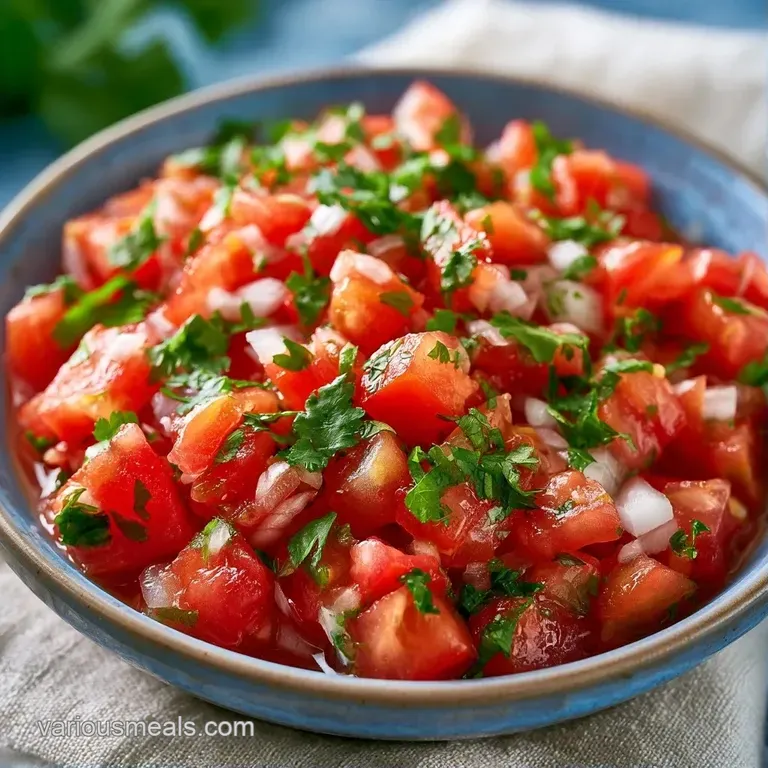
Follow these steps for a consistent, chunky texture.
- Dice the tomatoes, onions, and jalapeños into uniform 1/4 inch pieces. Note: Uniform sizes ensure every bite has a bit of everything.
- Place the diced tomatoes in a mesh strainer for 2 minutes until the excess liquid stops dripping.
- Whisk together the lime juice, red wine vinegar, olive oil, minced garlic, salt, and pepper in a bowl.
- Fold in the diced onions and jalapeños.
- Let the onion and pepper mixture sit in the acid for 2 minutes until they look slightly glossy.
- Gently fold in the diced tomatoes and chopped cilantro.
- Stir slowly until the ingredients are evenly distributed but the tomatoes aren't crushed.
- Let the salsa rest at room temperature for 10 minutes until the flavors fuse.
Chef's Tip: If you want a deeper flavor, crush the garlic with the side of your knife and a pinch of salt to create a paste before adding it to the bowl.
Fixing Common Salsa Issues
Even with a simple recipe, things can go sideways. Most issues come down to the water content or the balance of acid.
My salsa is watery
This happens when tomatoes aren't seeded or the salt is added too early. If it's already too watery, you can't "un salt" it, but you can stir in a tablespoon of finely diced cucumber (seeded) to add bulk without more liquid.
Onion flavor is strong
Raw white onions can be aggressive. If the bite is too sharp, add another teaspoon of lime juice or a pinch of sugar to neutralize the sulfur.
It tastes too acidic
This usually means the red wine vinegar is dominating. A small drizzle of extra virgin olive oil can mellow the sharpness.
| Problem | Root Cause | Solution |
|---|---|---|
| Soggy texture | Too many tomato seeds | Use a mesh strainer for 2 mins |
| Bland taste | Under salted | Add salt in 1/8 tsp increments |
| Too spicy | Too many jalapeño seeds | Remove seeds before mincing |
Fresh Flavor Twists
You can easily adapt this base to fit what you have in the fridge. For a creamy dip to serve alongside, try this homemade ranch dressing.
Diet SwapsKeto/Low Carb: This recipe is already naturally low carb. To reduce carbs further, reduce the onion by half. Nightshade Free: Swap tomatoes for finely diced roasted red peppers and a splash of extra vinegar.
2 Flavor TwistsTropical: Add 1/2 cup of finely diced fresh mango for a sweet heat contrast. Smoky: Add 1/2 teaspoon of smoked paprika or a minced chipotle pepper in adobo.
Decision Shortcut If you want more heat, keep the jalapeño seeds in. If you want it chunkier, use a larger dice (1/2 inch). If you want a zingier taste, add an extra tsp of red wine vinegar.
Storage and Waste Tips
Store your Raw Garden Tomato Salsa in an airtight glass jar in the fridge for up to 5 days. After day three, the tomatoes will soften, and the liquid will increase. This is normal.
For zero waste, don't toss the tomato stems or the ends of the onion. Keep a "scrap bag" in your freezer. Once it's full, simmer the scraps with water to make a quick vegetable stock for soups.
Scaling GuidelinesCutting in half: Use 1.5 cups of tomatoes and 1 clove of garlic. Reduce the resting time to 5 minutes. Doubling or Tripling: Do not triple the salt or vinegar linearly.
Use 1.5x the salt and vinegar for a 2x batch to avoid overpowering the fresh vegetables. Work in a larger bowl to avoid crushing the tomatoes during stirring.
Serving Your Fresh Salsa
The way you serve it affects how people perceive the freshness. I prefer using a chilled ceramic bowl.
Myths about Fresh SalsaMyth: You must peel the tomatoes. Truth: Roma skins are thin and add a necessary structural bite to the salsa. Myth: Garlic must be roasted for salsa.
Truth: Raw garlic paste provides a sharp, fresh punch that defines the garden style.
For a professional look, garnish with a few whole cilantro leaves and a lime wedge on the side. This lets guests add their own extra acidity if they prefer a sharper taste.
Recipe FAQs
Can salsa help lower cholesterol?
Yes, generally. The use of extra virgin olive oil and fresh vegetables provides heart healthy fats and antioxidants that support overall cholesterol management.
Is salsa good for diabetics?
Yes. With only 47 calories per serving and no added sugars, this fresh vegetable blend is a blood sugar-friendly condiment.
Is salsa okay for IBS?
No, it may be a trigger. Raw onion, garlic, and jalapeño are high FODMAP ingredients that can cause digestive distress for those with IBS.
How to make this fresh salsa?
Dice tomatoes, onions, and jalapeños into 1/4 inch pieces. Mix them with a whisked blend of lime juice, red wine vinegar, olive oil, and garlic, then let the mixture rest for 10 minutes.
Why does Mexican restaurant salsa taste so good?
They often balance raw sharpness with acidity. Letting the onions and jalapeños sit in the acid for 2 minutes mellows their raw bite. If you enjoyed mastering this acid based flavor balance, the same principle is used to brighten our fresh cranberry sauce.
How to make a thinner salsa?
Skip the mesh strainer step. Retaining the natural juices and seeds from the Roma tomatoes creates a more liquid, pourable consistency.
Is it true that tomatoes must be peeled for fresh salsa?
No, this is a common misconception. Keeping the skins on the Roma tomatoes provides the rustic texture and structure essential for a garden style salsa.
Raw Garden Tomato Salsa