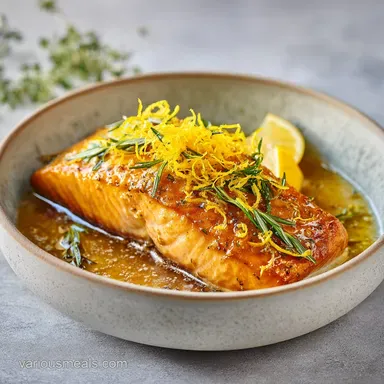
Salmon Honey Lemon Marinade: Bold and Savory
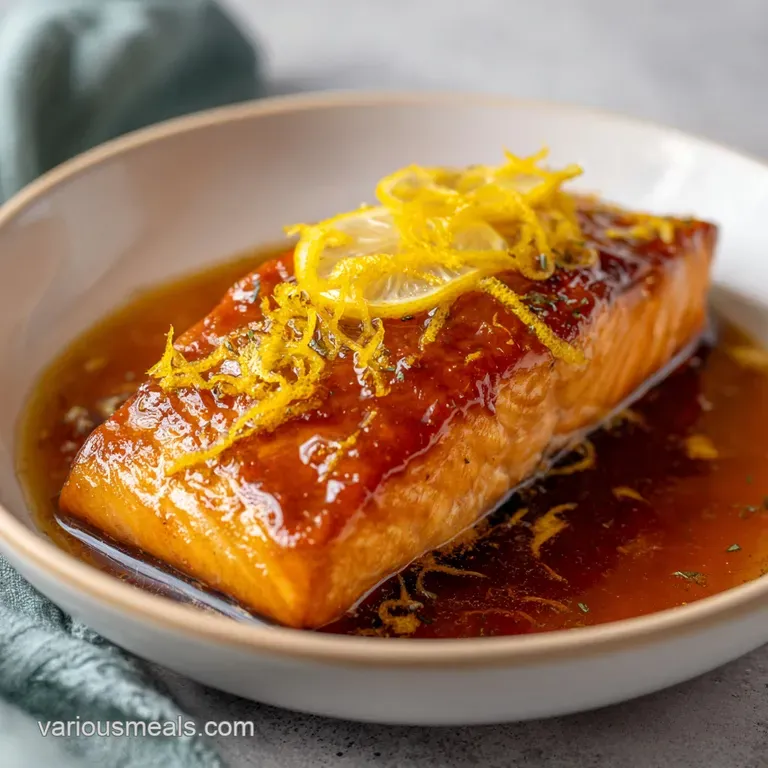
- Time: 10 min active + 30 min chilling = Total 50 minutes
- Flavor/Texture Hook: Sticky, mahogany glaze with a velvety, flaky center
- Perfect for: Quick weeknight dinners or a bold flavored date night meal
- The Bold Balance of a Salmon Honey Lemon Marinade
- The Secret to the Sticky Glaze
- Breaking Down the Flavor Components
- Selecting Your Ingredients and Swaps
- The Essential Gear for a Proper Sear
- Step by Step to a Mahogany Crust
- Solving Searing Struggles and Sauce Issues
- Troubleshooting Common Issues
- Customizing the Flavor Profile for Everyone
- Keeping Leftovers Fresh and Reducing Waste
- The Best Pairings for Bold Salmon
- Recipe FAQs
- 📝 Recipe Card
The Bold Balance of a Salmon Honey Lemon Marinade
The first thing that hits you is the scent - that sharp, bright zing of fresh lemon zest clashing with the deep, earthy aroma of minced garlic hitting a hot pan. I remember the first time I tried to nail this balance; I went too heavy on the honey and ended up with something that tasted more like a dessert than a dinner.
The fish looked great, but it was cloying. It took a bit of experimentation to realize that the lemon juice isn't just for flavor, it's the "brake" that keeps the sugar from taking over the whole dish.
This Easy Salmon Marinade with Honey and Lemon is the perfect recipe for a quick and delicious meal. When you get it right, the contrast is incredible. You have the shatter crisp edges of the caramelized honey against the silky, buttery flakes of the salmon. It's a high energy flavor profile that feels far more sophisticated than the 10 minutes of active work it actually takes.
If you're tired of bland, steamed fish, this is your exit strategy. We're talking about bold flavors and efficient technique. You'll get a sticky, glossy coating that clings to the fillet, making every single bite taste like it came from a high end fusion bistro.
Trust me on this, once you see that mahogany crust form in the pan, you'll never go back to plain seasoned fillets.
The Secret to the Sticky Glaze
Right then, let's talk about why this actually works. It's not magic, just a bit of kitchen logic that makes the Salmon Honey Lemon Marinade behave.
- Sugar Caramelization: The honey contains fructose and glucose that brown quickly under high heat, creating that dark, sticky crust.
- Acidic Tenderizing: Lemon juice breaks down the tight protein bonds on the surface, allowing the flavors to penetrate deeper into the flesh.
- Oil Barrier: Olive oil prevents the honey from burning too fast and helps the fillet slide across the pan without sticking.
- Umami Bridge: Soy sauce provides a salty depth that balances the sweetness, acting as a bridge between the lemon and the honey.
Flavor Map: The Contrast Story
- Honey: Deep, sticky sweetness (The Base)
- Lemon: Sharp, bright acidity (The Highlight)
- Soy Sauce: Salty, earthy depth (The Anchor)
- Garlic/Oregano: Pungent, herbal punch (The Accent)
| Thickness | Internal Temp | Rest Time | Visual Cue |
|---|---|---|---|
| 1 inch | 135°F (57°C) | 3 mins | Opaque pink, flakes easily |
| 1.5 inches | 135°F (57°C) | 5 mins | Firm edges, translucent center |
| Thin Cut | 130°F (54°C) | 2 mins | Just barely opaque |
Breaking Down the Flavor Components
The magic of the Salmon Honey Lemon Marinade depends on the quality of your starters. I've found that using fresh lemon zest instead of just the juice makes a world of difference because the oils in the skin carry the most punch.
| Ingredient | Science Role | Pro Secret |
|---|---|---|
| Honey | Glazing Agent | Use a light clover honey to avoid overpowering the lemon |
| Lemon Juice | pH Balancer | Always strain out seeds to keep the glaze velvety |
| Soy Sauce | Salt/Color | Adds the mahogany hue during the sear |
| Garlic | Aromatic | Mince it into a paste for more even distribution |
Selecting Your Ingredients and Swaps
For the marinade, you'll need a few staples. I prefer using center cut fillets because they cook evenly, which is key when you're dealing with a sugar based glaze that wants to burn.
- 1/4 cup honey Why this? Provides the sticky texture and sweetness
- 2 tbsp fresh lemon juice Why this? Cuts through the fat of the salmon
- 1 tsp lemon zest Why this? Concentrated citrus oil for aroma
- 2 tbsp olive oil Why this? over Medium heat stability and mouthfeel
- 3 cloves garlic, minced Why this? Essential pungent base
- 1 tbsp soy sauce Why this? Depth and saltiness
- 1/2 tsp dried oregano Why this? Earthy, Mediterranean contrast
- 1/4 tsp black pepper Why this? Mild heat to balance sugar
- 4 center cut salmon fillets, 6 oz each Why this? Consistent thickness for timing
- 1/2 tsp kosher salt Why this? Enhances all other flavors
| Original Ingredient | Substitute | Why It Works |
|---|---|---|
| Honey | Maple Syrup | Similar viscosity. Note: Adds a woody, autumnal sweetness |
| Soy Sauce | Tamari (gluten-free) | Nearly identical flavor. Note: Better for Celiac diets |
| Dried Oregano | Dried Thyme | Similar herbal profile. Note: Slightly more subtle, floral notes |
| Olive Oil | Avocado Oil | Higher smoke point. Note: Neutral flavor, better for very high heat |
Don't even bother with low-fat substitutes here. The fat from the olive oil and the salmon is what carries the lemon and honey flavors across your palate. If you strip that away, you're just eating sweet fish.
The Essential Gear for a Proper Sear
You don't need a professional kitchen, but a few specific tools make this process way more efficient.
- Cast Iron Skillet: This is my top choice (like a Lodge pan) because it holds heat better than anything else, ensuring that mahogany crust.
- Zip top Bag: Much better than a bowl for marinating as it forces the liquid into every nook and cranny of the fillet.
- Instant Read Thermometer: Non negotiable. Salmon overcooks in a heartbeat, and a thermometer is the only way to be sure.
- Paper Towels: For patting the fish dry. If the fish is wet, it steams instead of searing.
Step by step to a Mahogany Crust
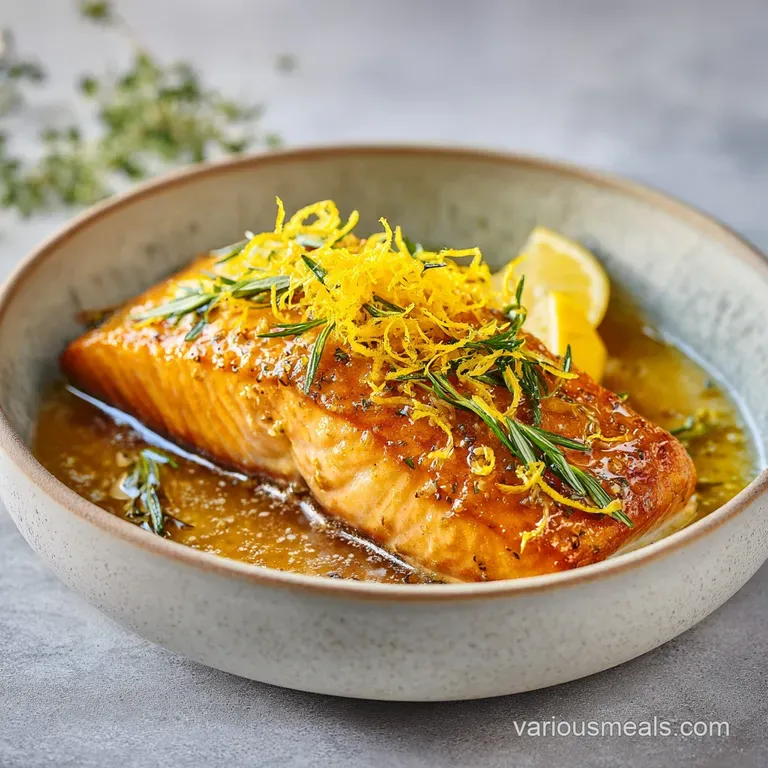
Let's crack on with the actual cooking. The goal here is a controlled sear. We want the sugars in the Salmon Honey Lemon Marinade to caramelize, not carbonize.
- Whisk together the honey, lemon juice, zest, olive oil, minced garlic, soy sauce, oregano, and pepper in a small bowl. Note: Whisk until it's a smooth, glossy emulsion so the oil doesn't separate.
- Pat the salmon fillets completely dry with paper towels. Note: This is the most important step for a crispy exterior.
- Place fillets in a shallow dish or zip top bag and pour the Salmon Honey Lemon Marinade over the top.
- Refrigerate for 30 minutes. Note: Don't go over 2 hours or the lemon juice will start "cooking" the fish like ceviche.
- Heat a non stick or cast iron skillet over medium high heat.
- Place the fillets skin side up in the pan and cook for 3–5 minutes until a mahogany colored crust forms.
- Flip the fillets carefully using a wide spatula.
- Cook for another 3–5 minutes.
- Spoon the remaining Salmon Honey Lemon Marinade over the fish during the last 2 minutes of cooking until the sauce thickens into a sticky glaze.
- Remove from heat when the internal temperature hits 135°F (57°C). Note: According to FoodSafety.gov, fish should reach 145°F, but for salmon, pulling it at 135°F allows carryover cooking to reach safety while keeping the center velvety.
Chef's Tip: To get a truly shatter crisp crust, freeze your butter for 10 minutes and whisk a tiny knob into the pan just before adding the final glaze. It adds a nutty, French style finish.
Solving Searing Struggles and Sauce Issues
Even the best of us have days where the fish sticks or the sauce burns. If your Salmon Honey Lemon Marinade isn't behaving, it's usually a temperature or moisture issue.
Troubleshooting Common Issues
| Issue | Solution | |||||
|---|---|---|---|---|---|---|
| Why Your Salmon Sticks to the Pan | This usually happens because the pan wasn't hot enough or the fish was too wet. When the protein hits a cold pan, it bonds to the metal. Make sure the oil is shimmering before the fish goes in. | |||||
| Why the Glaze Burns Too Quickly | Honey has a low burn point. If your heat is on "High" instead of "Medium High," the sugar will turn black before the fish is cooked through. If this happens, add a teaspoon of water to the pan to loos | |||||
| Why Your Salmon is Dry | Overcooking is the enemy. If you wait until the fish "looks done" visually, you've probably already gone too far. Trust your thermometer, not your eyes. | Problem | Root Cause | Solution | :--- |
Customizing the Flavor Profile for Everyone
Depending on who you're cooking for, you might want to tweak the Salmon Honey Lemon Marinade to fit different vibes.
Scaling the Recipe - Cutting it in half: Use a smaller skillet. Reduce the cook time by about 20% because smaller batches of fish don't drop the pan temperature as much. - Doubling or Tripling: Work in batches.
If you crowd the pan, the salmon will steam in its own juices and you'll lose that mahogany crust. Increase the soy sauce and salt by only 1.5x to avoid over salting.
Bold Variations If you love a bit of heat, add a teaspoon of sriracha or red pepper flakes to the whisking stage. For a completely different flavor profile, you might try a Cajun Honey Butter Salmon, which trades the lemon's brightness for a smoky, spicy punch.
If you need a Paleo version, simply swap the soy sauce for coconut aminos. It's slightly sweeter, so you can reduce the honey by a teaspoon to keep the balance.
Keeping Leftovers Fresh and Reducing Waste
Salmon is one of those things that is great fresh but can get a bit "fishy" if stored wrong.
Storage Guidelines Keep your cooked Salmon Honey Lemon Marinade fillets in an airtight container in the fridge for up to 3 days. To reheat, avoid the microwave, which will make the fish rubbery.
Instead, place the fillet in a pan over low heat with a teaspoon of water and cover it with a lid to steam it back to life.
Zero Waste Tips Don't toss the rest of the lemon! After zesting and juicing, toss the spent lemon hulls into a freezer bag. When you have a few, simmer them with water and sugar to make a quick citrus syrup for cocktails.
Also, any leftover marinade that hasn't touched raw fish can be simmered in a small pot for 2 minutes to create a reduction sauce for steamed vegetables.
The Best Pairings for Bold Salmon
Since the Salmon Honey Lemon Marinade is so rich and zesty, you need sides that can stand up to those flavors without competing with them.
I love serving this with something earthy and grainy to soak up the extra glaze. A Salmon Quinoa Bowl is a fantastic way to turn this into a full blown health powerhouse. The nuttiness of the quinoa anchors the sweetness of the honey.
For a lighter side, try blanched asparagus or sautéed bok choy. The slight bitterness of the greens cuts through the richness of the fish perfectly. If you're feeling fancy, a side of wild rice with toasted almonds adds a crunch that contrasts the velvety texture of the salmon.
Honestly, this dish is all about that sweet and tangy tension. Whether you're serving it for a quick Tuesday night dinner or a dressed up weekend meal, the Salmon Honey Lemon Marinade brings a level of boldness that makes the whole plate feel intentional.
Just remember: pat it dry, watch your heat, and pull it off the stove the second it hits 135°F. You've got this!
Recipe FAQs
How to avoid the salmon becoming mushy during the marinating process?
Limit marinating to exactly 30 minutes. The acid in the lemon juice breaks down the delicate proteins, and exceeding this window will compromise the fish's texture.
Is it true I should let the salmon reach room temperature before cooking?
No, this is a common misconception. Cooking the fillets straight from the refrigerator helps prevent the exterior from overcooking while the center reaches the target temperature.
How to ensure the garlic incorporates fully into the marinade?
Whisk the ingredients until the mixture is a smooth, glossy emulsion. This prevents the minced garlic from clumping and ensures an even distribution of flavor across every fillet.
Is it necessary to zest the lemon before juicing it?
Yes, always zest first. It is physically difficult to zest a lemon once it has been squeezed and the skin has collapsed.
How to know when the salmon is finished cooking?
Remove from heat when the internal temperature hits 135°F (57°C). Residual heat will continue to cook the fish slightly as it rests, bringing it to a perfect medium.
Can I marinate the salmon longer to get more lemon flavor?
No, do not increase the time. Extending the soak will ruin the texture of the fish; if you want a stronger citrus profile, increase the amount of lemon zest instead.
How to prepare the fillets for the best marinade absorption?
Pat the fillets completely dry with paper towels. Removing surface moisture allows the marinade to cling to the fish and ensures a mahogany-colored crust. This dish pairs beautifully with lemon rice for a complete meal.
Salmon Honey Lemon Marinade with Garlic