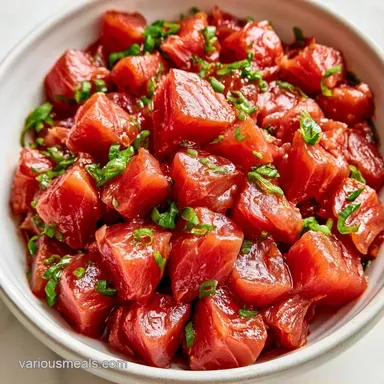
Hawaiian Shoyu Ahi Poke in 10 Minutes
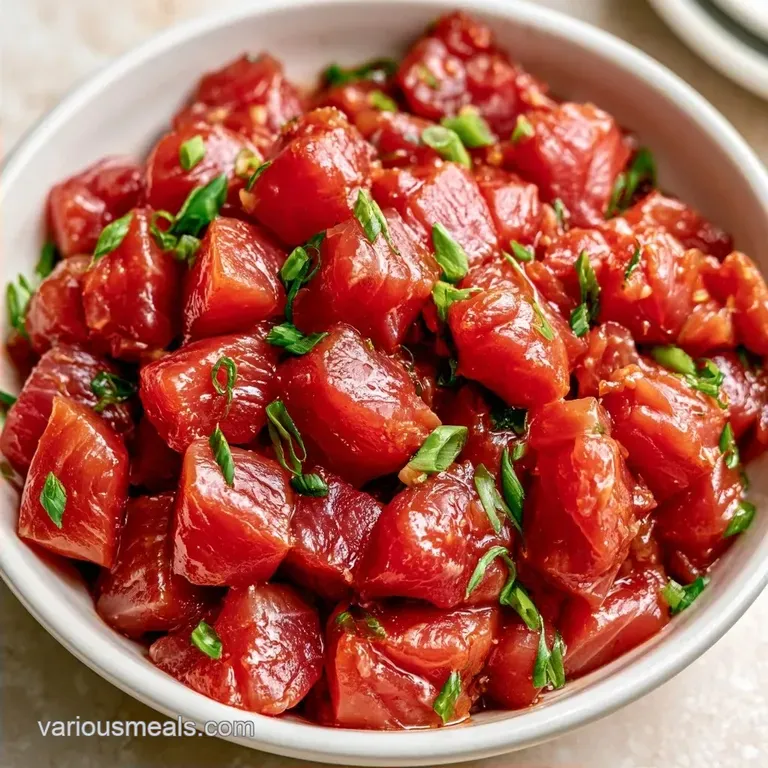
- Time: 10 min active
- Flavor/Texture Hook: Salty, umami rich and buttery
- Perfect for: Quick weeknight dinners or healthy appetizers
One lesson I learned early on is the importance of a chilled mixing bowl. Without one, the tuna can warm up quickly once the sauce is added, which kills that signature snap. Now, I pop my bowl in the freezer for ten minutes before starting.
The speed of this recipe is incredible. You'll love the aroma of toasted sesame and fresh ginger wafting through the room. Because there's no heat involved, your only real task is the chopping.
This Shoyu Ahi Poke is an excellent option for a high protein meal that doesn't require the stove. It's light, vibrant, and always feels like an indulgence.
Why These Flavors Just Click
- The Salt Balance: Shoyu provides a fermented depth, but the sea salt crystals draw out the natural sweetness of the raw ahi. This prevents the fish from tasting flat.
- Temperature Control: Keeping the fish ice cold preserves the firm texture. If the tuna warms up, it loses that signature "pop" when you bite into it.
- Surface Area: Cutting the tuna into half inch cubes ensures every single piece gets a thin coating of sauce without drowning the fish.
| Premium Choice | Budget Alternative | Impact | Savings |
|---|---|---|---|
| Fresh Sashimi Grade Ahi | Flash Frozen Sushi Grade | Nearly identical taste; slightly less firm | $5 - $10 per lb |
| Maui Onion | Sweet White Onion | Slightly less sweetness; more "bite" | $1 - $2 |
| Dried Limu | Nori strips (finely cut) | Different sea salt profile; less "oceanic" | $2 - $4 |
Recipe Quick Specs
This recipe is built for speed. You aren't marinating this for hours, which would actually "cook" the fish in acid. You're doing a fresh toss.
For the best result, make sure your tuna is chilled to about 34-38°F before you start slicing. According to USDA guidance, keeping raw seafood at these temperatures is essential for safety and quality.
The Essential Ingredient List
| Ingredient | What It Does | Best Swap |
|---|---|---|
| Sashimi grade Ahi | The buttery, protein base | Fresh Salmon |
| Shoyu | Adds salt and umami | Tamari (for gluten-free) |
| Toasted Sesame Oil | Provides a nutty aroma | Neutral oil + toasted seeds |
| Dried Limu | Adds a briny, sea salt finish | Shredded Nori |
- 1 lb sashimi grade ahi tuna, cubed into 1/2 inch pieces Why this? Essential for raw consumption safety.
- 2 tbsp Maui onion, finely diced Why this? Mild sweetness balances the salt.
- 2 stalks green onion, thinly sliced
- 1 tsp sea salt
- 3 tbsp shoyu Why this? Traditional Hawaiian soy sauce base.
- 1 tbsp toasted sesame oil Why this? Gives that iconic toasted smell.
- 1 tsp rice vinegar
- 1 tsp fresh ginger, grated
- 1 tbsp toasted sesame seeds
- 1 tbsp roasted macadamia nuts, crushed Why this? Adds a rich, buttery crunch.
- 1 tsp dried limu
- 1/2 tsp red pepper flakes
Gear for the Job
Professional gear isn't a must, but a razor sharp knife is essential. A dull edge will shred the tuna rather than slicing it cleanly, resulting in a mushy consistency.
A silicone spatula is my top choice for the mixing stage. Its flexibility protects the fish and allows you to fold in the macadamia nuts without breaking them. Using a chilled stainless steel bowl also helps maintain the ideal temperature for the tuna while you work.
Putting it All Together
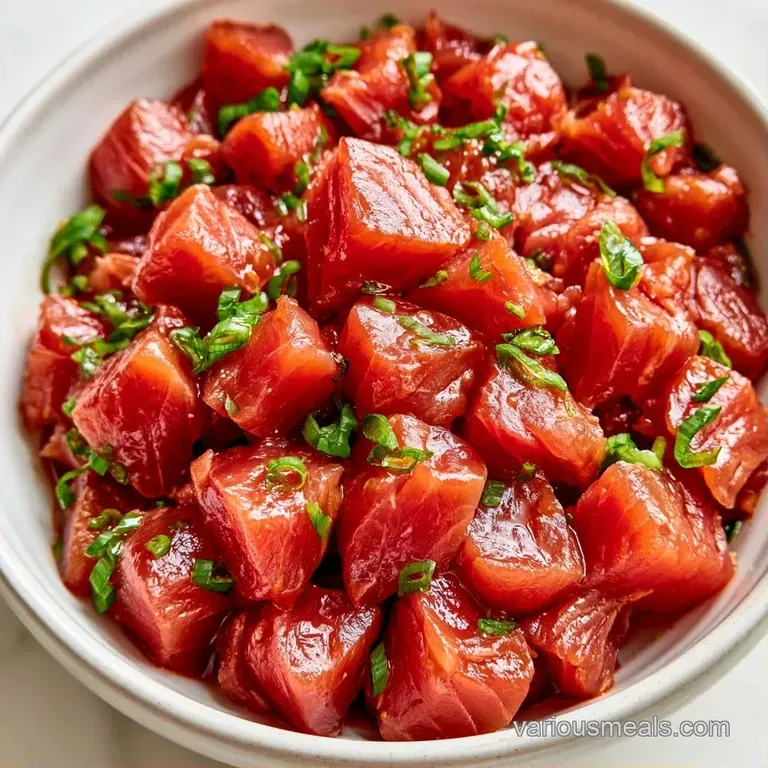
Phase 1: The Precision Cut
Slice the chilled ahi tuna into uniform planks, then strips, and finally into 1/2 inch cubes. Transfer the cubes immediately into a chilled mixing bowl. Note: Keeping the fish cold is the most important part here.
Phase 2: The Sauce Mix
In a small separate bowl, whisk together the shoyu, toasted sesame oil, rice vinegar, and grated ginger. Stir until the mixture is glossy and cohesive. You should smell a strong, punchy ginger aroma here.
Phase 3: The Gentle Fold
Pour the shoyu sauce over the cubed tuna. Add the diced Maui onion, green onion, and sea salt. Using a silicone spatula, gently fold the ingredients together. This is how you build a proper Shoyu Ahi Poke without bruising the meat.
Phase 4: The Final Flourish
Fold in the toasted sesame seeds, crushed macadamia nuts, and dried limu. Give it one final light toss until the seeds are evenly distributed. Serve immediately.
Fixing Common Poke Problems
If the fish looks a bit dull, you likely over mixed it. The goal is to coat the tuna, not mash it into a paste. Use a folding motion, like you would with a cake batter.
Another common issue is the salt level. Shoyu brands vary wildly in saltiness. Taste a small piece of the finished poke. If it's too sharp, a tiny squeeze of fresh lime juice can cut through the salt.
The Tuna Looks Mushy
This usually happens if the tuna wasn't cold enough or you stirred too hard. Stop mixing as soon as the sauce covers the fish.
The Flavor is Too Salty
Too much shoyu or salt can overpower the ahi. Add a bit more diced onion or avocado to dilute the saltiness.
| Problem | Fix |
|---|---|
| Mushy texture | Use a chilled bowl and fold gently |
| Overly salty | Add more onion or fresh avocado |
| Bland taste | Increase ginger or add a pinch more sea salt |
Best Ways to Serve
The most common way to enjoy Shoyu Ahi Poke is in a bowl over warm sushi rice. The contrast between the cold fish and warm rice is brilliant. If you're looking for something even faster, check out my Poke in 15 Minutes recipe for a streamlined version.
You can also serve this as an appetizer with wonton chips or sliced cucumber rounds. For a more filling meal, add cubed avocado and shelled edamame.
| Servings | Tuna Amount | Shoyu Amount | Sesame Oil |
|---|---|---|---|
| 2 People | 1/2 lb | 1.5 tbsp | 1/2 tbsp |
| 4 People | 1 lb | 3 tbsp | 1 tbsp |
| 8 People | 2 lbs | 5 tbsp | 1.5 tbsp |
Freshness and Storage Tips
Because this is a raw dish, you can't let it sit. Eat this Shoyu Ahi Poke immediately for the best texture. If you absolutely must store it, put it in an airtight glass container and keep it in the coldest part of your fridge.
It stays safe for about 24 hours, but the salt in the shoyu will start to "cure" the fish, changing the texture from raw to something more like ceviche. I don't recommend freezing the finished poke, as the sauce will separate and the tuna will become grainy.
To avoid waste, use any leftover Maui onion or green onion for a quick stir fry or as a garnish for eggs the next morning.
Tweak for Your Diet
You can easily adjust the flavor profile of this Shoyu Ahi Poke based on what you have in your pantry. For those who prefer more heat, try replacing the red pepper flakes with Sriracha or prepare a full Spicy Tuna Poke Bowl.
The Tropical Twist
Stir in some diced pineapple or mango. The natural sweetness of the fruit balances beautifully with the salty Hawaiian Ahi Shoyu Sauce.
Low Sodium Option
Substitute shoyu with coconut aminos. It provides a similar umami taste and dark hue but contains significantly less salt.
Plant Based Swap
If you are avoiding fish, extra firm tofu is a great alternative. Press the tofu for 30 minutes to remove excess water, cut into cubes, and toss with the same sauce.
For different goals:
- For a creamier texture: fold in 1/2 a diced avocado right before serving.
- For more crunch: double the macadamia nuts and stir in toasted panko.
- For a brighter zing: stir 1 tsp of fresh lemon zest into the sauce.
Now you're all set to begin. Just remember to keep the tuna chilled, use a sharp knife, and avoid over mixing. This Shoyu Ahi Poke relies on high-quality ingredients and simple preparation. Let's get to chopping!
Critical Sodium Level
1815 mg 1815 mg of sodium per serving (79% 79% of daily value)
The American Heart Association recommends a daily sodium limit of no more than 2,300 mg, with an ideal limit of 1,500 mg for most adults.
Ways to Reduce Sodium
-
Swap Your Shoyu-30%
Replace standard shoyu with low-sodium soy sauce or coconut aminos to significantly lower the salt content.
-
Omit Added Salt-25%
Since shoyu is already very salty, eliminate the 1 tsp of sea salt entirely from the recipe.
-
Check Your Nuts-10%
Use unsalted roasted macadamia nuts to avoid unnecessary added sodium from processing.
-
Rinse Dried Limu-5%
Rinse the dried limu thoroughly under cold water before adding to remove excess surface salt.
-
Enhance with Citrus
Add a squeeze of fresh lime juice or extra grated ginger to provide a bright, punchy flavor without adding any sodium.
Recipe FAQs
What defines shoyu ahi poke?
It is a Hawaiian style raw tuna dish marinated in a savory blend of shoyu, sesame oil, and ginger.
Tip: Chill your mixing bowl in the freezer for ten minutes to maintain the fish's snap.
How do I assemble the poke?
Fold the marinated tuna gently with a silicone spatula to avoid breaking the cubes.
Tip: Serve immediately after adding the macadamia nuts to keep them crunchy.
Is it true that any tuna steak is safe for raw poke?
No, and here's why. Only sashimi grade tuna is treated specifically to be safe for raw consumption.
Tip: Always verify with your fishmonger that the cut is sushi grade.
Which fish is specifically used for ahi poke?
This recipe requires sashimi grade ahi tuna.
Tip: Cut the tuna into exact 1/2 inch cubes so every piece gets coated in sauce.
Why pick shoyu poke over spicy versions?
Shoyu poke emphasizes the buttery flavor of the fish with umami, while spicy versions prioritize heat.
Tip: For a different flavor profile, see how we use a similar marinade in our soy ginger tuna.