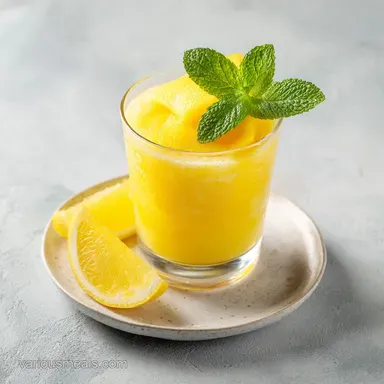
Mango Lemonade: Velvety and Tropical
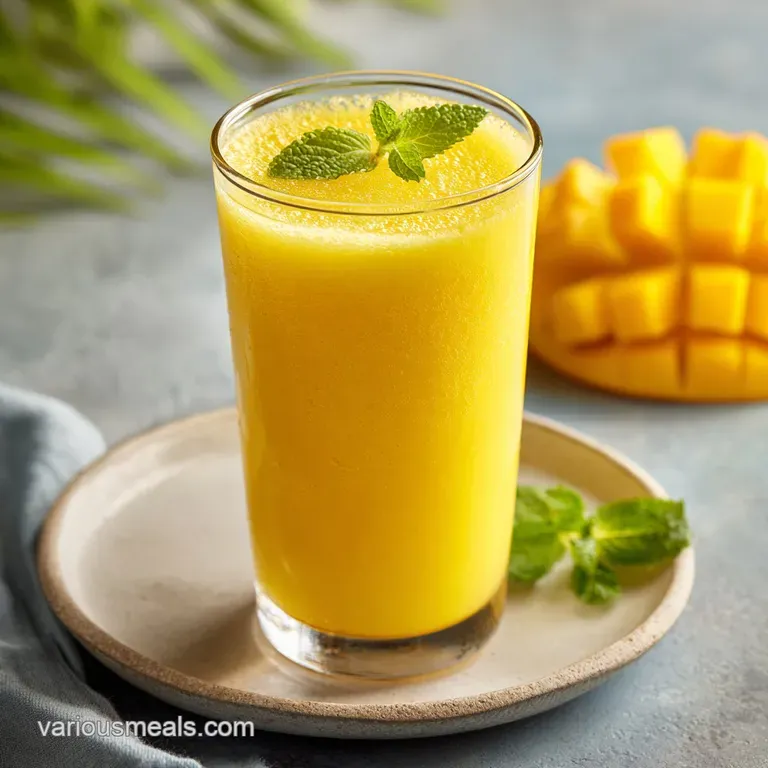
- Time: Active 10 minutes, Passive 0 minutes, Total 10 minutes
- Flavor/Texture Hook: Velvety mango sweetness with a citrus sizzle
- Perfect for: Backyard barbecues, hot summer afternoons, or beginner friendly entertaining
- Creating a Refreshing Mango Lemonade for Summer
- Vital Stats for Your Next Tropical Drink
- Essential Components for This Vibrant Fruit Base
- Simple Gear for a Smooth Velvety Texture
- Step-by-Step Method for Maximum Fruit Flavor
- Common Pitfalls When Preparing Fresh Fruit Drinks
- Creative Variations for Your Homemade Tropical Blend
- Storing Your Batch to Maintain Bright Flavors
- Perfect Pairings for This Chilled Summer Classic
- Recipe FAQs
- 📝 Recipe Card
Creating a Refreshing Mango Lemonade for Summer
The first thing you notice is that bright, sunshine yellow hue that just screams summer. Then comes the scent, a heady mix of floral mango skin and that sharp, clean citrus spray that hits your nose when you squeeze a lemon. I remember the first time I served this at a family gathering.
We were all wilting in the heat, and the moment the pitcher hit the table, the condensation on the glass promised the kind of relief only a cold drink can provide.
We’ve all had those fruit drinks that are either too watery or weirdly chunky, right? I used to just stir mango nectar into store-bought lemonade and wonder why it tasted so flat. It was a mistake I made for years until I realized that the magic happens in the blender.
By processing the whole fruit with just a bit of sugar and salt, you create this incredibly lush base that holds its body even after you add the ice.
This isn't just a drink, it's a mood. It's about sitting on the porch while the sun starts to dip, watching the ice cubes slowly melt into a sunset colored swirl. You don't need fancy equipment or hours in the kitchen to make this happen.
In about 10 minutes, you'll have something that looks like it came from a high end tropical resort but was actually made in your own pajamas. Let's get into how we make this happen without any stress.
Vital Stats for Your Next Tropical Drink
Before we get the blender spinning, it is helpful to see how this approach compares to the old-fashioned way of making fruit drinks. Most people think they need to stand over a stove making a fruit syrup, but for mangoes, that actually kills some of the fresh, floral notes we want to keep.
| Method | Time | Texture | Best For |
|---|---|---|---|
| Blender Base | 10 minutes | Velvety and thick | Maximum fruit flavor and speed |
| Stovetop Syrup | 30 minutes | Thin and clear | Long term storage or clear cocktails |
| Juiced Fruit | 15 minutes | Light and watery | Refreshment without the "filling" feeling |
When you use the blender method, you are keeping the fruit solids in suspension. This is what gives the drink its "weight" on the tongue. If you've ever felt like lemonade was just "sour water," this is the fix. The mango provides a natural creaminess that usually requires dairy, but here it is all plant power.
High Speed Suspension: Blending at high speeds breaks down mango fibers into microscopic particles that stay suspended in the water rather than sinking.
Osmotic Extraction: Letting the sugar sit with the mango for just a minute before blending helps draw out the juices, resulting in a more intense flavor profile.
Acid Balance: The citric acid in the lemon juice acts as a flavor "brightener," which prevents the dense mango from tasting too cloying or heavy.
Essential Components for This Vibrant Fruit Base
Getting the right ingredients is half the battle. If your mangoes aren't ripe, the whole drink will taste like green grass. Look for fruit that gives slightly when you press it, like a ripe peach, and has a strong, sweet aroma right at the stem end.
| Component | Science Role | Pro Secret |
|---|---|---|
| Ripe Mangos | Provides viscosity and natural fructose | Use Ataulfo (honey) mangos for less fiber and more creaminess |
| Granulated Sugar | Balances acidity and stabilizes the puree | Pulse with the fruit first to ensure every grain dissolves |
| Lemon Juice | Breaks down fruit pectin and provides top notes | Always roll your lemons on the counter before squeezing for more yield |
| Sea Salt | Suppresses bitterness and amplifies sweetness | A tiny pinch makes the mango flavor "pop" without tasting salty |
For the Mango Base
You will need 2 Large Ripe Mangos, which should give you about 450g of fruit. If you can find the smaller, yellow honey mangos, use four of those instead. You also need 1/2 cup (100g) of granulated sugar. I have tried using honey or agave, but honestly, plain white sugar lets the fruit flavor stay the star of the show.
To help the blender along, keep 1/2 cup (120ml) of filtered water and a pinch of sea salt ready.
For the Lemonade Component
Freshness is everything here. You need 1 cup (240ml) of freshly squeezed lemon juice. This usually takes about 4 to 6 lemons depending on their size. Don't even look at the bottled stuff in the green plastic lemon; it has a metallic aftertaste that will ruin the delicate mango.
Finally, you'll need 3 cups (720ml) of cold filtered water to bring it all together.
| Original Ingredient | Substitute | Why It Works |
|---|---|---|
| Granulated Sugar | Honey (1/3 cup) | Adds a floral note but may slightly change the vibrant yellow color. |
| Fresh Mangos | Frozen Mango Chunks | Works well for a slushy texture. Note: Thaw slightly for a smoother liquid drink. |
| Lemon Juice | Lime Juice | Creates a "Mango Limeade" which is more tart and tropical. |
While you are thinking about tropical flavors, you might want to consider how this base can be used in other ways. For instance, if you end up with extra mango, it's the perfect excuse to whip up a Mango Habanero Sauce for dinner later. The sweetness of the mango is the ultimate partner for a bit of heat.
Simple Gear for a Smooth Velvety Texture
You don't need a kitchen full of gadgets, but a high speed blender is your best friend here. A standard blender will work, but you might need to run it for an extra minute to get rid of those tiny mango "hairs" that can be annoying.
If you find your blender struggling, try cutting the mango into smaller half inch cubes first.
A good citrus juicer is also a huge help. I prefer the hand press style (the ones that look like giant garlic presses) because they get the most juice out without releasing the bitter oils from the lemon zest. If you don't have one, the old-fashioned glass reamer works just fine.
Just make sure you have a fine mesh sieve nearby. Even if your blender is a beast, pouring the finished Mango Lemonade through a sieve into the pitcher ensures that "velvety" texture I keep talking about. It catches any rogue seeds or stubborn fibers.
Step-by-step Method for Maximum Fruit Flavor
- Peel and cube the 2 Large Ripe Mangos, discarding the pits. Place the mango chunks, 1/2 cup (100g) granulated sugar, 1/2 cup (120ml) of filtered water, and a pinch of sea salt into a high speed blender. Note: Adding the salt now helps it dissolve perfectly into the fruit cell walls.
- Start the blender on low speed and gradually increase to the highest setting. Process for exactly 60 seconds until the mixture is a glossy, completely smooth puree with no visible fibers.
- Add the 1 cup (240ml) freshly squeezed lemon juice to the blender. Pulse 3-4 times just to integrate the acid with the mango puree. Note: Pulsing instead of blending prevents the lemon juice from oxidizing and becoming bitter.
- Pour the concentrated mango lemon mixture into a large glass pitcher. Stir in the remaining 3 cups (720ml) of cold filtered water. Stir until the color is uniform.
- Optional: Pass the lemonade through a fine mesh sieve into another vessel until the liquid is perfectly translucent and smooth.
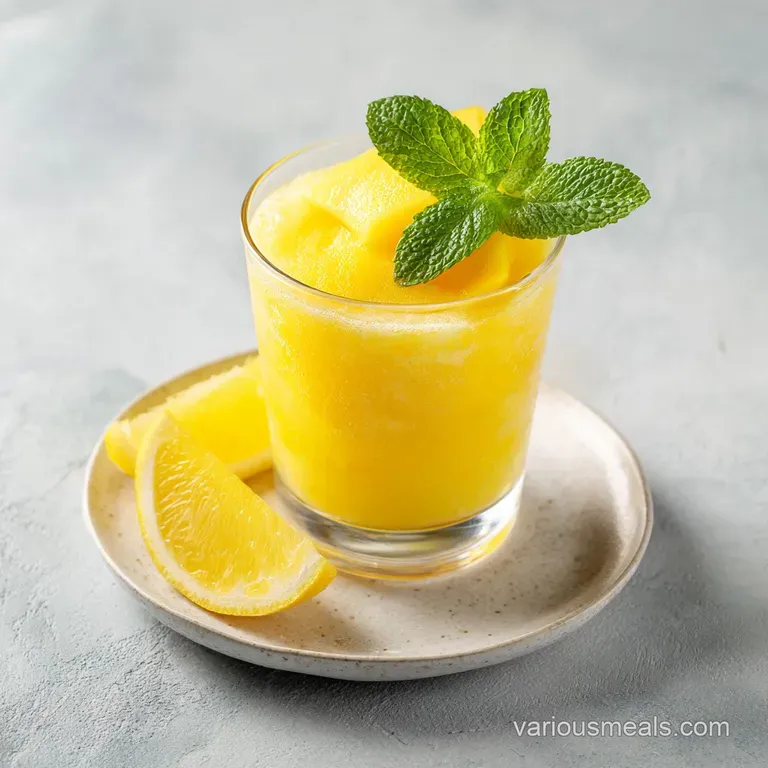
- Serve immediately over ice, garnished with mint or lemon slices.
1. The High Velocity Blitz
The goal of that first minute in the blender isn't just to chop the fruit. We are actually creating a fruit emulsion. By spinning the sugar and mango together at high speed, you are creating a stable base that won't separate as quickly when it sits in the fridge.
If you stop too early, you'll end up with a layer of "sludge" at the bottom of your glass.
2. The Acid Integration
Adding the lemon juice at the very end is a trick I learned from a bartender friend. Citric acid can be delicate. If you blend it on high for a full minute, you sometimes incorporate too much air, which can make the juice taste a bit "muted." By pulsing it at the end, you keep that sharp, fresh citrus bite intact.
3. The Cold Flash Assembly
Using cold filtered water for the final stir is key. If you use room temperature water, you'll have to use more ice to cool it down, which eventually dilutes the flavor. I like to keep a pitcher of water in the fridge for an hour before I start.
This way, the first glass you pour is already at that "brain freeze" temperature we love.
Common Pitfalls When Preparing Fresh Fruit Drinks
Even the simplest recipes have their traps. The most common issue with Mango Lemonade is the "thickness" factor. Since we are using real fruit, the density can vary. If your mangos were particularly large or fibrous, you might find the drink feels more like a smoothie than a lemonade.
Why Your Drink Is Too Thick
If the consistency feels heavy, it's usually because the mangos were very high in pectin or the blender didn't quite break down the fibers enough. A quick fix is to add more water, but that can dilute the flavor.
| Problem | Root Cause | Solution |
|---|---|---|
| Separation | Not blended long enough | Give it another 30 seconds on high speed or stir vigorously before serving. |
| Too Tart | Lemons were extra acidic | Stir in a tablespoon of simple syrup or honey to balance the pucker. |
| Gritty Texture | Mango fibers remained | Pass the entire mixture through a fine mesh sieve or a cheesecloth. |
Common Mistakes Checklist
- ✓ Don't skip the salt; it sounds weird for a drink, but it is the secret to making the mango taste "bright" rather than just "sweet."
- ✓ Always use fresh lemons; the bottled juice has preservatives that clash with the fresh mango oils.
- ✓ Use filtered water if your tap water has a strong chlorine taste, as it will be very noticeable in a cold drink.
- ✓ Avoid over blending the lemon juice; a few pulses are all you need to keep the citrus flavor fresh.
- ✓ Peel your mangos thoroughly; even a little bit of the tough skin will create bitter green flecks in your drink.
Creative Variations for Your Homemade Tropical Blend
Once you have the basic method down, you can really start playing with the flavors. My personal favorite is adding a bit of heat. A tiny slice of jalapeño steeped in the pitcher for 20 minutes gives it a back of-the throat warmth that is incredible. If you're hosting a party and want to offer an adult version, you might consider how this fruit profile works in a Strawberry Mango Sangria. It uses similar fruit notes but adds that festive wine element.
1. The Spicy Tajín Twist
For a Mexican inspired version, rim your glasses with a bit of lime juice and Tajín seasoning. The chili lime salt works perfectly with the sweetness of the mango. It turns a simple drink into something that feels like street food in liquid form.
2. The Sparkling Mango Lemonade Mocktail
If you want some bubbles, replace the final 3 cups of still water with cold sparkling water or club soda. Just be careful when stirring! If you stir too fast, you'll lose all the carbonation. This version feels much lighter and is great for celebrations where you want a fancy non alcoholic option.
If you want a creamier drink, add a splash of coconut milk
This creates a "Mango Colada" style lemonade that is much richer. It's almost like a liquid dessert. The fat in the coconut milk carries the mango flavor across your palate in a different way, making it feel very indulgent.
Storing Your Batch to Maintain Bright Flavors
Fresh fruit juice is a "live" product, meaning it starts to change the moment it's made. The lemon juice will eventually start to lose its brightness, and the mango may begin to settle.
Storage: Keep the lemonade in a sealed glass pitcher in the fridge for up to 3 days. Before serving, give it a good stir with a long spoon to re incorporate any fruit solids that have settled at the bottom.
Freezing: You can freeze this! In fact, freezing it in ice cube trays is a genius move. You can use the Mango Lemonade cubes in plain water or even blend them later for a quick frozen slushy. They will stay fresh in the freezer for about 2 months.
Zero Waste: Don't throw away those lemon rinds! You can toss them into a jar of white vinegar to make a fresh smelling kitchen cleaner, or zest them before juicing and keep the zest in the freezer for baking projects later in the week.
Perfect Pairings for This Chilled Summer Classic
Because this drink has both high acid and high sugar, it is incredibly versatile with food. It acts as a palate cleanser for rich, fatty foods but also complements spicy dishes. If you are doing a full tropical spread, serving this alongside a fresh Arugula Salad with Lemon Vinaigrette creates a nice bridge between the citrus in the drink and the dressing on the greens.
The Spicy Food Partner
Mango is the natural enemy of "too much heat." If you're serving spicy tacos or a hot curry, this lemonade is your best friend. The sugar and the density of the fruit help coat the tongue and neutralize the capsaicin burn. It's much more effective than plain water.
The Savory Grill Match
Think about things coming off the barbecue. Charred chicken, pork ribs, or even grilled halloumi cheese. The brightness of the lemon cuts through the smoky, charred flavors of the grill, while the mango adds a fruity depth that pairs well with most BBQ sauces.
It’s a simple way to make a basic backyard meal feel like a thought out menu.
Searing or grilling meat doesn't actually "seal in juices" as the old myths say, but it does create a crust that provides a savory counterpoint to a sweet drink like this. The contrast between a salty, charred piece of protein and a cold, velvety sip of Mango Lemonade is exactly why summer dining is so special.
Trust me, once you make this for a crowd, they won't let you go back to the powdered stuff ever again.
Recipe FAQs
Is Mango Lemonade a thing?
Yes, it is a classic tropical pairing. The intense sweetness of the mango perfectly balances the sharp acidity of fresh lemon, creating a sophisticated profile that goes beyond standard citrus drinks.
Do mango and lemon go together?
Yes, they are a culinary match. If you enjoyed the tangy citrus balance found in our wing recipe, you will appreciate how the acidity of lemon cuts through the rich, heavy texture of pureed mango.
What lemonade can diabetics drink?
Consult your medical professional regarding sugar content. This specific recipe uses granulated sugar to achieve its flavor, which requires careful monitoring for those managing blood glucose levels.
Can a diabetic eat lemonade?
No, not without careful consideration of total carbohydrate intake. Because this recipe includes significant amounts of granulated sugar, it is essential to check your personal dietary guidelines before consumption.
How to get the perfect texture in the puree?
Process the mango chunks, sugar, water, and salt on the highest blender setting for exactly 60 seconds. This duration ensures the fruit cell walls break down completely into a glossy, fiber free liquid.
How to prevent the lemonade from tasting bitter?
Peel the mangos thoroughly and pulse the lemon juice only 3-4 times. Any traces of mango skin will introduce bitterness, and over blending the citrus can release harsh oils from the lemon, compromising the fresh flavor.
How to store leftovers properly?
Keep the mixture in a sealed glass pitcher in the refrigerator for up to 3 days. Always stir well before serving, as the natural fruit solids will naturally settle at the bottom of the vessel over time.
Velvety Mango Lemonade