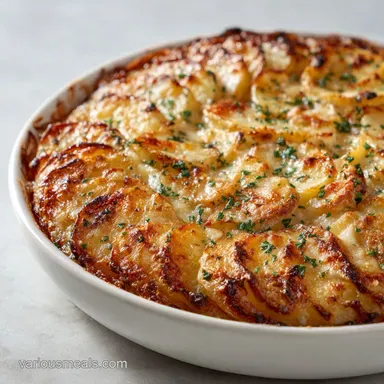
Creamy Au Gratin Potatoes: Nutty and Rich
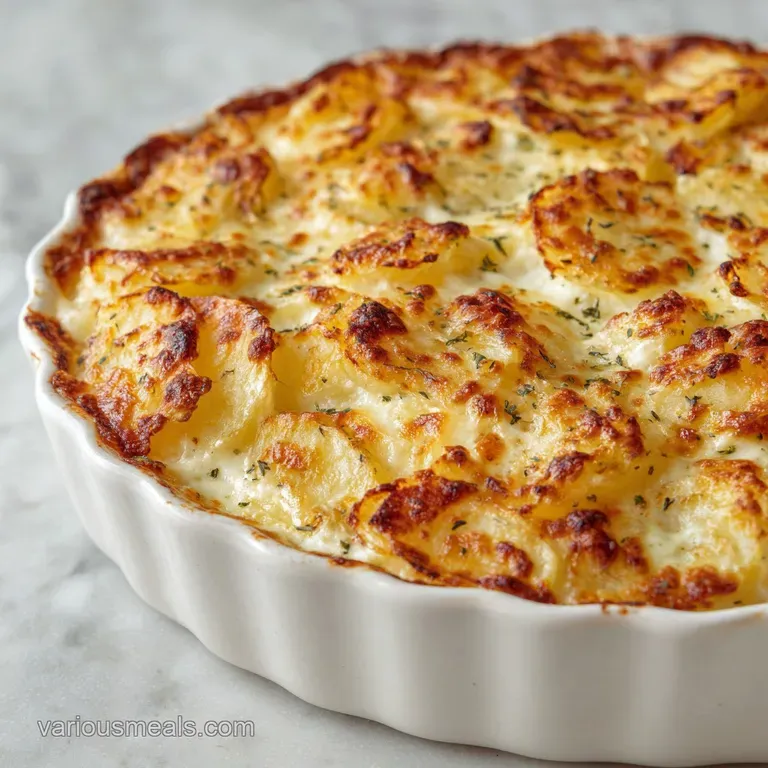
- Time: 20 min active + 75 min bake = 1 hour 35 mins total
- Flavor/Texture Hook: Nutty Gruyère with a velvety, creamy sauce
- Perfect for: Family holiday dinners or a comforting Sunday roast
The Ultimate Au Gratin Potatoes
I can't tell you how many times I've pulled a tray out of the oven only to find a soggy, lukewarm mess in the middle and a burnt, blackened top. It's the classic potato trap. You think you've got the timing right, but you end up with something that has the consistency of a loose porridge rather than a structured bake.
I once served a version of this at a dinner party where the slices were basically swimming in a thin, broken sauce that had separated into oil and water. It was a total nightmare.
The trick to fixing this is all in how you handle the liquid. Most people just pour milk and cream over the slices and hope for the best. But if you want that rich, cohesive texture, you need a sauce that's actually stable before it even hits the oven.
By thickening the milk first, you ensure the sauce clings to every single slice of potato, creating those distinct, velvety layers instead of a puddle.
This version of Au Gratin Potatoes is all about the contrast. You get the salty, nutty punch of the Gruyère, the aromatic lift from fresh thyme, and the satisfying crunch of the Parmesan crust.
It's the kind of side dish that makes the rest of the meal feel like a celebration, regardless of what the main protein is.
The Secret To Success
If you've ever wondered why some versions feel like a different dish entirely, it's usually the cheese and the starch. For instance, these are quite different from Scalloped Potatoes, which typically rely on a bechamel and don't always feature the browned cheese topping that defines a "gratin."
- Richness
- Heavy cream and melted butter
- Salt/Nuttiness
- Gruyère and Parmesan
- Aroma
- Fresh thyme and minced garlic
- Texture
- Crisp top, tender slices
- The Starch Bind
- Cornstarch prevents the milk from separating when heated, keeping the sauce silky.
- Temperature Control
- Baking at 190°C allows the potatoes to soften before the cheese burns.
- Layering Logic
- Alternating onion and potato distributes moisture evenly, preventing raw spots.
- The Rest Period
- Letting the dish sit for 10 minutes allows the sauce to set, so it doesn't run.
| Method | Prep Time | Texture | Best For |
|---|---|---|---|
| Classic (Raw) | 20 mins | Velvety & Structured | Holiday feasts |
| Fast (Parboiled) | 40 mins | Softer & More Uniform | Quick weeknight sides |
The Component Breakdown
When you're working with a dish this rich, the quality of the base determines whether it feels heavy or balanced. I've found that the interaction between the potato starch and the dairy is what creates that "melt in-your mouth" feel.
| Ingredient | Science Role | Pro Secret |
|---|---|---|
| Yukon Gold | Natural binder | Keeps shape better than Russets |
| Cornstarch | Thickening agent | Mix into cold milk to avoid lumps |
| Gruyère | Flavor & Melt | Grate it yourself for a smoother melt |
| Thyme | Aromatic balance | Add at the end to keep the scent fresh |
Gear For The Job
You don't need a professional kitchen, but a few tools make this way easier. A mandoline is my absolute favorite here because getting those 1/8 inch slices by hand is a chore and usually results in uneven cooking. If you don't have one, just take your time with a sharp knife.
I always use a ceramic 9x13 inch baking dish. Ceramic holds heat more evenly than glass or metal, which means you're less likely to get those burnt edges while the center is still hard. For the sauce, a medium saucepan is all you need to get the milk and cornstarch simmering.
The Cooking Process
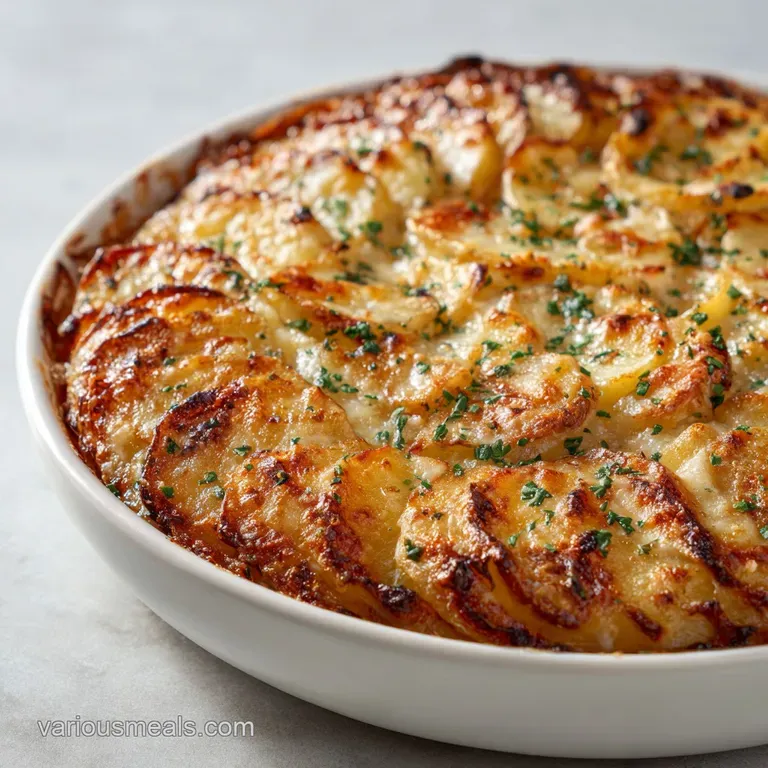
Right then, let's get into the actual build. Trust me on the potato soaking step, it makes a huge difference in how the sauce adheres.
1. Preparing the Foundation
Grease your 9x13 inch ceramic dish with melted butter. Use a mandoline to slice your potatoes and onions into 1/8 inch rounds. Put the potato slices in a bowl of cold water for a few mins to wash off excess surface starch, then pat them completely dry with a towel.
Note: Dry potatoes mean the sauce sticks instead of sliding off.
2. Building the Velvety Sauce
Whisk the milk (or half and half) and cornstarch in a saucepan over medium heat. Stir in the salt, pepper, and minced garlic. Bring it to a gentle simmer until the sauce thickens enough to coat the back of a spoon.
3. The Cheese Blend
Remove the pan from the heat. Stir in 1 cup of the shredded Gruyère cheese, whisking until it's melted and smooth.
4. The First Layer
Layer half of your potato and onion slices in the dish. Sprinkle a little salt over them. Pour half of the cheese sauce evenly over the top, tilting the pan to cover the edges.
5. The Second Layer
Repeat the process with the remaining potatoes and onions, then pour the rest of the sauce over everything.
6. The Final Topping
Scatter the remaining Gruyère, the grated Parmesan, and the fresh thyme leaves across the top.
7. The Bake
Bake uncovered at 375°F (190°C) for 60-75 minutes until the top is bubbling and deep golden brown.
8. The Rest
Let the dish sit for 10 minutes before scooping. Note: This is the hardest part, but it stops the sauce from being too runny.
Fixing Common Glitches
Even with a plan, things can go sideways. Usually, it's a temperature or starch issue. If the top is getting too dark but the potatoes aren't tender, just tent a piece of foil over the dish.
Hard Center Fix
This usually happens if the slices are too thick or the oven is too hot. Make sure you're using 1/8 inch slices and a ceramic dish for even heat.
Grainy Sauce Cause
If you boil the sauce too hard or add the cheese while the milk is still bubbling, the fats can separate. Always take the pan off the heat before stirring in the Gruyère.
Burning Top Solution
The Parmesan can brown quickly. If it's darkening too fast, lower the heat by 10 degrees or cover it with foil for the last 20 minutes.
| Problem | Root Cause | Solution |
|---|---|---|
| Sauce is watery | Not enough cornstarch | Simmer sauce longer before layering |
| Potatoes are raw | Slices too thick | Use a mandoline for 1/8 inch cuts |
| Cheese is oily | Overheated sauce | Remove from heat before adding cheese |
Common Mistakes Checklist:
- ✓ Patting potatoes dry after soaking
- ✓ Using a ceramic dish for even heating
- ✓ Whisking cornstarch into cold milk first
- ✓ Letting the dish rest for 10 minutes
- ✓ Grating cheese from a block, not a bag
Variations And Swaps
I love this recipe as a base, but you can really play with the flavors. If you want a more "loaded" version, you can stir in some crispy bacon bits and chopped chives between the layers.
For a bit of a kick, a pinch of nutmeg or a teaspoon of Dijon mustard in the sauce adds a depth that makes people ask for the secret ingredient.
If you're looking for a different potato vibe, try adding some roasted garlic to the sauce for a more pungent flavor.
| Original Ingredient | Substitute | Why It Works |
|---|---|---|
| Gruyère (1.5 cups) | Sharp Cheddar | Stronger tang. Note: Can be oilier when melted |
| Half and Half (2 cups) | Whole Milk | Lighter feel. Note: Sauce will be slightly thinner |
| Russet Potatoes | Yukon Gold | Waxier texture. Note: Holds shape better, creamier bite |
| Fresh Thyme | Dried Thyme | Convenient. Note: Use 1/3 the amount of dried |
Decision Shortcut: If you want a nuttier flavor, use more Gruyère and less Parmesan. If you want a firmer slice, stick with Yukon Gold potatoes. If you're in a rush, parboil the slices for 5 mins before layering.
Potato Truths
There are a few things people always say about this dish that just aren't true.
First, some claim you must use heavy cream for it to be "authentic." Honestly, half and half or even whole milk with a bit of butter works just as well if you use the cornstarch trick. You get the same velvety result without it feeling like a brick of fat.
Second, people think that peeling the potatoes is optional. While skin on is fine for roasted potatoes, in Au Gratin Potatoes, the peel creates a barrier that prevents the sauce from soaking into the slice. Peel them for that seamless, melting texture.
Keeping Leftovers Fresh
Store any leftovers in an airtight container in the fridge for up to 4 days. The sauce will thicken significantly as it cools, which is normal.
To reheat, don't use the microwave if you can help it, as it can make the potatoes rubbery. Instead, put a portion in a small baking dish, add a splash of milk to loosen the sauce, cover with foil, and bake at 350°F (175°C) for about 15-20 minutes.
For zero waste, if you have leftover potato peels, toss them in olive oil and salt and air fry them at 400°F (200°C) for 10 minutes for a quick snack. If you have a bit of leftover cheese sauce, it makes a killer base for a quick macaroni and cheese.
Best Pairing Ideas
Since these are so rich, you need something to cut through the creaminess. I usually pair this with a lean protein and something bright and acidic. A crisp green salad with a lemon vinaigrette is a must.
If you're doing a big meat heavy dinner, these go perfectly with Garlic Butter Steak Bites or a roasted chicken. The acidity of the meat's sear balances the velvety nature of the potatoes. It's all about that balance of rich and bright on the plate.
Recipe FAQs
What does "au gratin" actually mean?
It refers to a dish topped with a browned crust. This is typically achieved by topping the food with cheese or breadcrumbs and baking it until golden brown.
What is in potatoes au gratin?
Thinly sliced potatoes and onions baked in a cheesy sauce. This version uses milk or half and-half thickened with cornstarch, flavored with garlic and thyme, and topped with Gruyère and Parmesan.
What's the difference between scalloped potatoes and potatoes al gratin?
The inclusion of cheese and a browned top. While scalloped potatoes are sliced and baked in cream, au gratin specifically requires cheese and a crisp, toasted crust.
What's the secret to perfect au gratin?
Slice the potatoes uniformly thin. Use a mandoline to get 1/8 inch rounds so that every slice cooks through at the same rate and absorbs the sauce evenly.
Why are my potatoes still hard after baking?
The potato slices were likely too thick. Ensure you maintain 1/8 inch thickness and bake at 375°F (190°C) for the full 60 75 minutes.
How to store and reheat leftovers?
Store in an airtight container in the refrigerator. Reheat in the oven at 375°F (190°C) until the sauce is bubbling to preserve the golden cheese crust.
Is it true I can only use Yukon Gold potatoes for this recipe?
No, this is a common misconception. Both Russet and Yukon Gold potatoes work perfectly for this dish depending on your preference for texture.
Creamy Au Gratin Potatoes