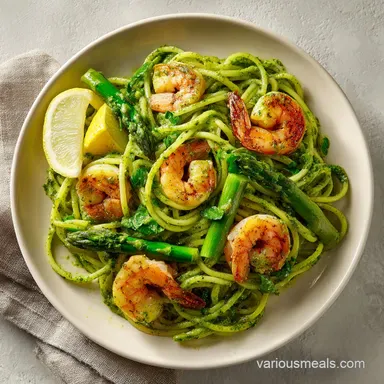
Pesto Shrimp Asparagus Pasta: Velvety and Zesty
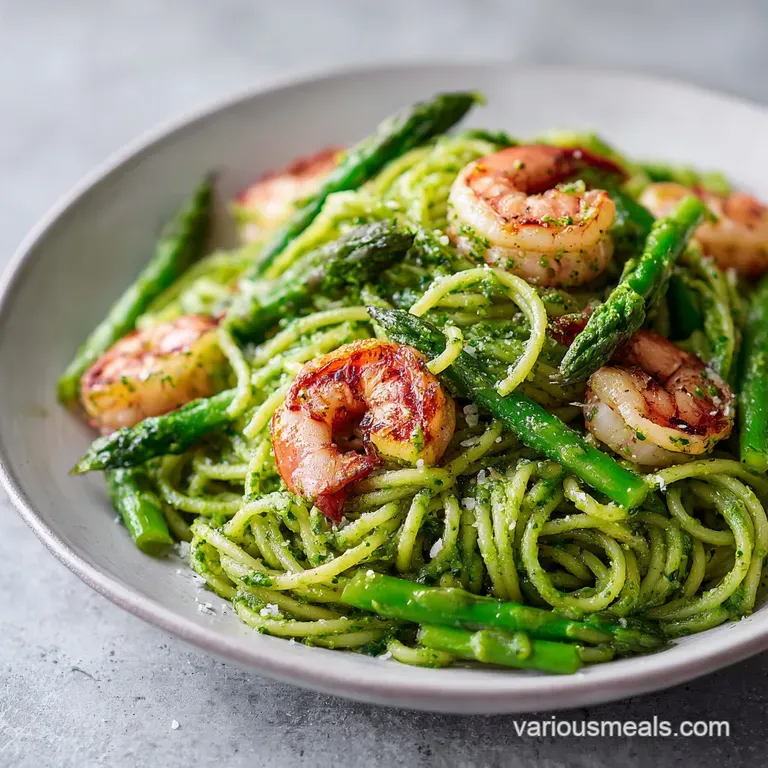
- Time: 10 min active + 15 min cooking = Total 25 mins
- Flavor/Texture Hook: Zesty lemon brightness against buttery, seared shrimp and snap crisp greens
- Perfect for: High energy weeknight dinners or a fast date night meal
- Pesto Shrimp Asparagus Pasta
- Logic Behind the Method
- Necessary Ingredients
- Essential Kitchen Tools
- The Cooking Process
- Avoiding Kitchen Disasters
- Troubleshooting Common Issues
- Adjusting the Portion Size
- Common Kitchen Misconceptions
- Storage and Waste Reduction
- Serving Suggestions
- High in Sodium
- Recipe FAQs
- 📝 Recipe Card
Sizzle. That's the sound of shrimp hitting a white hot skillet, turning from translucent grey to a golden, opaque pink in seconds. There's nothing quite like that smell, especially when garlic and red pepper flakes join the party, filling the kitchen with a sharp, savory heat that makes your mouth water instantly.
I used to struggle with this specific combo. I'd toss everything in the pan at once, and by the time the pasta was ready, the shrimp had the texture of rubber bands and the asparagus was a sad, mushy grey. It was a total mess. I realized the problem wasn't the ingredients, but the timing and the heat.
Now, I treat this Pesto Shrimp Asparagus Pasta as a game of contrasts. I want the shrimp to have a hard sear, the asparagus to keep its snap, and the pesto to stay bright green rather than turning brown from too much heat. Once you nail the sequence, it's a 25 minute win that tastes like you spent hours in a kitchen.
Pesto Shrimp Asparagus Pasta
Reasons This Meal Wins
Right then, let's talk about why this version actually works. The magic is in the layers. We aren't just mixing things in a bowl; we're building a flavor profile that hits every part of your palate.
You've got the richness of the pine nuts and olive oil in the pesto, the briny sweetness of the shrimp, and the earthy, fresh punch of the asparagus.
It's an efficient way to get protein and greens on the table without feeling like you're eating a "health food" dish. Because we use a over high heat sear, the shrimp get those little brown bits that add a deep, savory contrast to the bright, zesty lemon juice. Trust me on this: the lemon is non negotiable.
It cuts through the fat of the pesto and wakes up the whole plate.
If you're looking for something with even bolder seafood vibes, you might enjoy a Cajun seafood boil for your next gathering. But for a Tuesday night, this pasta is the gold standard. It's fast, it's vibrant, and it doesn't leave you with a mountain of dishes.
How the Flavors Balance
To understand this dish, you have to look at the flavor map. I like to think of it as a balance of four main pillars:
- Bright: Fresh lemon juice and basil.
- Rich: Olive oil, Parmesan, and pine nuts.
- Savory: Seared shrimp and toasted garlic.
- Fresh: Snap crisp asparagus.
When these hit your tongue at once, you get a velvety texture that feels indulgent but leaves you feeling light. It's all about that contrast between the tender pasta and the slight crunch of the vegetables.
Logic Behind the Method
Starch Binding: Reserved pasta water contains amylose, which acts as a bridge between the watery lemon juice and the oily pesto, creating a glossy sauce.
Protein Protection: Searing shrimp separately prevents them from simmering in the vegetable juices, which ensures they stay plump and tender.
Chlorophyll Preservation: Adding the pesto at the very end, off the direct high heat, keeps the basil from oxidizing and turning a dull olive brown.
Acidic Lift: Lemon juice breaks down the heaviness of the nuts and cheese, brightening the overall profile.
| Method | Time | Texture | Best For |
|---|---|---|---|
| Fast (This Recipe) | 25 mins | Crisp & Glossy | Weeknights |
| Classic (Slow) | 50 mins | Soft & Integrated | Sunday Lunch |
| One Pot | 20 mins | Uniform/Softer | Extreme Speed |
Component Deep Dive
| Ingredient | Science Role | Pro Secret |
|---|---|---|
| Pasta Water | Emulsifier | Always salt the water like the sea for deep flavor |
| Basil Pesto | Fat Base | Use a brand with high olive oil content for better glide |
| Lemon Juice | pH Balancer | Squeeze fresh; bottled juice lacks the volatile oils |
| Large Shrimp | Protein | Pat them bone dry with paper towels before searing |
Necessary Ingredients
Here is everything you need. I've stuck to the essentials to keep this a quick pesto shrimp asparagus pasta that doesn't require a trip to three different stores.
- 1 lb linguine or gemelli pastaWhy this? Long strands or spirals hold the pesto perfectly. (Substitute: Fettuccine or Penne)
- 1 lb large shrimp, peeled and deveinedWhy this? Large shrimp hold their shape better during a sear. (Substitute: Scallops or Chicken Breast)
- 1 bunch asparagus, trimmed and cut into 2 inch piecesWhy this? 2 inch cuts ensure they cook at the same rate as the shrimp. (Substitute: Frozen peas or Broccolini)
- 2 tbsp olive oilWhy this? High smoke point for the initial sear. (Substitute: Avocado oil)
- 3/4 cup basil pestoWhy this? Provides the primary flavor and fat source. (Substitute: Walnut pesto or homemade)
- 3 cloves garlic, mincedWhy this? Fresh garlic provides a sharp, aromatic bite. (Substitute: 1 tsp garlic powder)
- 1/2 tsp red pepper flakesWhy this? Adds a subtle back end heat. (Substitute: Pinch of cayenne)
- 1 tbsp fresh lemon juiceWhy this? Essential for cutting through the richness. (Substitute: White wine splash)
- 1/4 cup grated Parmesan cheeseWhy this? Adds umami and helps thicken the sauce. (Substitute: Pecorino Romano)
- Salt and black pepper to taste.
Essential Kitchen Tools
You don't need a professional setup for this, but a few specific tools make the process way smoother.
- Large pot: For the pasta.
- Large skillet: A 12 inch stainless steel or cast iron pan is best to avoid crowding the shrimp.
- Tongs: Essential for tossing the pasta and flipping shrimp without breaking them.
- Colander: For draining, though a spider strainer is even better.
- Measuring cups/spoons: For accuracy.
The Cooking Process
Let's crack on with the actual cooking. Follow these steps closely, especially the timing, to avoid the rubbery shrimp trap.
- Boil the pasta. Bring a large pot of salted water to a rolling boil. Add your linguine or gemelli and cook until al dente. Note: Check your package times but start tasting 2 minutes early.
- Save the liquid. Before draining, scoop out 1/2 cup of the starchy pasta water. This is your secret weapon for a silky sauce.
- Sear the shrimp. Heat olive oil in your large skillet over medium high heat. Add shrimp in a single layer, season with salt and pepper, and sear for 1-2 minutes per side until opaque pink and golden.
- Rest the protein. Remove the shrimp from the pan immediately and set them on a plate. Note: Leaving them in the pan while you do the veg will overcook them.
- Sauté the greens. In the same skillet (don't wash it!), toss in the asparagus pieces. Cook for 3-5 minutes until bright green and slightly charred.
- Add aromatics. Stir in the minced garlic and red pepper flakes for the final 60 seconds. Wait until you smell the garlic before moving to the next step so it doesn't burn.
- Combine base. Lower the heat to medium. Return the shrimp to the pan with the asparagus. Stir in the basil pesto and lemon juice, tossing gently to coat everything.
- Emulsify the sauce. Fold in the cooked pasta. If it looks too thick or clumpy, add the reserved pasta water one tablespoon at a time until the pesto clings to the noodles in a smooth, glossy layer.
- Final touch. Remove from heat and top with a generous sprinkle of grated Parmesan cheese.
Chef's Tip: If you want a deeper flavor, try adding a teaspoon of tomato paste to the garlic step. It adds a hidden richness that makes the pesto taste more complex.
Avoiding Kitchen Disasters
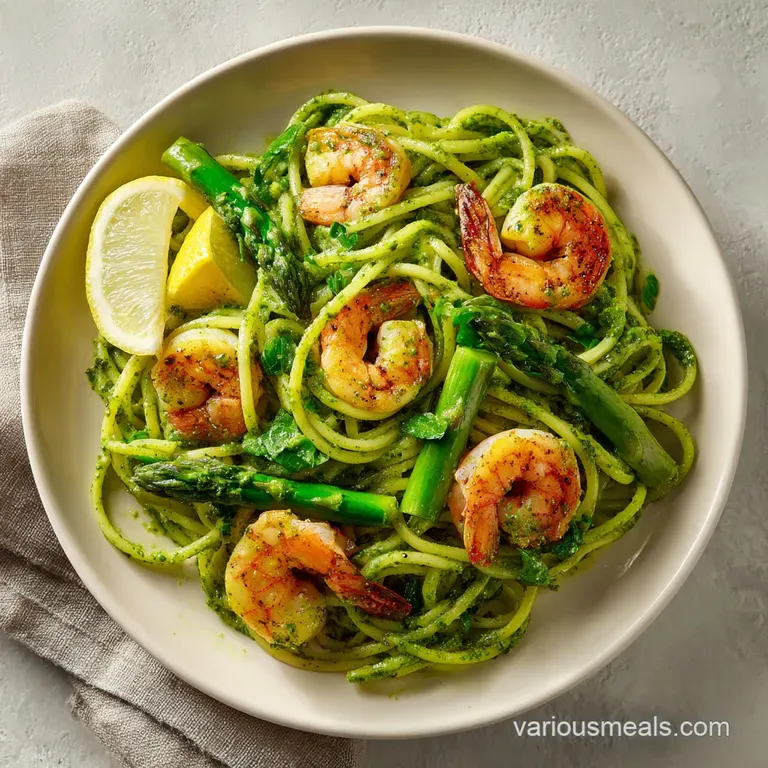
Most people mess up this recipe by rushing the heat or crowding the pan. If you put too many shrimp in at once, they'll steam in their own juices instead of searing, and you'll lose that golden crust.
Troubleshooting Common Issues
| Issue | Solution |
|---|---|
| Why Your Shrimp Are Rubbery | This happens when the protein is exposed to heat for too long. Shrimp cook incredibly fast. As soon as they curl into a "C" shape and turn opaque, they're done. If they curl into an "O", they're overc |
| Why Your Pesto Broke | Pesto is an emulsion of oil, nuts, and cheese. If you boil it or keep it on high heat for too long, the oil separates from the solids. This is why we add it at the end and keep the heat on medium. |
| Why Your Asparagus Is Mushy | Overcooking the greens kills the snap. You want a quick, over high heat sauté. If you're using very thin asparagus, reduce the sauté time to 2-3 minutes. |
Mistakes Checklist:
- ✓ Did you pat the shrimp dry? (Prevents steaming)
- ✓ Did you reserve the pasta water? (Crucial for texture)
- ✓ Did you remove shrimp before adding asparagus? (Prevents rubbery texture)
- ✓ Did you add lemon juice at the end? (Preserves brightness)
- ✓ Did you avoid boiling the pesto? (Keeps color vibrant)
Adjusting the Portion Size
Scaling this recipe is straightforward, but you can't just double everything blindly.
Cutting it in half (2 servings): Use a smaller skillet to maintain heat. Reduce the garlic to 2 cloves and the red pepper flakes to a pinch. The pasta water ratio stays the same still reserve about 1/4 to 1/2 cup.
Doubling the batch (8 servings):Work in batches. This is the most important rule. If you put 2 lbs of shrimp in one pan, they will steam and turn grey. Sear the shrimp in two turns, then the asparagus in two turns.
Increase salt and spices to about 1.5x rather than 2x, as they can become overpowering.
If you enjoy using different sauces for your proteins, you might find my six dumpling sauces useful for other quick shrimp appetizers.
Common Kitchen Misconceptions
Searing "seals in" juices. This is a myth. Searing creates a crust for flavor (thanks to the browning of proteins), but it doesn't create a waterproof seal. Moisture loss happens regardless, which is why timing is everything for shrimp.
Pesto needs to be cooked to be safe. Actually, cooking pesto too much ruins it. The basil is delicate and the cheese can clump. Treat pesto as a finishing sauce, not a simmering base.
All pasta needs a heavy sauce. Not at all. According to Serious Eats, the goal of a pasta sauce is to coat the noodle, not drown it. The combination of pesto and pasta water creates a thin but intense film that's far more flavorful than a thick, creamy sauce.
Storage and Waste Reduction
Storage Guidelines Keep this dish in an airtight container in the fridge for up to 3 days. Note that the pasta will soak up the sauce as it sits, so it may look a bit dry when you open it.
Reheating Tips Avoid the microwave if you can; it makes shrimp rubbery. Instead, heat a splash of water or olive oil in a skillet over medium heat, toss in the pasta, and stir until warmed through. This restores the glossy texture.
Freezing I don't recommend freezing the finished dish because the asparagus loses its snap and the pesto can separate. However, you can freeze blanched asparagus and seared shrimp separately for future use.
Zero Waste Tips Don't throw away the woody ends of the asparagus! Collect them in a freezer bag and use them to flavor your next batch of vegetable or chicken stock. They add a wonderful earthy depth to broths.
Serving Suggestions
This Pesto Shrimp Asparagus Pasta is a complete meal on its own, but a few additions can make it feel like a restaurant experience.
The Perfect Pairings A crisp arugula salad with a simple balsamic vinaigrette provides a peppery contrast to the creamy pesto. If you want something heartier, a slice of toasted sourdough rubbed with a raw garlic clove is a great way to scoop up any leftover sauce.
Flavor Tweaks For a more nutrient dense version, swap the linguine for chickpea pasta or zoodles. If you prefer a creamy pesto twist, stir in a tablespoon of mascarpone or heavy cream during the final emulsion step.
For those who want a different protein, this recipe works beautifully with diced scallops or even grilled chicken.
Presentation Serve in shallow bowls and garnish with extra shaved Parmesan, a few fresh basil leaves, and a final squeeze of lemon. The contrast of the bright green pasta and pink shrimp makes this a visually stunning dish for any occasion.
High in Sodium
840 mg 840 mg of sodium per serving (37% 37% of daily value)
The American Heart Association recommends a daily sodium limit of no more than 2,300 mg for most adults to maintain heart health.
Tips to Reduce Sodium
-
Low-Sodium Pesto-30%
Substitute store-bought pesto with a homemade version or a certified low-sodium brand to drastically reduce processed salt.
-
Omit Added Salt-25%
Remove the 'salt to taste' from the recipe entirely, as the cheese and pesto already provide significant sodium.
-
Unsalted Pasta Water-20%
Skip adding salt to the boiling pasta water, which is often a hidden source of excessive sodium intake.
-
Reduce Parmesan-15%
Cut the amount of grated Parmesan cheese in half or use a small amount of high-quality aged Parmesan for stronger flavor with less volume.
-
Enhance with Acid & Herbs
Increase the fresh lemon juice or add lemon zest and fresh basil leaves to brighten the flavors without adding any salt.
Recipe FAQs
Why are my shrimp rubbery?
You overcooked them. Shrimp cook very quickly; they are done once they form a "C" shape and turn opaque pink. If they curl into an "O", they have been exposed to heat for too long.
Is it true I should boil the pesto to make it stick better?
No, this is a common misconception. Boiling pesto causes the oil to separate from the solids, breaking the emulsion. Keep the heat on medium and stir it in at the end to maintain a smooth texture.
Why save the pasta water?
It creates a glossy emulsion. The starchy water helps the pesto cling to the noodles instead of sliding off. Add it one tablespoon at a time until the sauce is smooth and glossy.
How to reheat leftovers without ruining the shrimp?
Heat a splash of water or olive oil in a skillet over medium heat. Toss in the pasta and stir until warmed through. Avoid the microwave, as it often makes shrimp rubbery.
Can I freeze this pasta dish?
No, it is not recommended. Freezing causes the asparagus to lose its snap and the pesto to separate. The dish is best stored in the fridge for up to 3 days.
Why is my asparagus mushy?
It was sautéed for too long. Cook the pieces for only 3 5 minutes until they are bright green and slightly charred. Overcooking destroys the crisp texture.
What can I serve with this pesto pasta?
Toasted garlic bread is an ideal pairing. If you enjoy the cheese and garlic profiles here, see how we balance similar flavors in our spinach stuffed shells.
Pesto Shrimp Asparagus Pasta