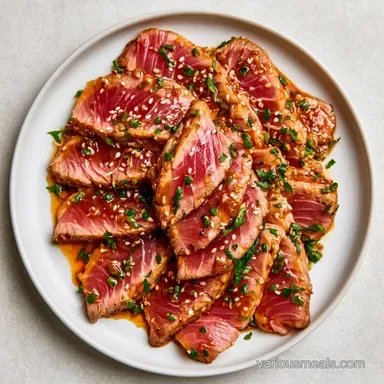
Sesame Ginger Ahi Tuna: Pan-Seared
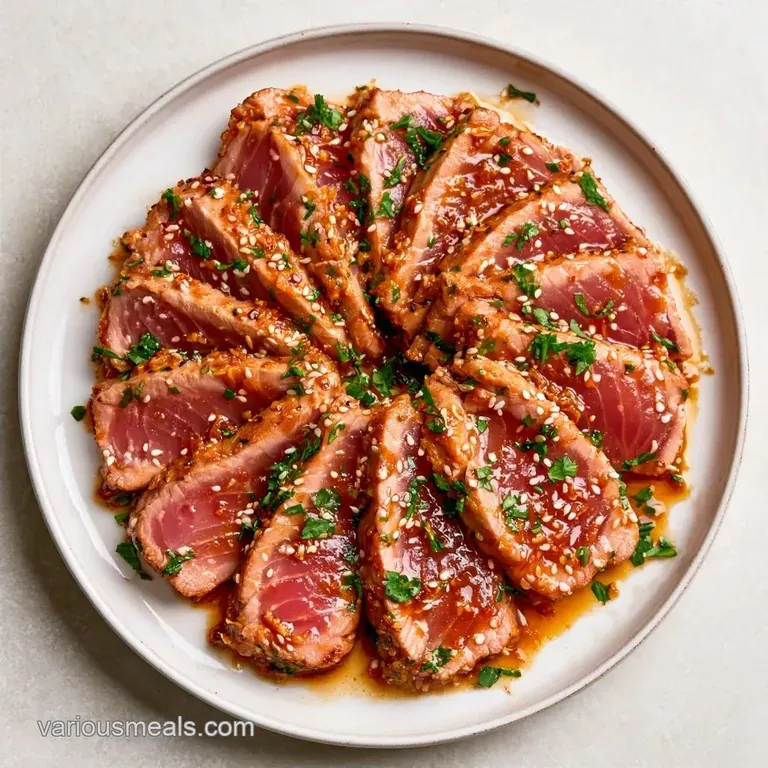
- Time: 10 min active + 15 min marinating + 5 min cooking
- Flavor/Texture Hook: Toasted, nutty crunch against a buttery, raw center
- Perfect for: High energy weeknight dinners or an impressive date night
The loud hiss of a cast iron skillet is the sound of a meal done right. Back in my old apartment, my first attempt was a bit tense; I stared at the pan like it was a ticking bomb, terrified I'd overcook the fish. I pulled the tuna too soon and missed that mahogany crust, but the second try was a total success.
That moment when the ginger hits the hot oil and the room smells like a high end sushi lounge is simply unbeatable.
You don't need professional culinary training to nail this. All you need is a pan that can take the heat and a bit of confidence. This recipe is a study in contrast, blending the sharp acidity of rice vinegar with sweet honey and earthy toasted sesame.
Expect a dinner that feels elegant but takes very little effort. This Sesame Ginger Ahi Tuna captures bold, global flavors without the need for obscure ingredients from a specialty store. It’s a dependable way to add some variety to your dinner rotation.
Why This Flavor Build Works
The key here is the temperature gap. We want the outside to be charred and the inside to stay raw. If you use a low flame, the tuna will cook through, and you'll end up with a grey, dry steak instead of that beautiful red center.
- High Heat: Rapid searing creates a crust in seconds. This prevents the heat from penetrating the core of the fish.
- Acid Sugar Balance: The honey and rice vinegar in the marinade act as a glue for the seeds and help the crust brown faster.
- Seed Contrast: Mixing black and white sesame seeds isn't just for looks. The black seeds often have a slightly more intense, toasted flavor that cuts through the rich fat of the tuna.
If you enjoy this style of sear, you might also like my Peppered Ahi Tuna for a different kind of kick.
Gear For The Job
You can use a stainless steel pan, but a cast iron skillet is the way to go. It holds heat way better, which means the temperature doesn't drop when the cold fish hits the surface.
2 Must Have Tools
A heavy skillet (cast iron is best) and a set of paper towels. Patting the tuna dry is the most skipped step, but it's the most important.
Optional Helpers
A microplane for the ginger makes a huge difference. It turns the root into a paste that blends into the marinade rather than leaving chunky bits.
What Each Ingredient Does
The marinade does two things: it seasons the meat and helps the seeds stick. Without the honey, the seeds would just slide off in the pan.
| Ingredient | What It Does | Best Swap |
|---|---|---|
| Soy Sauce | Provides salt and umami | Tamari (for gluten-free) |
| Honey | Aids browning and balances salt | Maple syrup |
| Fresh Ginger | Adds a sharp, peppery zing | Ginger paste (in a tube) |
| Rice Vinegar | Cuts through the fat with acidity | Apple cider vinegar |
Recipe Specs
This recipe is designed for efficiency. Since the cook time is so short, most of your "work" is just waiting for the fish to marinate.
- Prep time:10 minutes
- Cook time:5 minutes
- Total time:30 minutes
- Yield: 4 servings
How To Make It
Let's get started. Use only sushi grade tuna; since the center remains raw, the quality of the fish is paramount.
1. Prep the Marinade and Fish
Whisk together the 1/4 cup soy sauce, 1 tbsp toasted sesame oil, 1 tbsp honey, 1 tbsp grated ginger, and 1 tbsp rice vinegar in a bowl. Pat the 4 tuna steaks completely dry with paper towels. Note: Moisture on the surface prevents a good sear.
2. Divide and Soak
Pour half of your marinade into a small separate container. Use the remaining half to coat the tuna steaks and let them soak for 10–15 minutes. Do not exceed 20 minutes, or the vinegar will begin to "cook" the fish and alter its texture.
3. Build the Sesame Crust
Mix 2 tbsp white sesame seeds and 1 tbsp black sesame seeds on a flat plate. Press each side of the marinated tuna firmly into the seed blend, using your palm to embed them into the flesh.
4. Heat the Pan
Add 1 tbsp avocado oil to your skillet over medium high heat. Wait until the oil just begins to smoke. This is the signal that the pan is ready.
5. The Quick Sear
Gently place the tuna in the pan. Sear for 45 60 seconds per side and 15 seconds on each edge. You are aiming for a thin brown rim and a raw center.
6. Finish the Sauce
While the tuna rests, take your reserved marinade and stir in 1 tsp lime juice and 1/2 tsp sriracha. You can serve this as a chilled dipping sauce or simmer it in a pan for 2 minutes to create a silky glaze.
Fixing Common Issues
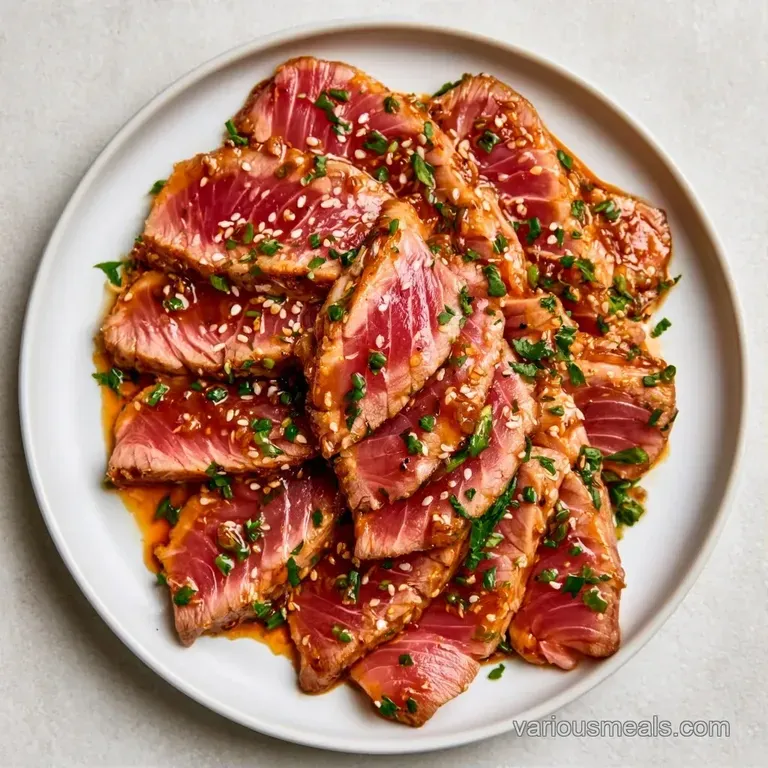
Most people struggle with either the crust or the doneness. The trick is to trust the clock. Sixty seconds feels fast, but in a screaming hot pan, it's plenty.
Fixing Loose Sesame Seeds
If your seeds fall off, the fish was likely too wet. Always pat the tuna dry before the marinade. Pressing firmly with your palm is better than just dipping.
Fixing Overcooked Tuna
If you see a thick grey band around the edges, the heat was too low or the time was too long. Next time, increase the heat and pull the fish off the second the crust looks mahogany.
Adjusting Salty Sauce
If the reduction becomes too salty, whisk in a teaspoon of water or a squeeze of extra lime. The acid helps neutralize the saltiness of the soy.
| Problem | Root Cause | Solution |
|---|---|---|
| Seeds sliding off | Excess surface moisture | Pat dry before marinating |
| Grey, overcooked center | Low pan temperature | Wait for oil to smoke |
| Sauce tastes too sharp | Too much vinegar/lime | Add a pinch more honey |
Storage And Scraps
Tuna is best eaten immediately. Once you sear it, the texture changes quickly.
Fridge Storage: If you have leftovers, keep them in an airtight container for 1 day. Reheating is a bad idea because it will overcook the raw center. Eat them cold over a salad instead.
Zero Waste: Don't toss the leftover marinade if you didn't use it for the sauce. Use it as a quick dressing for shredded carrots or cucumbers. If you have ginger scraps, freeze them in a bag to grate into future stir fries.
Flavor Twists And Swaps
You can easily customize this Sesame Ginger Ahi Tuna to suit your taste.
- Extra heat? → Mix 1 tsp red pepper flakes into the seeds.
- Nutty depth? → Use crushed peanuts instead of white sesame.
- More tang? → Stir 1 tsp lemon zest into the finished sauce.
To make it a heartier dish, I suggest serving this as a Sesame Crusted Tuna Bowl with avocado and quinoa.
Dietary Adjustments
For a gluten-free option, replace the soy sauce with tamari or coconut aminos. If you need a low sodium version, opt for "less sodium" soy sauce and add extra lime juice to keep the flavors vibrant.
Best Ways To Serve
The way you present this dish makes it feel like a restaurant meal. Slicing the tuna into thick strips reveals the red center, which is the best part.
The Elegant Appetizer Plate
Slice the tuna into 1/2 inch thick pieces. Fan them out on a plate and drizzle the sriracha lime reduction over the top. Garnish with sliced scallions and a sprinkle of extra sesame seeds.
The Fusion Dinner
Serve the tuna over a bed of steamed jasmine rice or baby spinach. Add a side of sautéed bok choy or steamed broccoli. The richness of the tuna pairs great with bitter greens.
Since we're talking about fast versus classic methods, here's how this version stacks up against the slow marinated traditional approach.
| Feature | Fast Sear Method | Classic Slow Marinade |
|---|---|---|
| Marinade Time | 10-15 minutes | 2-4 hours |
| Texture | Raw center, crisp crust | Cured exterior, softer bite |
| Flavor Profile | Fresh, bright ginger | Deep, salty soy penetration |
Kitchen Myths
Some believe searing "locks in" the juices, but that's a common misconception. Searing is actually about adding depth of flavor and texture through the browning process. The tuna remains juicy because the quick cook time prevents the heat from penetrating the center.
Similarly, a high end sous vide machine isn't necessary for that ideal medium rare finish. For Ahi tuna, a hot cast iron pan and a timer are perfectly effective alternatives.
Chef's Note: Not sure if the pan is hot enough? Try a "test sear" with a single sesame seed. If it sizzles and jumps right away, you're good to go. If it stays still, give it another minute.
High in Sodium
980 mg 980 mg of sodium per serving (43% 43% of daily value)
The American Heart Association recommends a daily sodium limit of no more than 2,300 mg to reduce the risk of high blood pressure and heart disease.
Tips to Reduce Sodium
-
Swap Soy Sauce-30%
Replace regular soy sauce with low-sodium soy sauce or coconut aminos to drastically reduce the salt content.
-
Boost Citrus-15%
Increase the lime juice or add a splash of extra rice vinegar to provide brightness and acidity, which mimics the taste of salt.
-
Fresh Heat-10%
Substitute sriracha with freshly minced chili peppers or red pepper flakes to get the heat without the processed sodium.
-
Enhance Aromatics
Double the amount of fresh ginger or add minced garlic to deepen the flavor profile without adding any sodium.
Recipe FAQs
How to get sesame seeds to stick to tuna?
Press the marinated steaks firmly into a plate of mixed seeds. The honey and soy sauce in the marinade act as a natural glue to hold them in place.
Can I cook the tuna all the way through?
Yes, but the texture becomes very dry and loses its buttery quality. It is best served seared on the outside with a raw center.
Which pan works best if I don't have cast iron?
Use a heavy bottomed stainless steel skillet to achieve a similar sear. This helps maintain high heat for that signature crust.
Is it true that seared tuna is too raw to be safe?
No, this is a common misconception. Sushi grade tuna is intended to be eaten raw or rare, provided it is handled and stored correctly.
What is the best way to make a poke bowl with this tuna?
Slice the seared tuna into cubes and serve over rice with fresh vegetables. If you enjoyed balancing these bold Asian flavors, see how we use similar profiles in our dumpling sauces.
Sesame Ginger Ahi Tuna