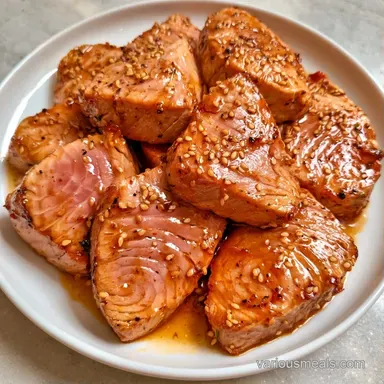
Soy Tuna Marinade with Honey and Ginger
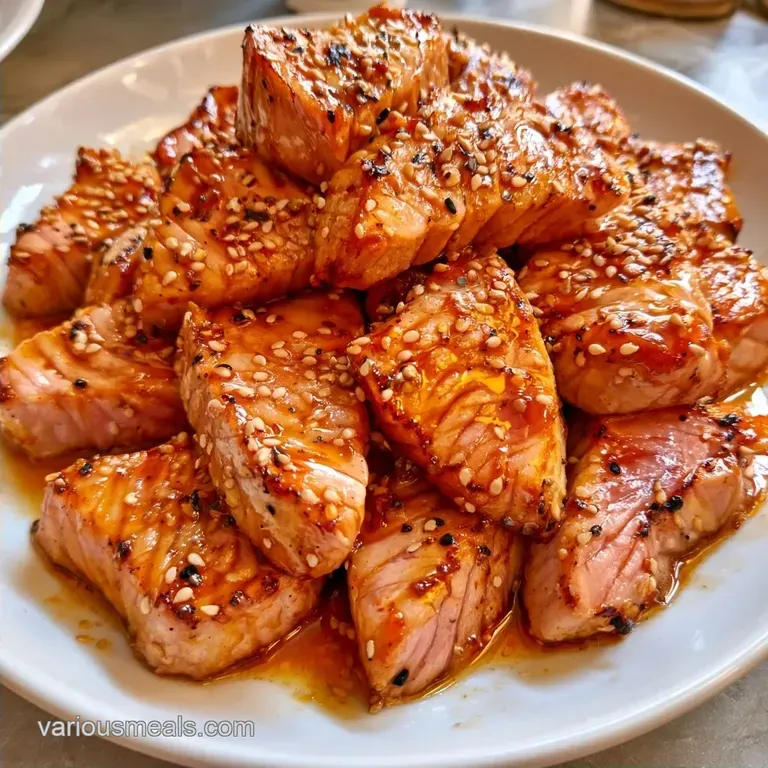
- Time: 10 minutes of work plus 30 minutes in the fridge
- Highlight: A salty, sweet, dark-brown crust
- Best for: Punchy weekday meals
Few things are as memorable as the aroma of toasted sesame oil sizzling in a scorching cast iron skillet. My first encounter with seared Ahi was in a small, misty Kyoto kitchen; the chef was silent, but the meal spoke for itself. The fish featured a charred, caramelized rim surrounding a brilliant, ruby red center.
It's easy to overcomplicate this dish. Many assume a long list of ingredients is required to replicate a professional kitchen. In reality, a handful of powerful, complementary flavors are all you need.
This Soy Tuna Marinade delivers those high impact tastes to your own kitchen. It is crafted for simplicity, capturing the perfect sweet savory balance while letting the natural freshness of the Ahi shine.
Why This Flavor Profile Hits
Natural Sugars: Honey doesn't just add sweetness. It browns quickly in the pan, creating that dark crust.
Umami Depth: Soy sauce adds glutamates that make the lean tuna taste richer.
Acid Balance: Rice vinegar cuts through the oil, keeping the dish from feeling too heavy.
| Method | Time | Texture | Best For |
|---|---|---|---|
| Quick Soak | 30 mins | Fresh & Light | Weeknight dinner |
| Classic Soak | 2 hours | Deep & Salty | Entertaining |
If you're looking for other fish options, a salmon marinade uses similar logic but needs a bit more citrus to handle the higher fat content.
The Quick Stats
This recipe is built for speed. You spend very little time prepping and the rest is just waiting for the flavors to penetrate the fish.
- Prep time: 10 minutes
- Cook time: 8 minutes
- Total time: 48 minutes
- Yield: 4 servings
Pantry and Produce List
For the Umami Base
- 1/2 cup low sodium soy sauce Why this? Prevents the fish from becoming a salt bomb
- 2 tbsp rice vinegar Why this? Mild acidity that doesn't "cook" the fish
- 2 tbsp honey Why this? Essential for the mahogany sear
For the Aromatics
- 1 tbsp toasted sesame oil Why this? Adds a nutty, roasted aroma
- 1 tbsp fresh ginger, finely grated Why this? Adds a sharp, peppery bite
- 2 cloves garlic, minced Why this? Classic savory depth
- 1 tsp black pepper, freshly cracked
- 1/4 tsp red pepper flakes
- 4 Ahi tuna steaks (approx 5 oz each)
| Component | Purpose | Substitute Notes |
|---|---|---|
| Low sodium soy | Salt & Umami | Tamari: Works well, makes it gluten-free |
| Honey | Browning | Maple syrup: Earthier taste, browns similarly |
| Rice Vinegar | Brightness | Apple cider vinegar: Stronger, use 1 tbsp |
I once tried using regular soy sauce instead of low sodium. It was a mistake. The fish tasted like a salt lick and ruined the delicate tuna. Stick to the low sodium version here.
Tools for the Job
Equipment is minimal, but the choice of pan is crucial. A cast iron skillet is ideal because it retains heat far better than non-stick cookware.
- Small mixing bowl
- Whisk or fork
- Glass container or Ziploc bag
- Cast iron skillet or heavy stainless steel pan
- Tongs
Getting the Tuna Ready
Phase 1: Creating the Base
Combine the low sodium soy sauce, rice vinegar, and honey in your bowl. Whisk vigorously for 30 seconds. Keep going until the honey is fully dissolved and you don't see any sticky streaks at the bottom.
Phase 2: Integrating the Aromatics
Stir in the toasted sesame oil, grated ginger, minced garlic, and black pepper. Stir until the Sauce Tuna Marinade looks glossy and the garlic bits are floating evenly.
Phase 3: The Marinating Process
Place your tuna steaks in a glass container or a resealable bag. Pour the Soy Tuna Marinade over the fish. Make sure every side is submerged. Seal it tight and put it in the fridge for 30 minutes to 2 hours.
Phase 4: The High Heat Sear
Pat the tuna steaks dry with a paper towel. This is a big step. If they're too wet, they'll steam instead of sear. Heat your pan over high heat with a splash of neutral oil.
Phase 5: Finishing the Crust
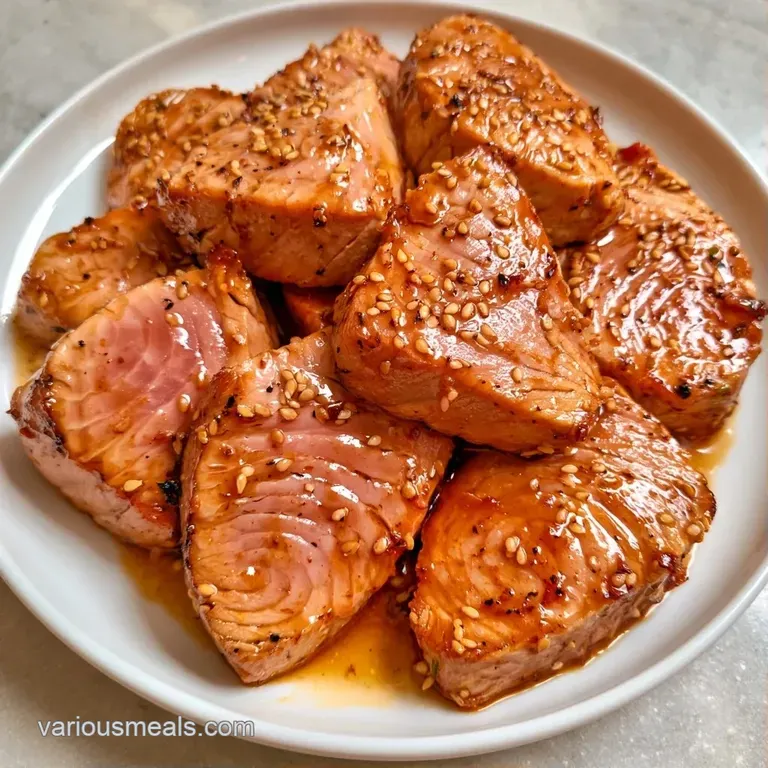
Place the tuna in the pan. Sear for 1 to 2 minutes per side until a caramelized mahogany crust forms. You should smell the honey caramelizing and the ginger toasted.
Phase 6: The Final Rest
Remove the steaks from the pan immediately. Let them rest on a board for 3 minutes. This lets the heat redistribute so the center stays a beautiful rare red.
Chef's Note: If you want a more charred look, try grilled ahi tuna over direct flames. The smoke adds another layer of flavor.
Solving Common Cooking Issues
The most common problem is the center cooking through. Tuna is lean, so it goes from rare to dry in about 60 seconds. If you see the red color disappearing from the sides, pull it off the heat immediately.
Another issue is the "grey" look. This happens if your pan isn't hot enough. The fish should sizzle the second it hits the metal. If it doesn't, wait another minute before adding the tuna.
Fixing a Bland Crust
If the flavor feels flat, you likely didn't pat the fish dry. Excess liquid prevents the sugars from bonding with the protein.
Handling Excess Salt
If the marinade tastes too sharp, a squeeze of fresh lime juice after cooking can neutralize the salt.
| Problem | Fix |
|---|---|
| No brown crust | Increase pan heat; pat tuna dry |
| Overcooked center | Reduce sear time by 30 seconds |
| Too salty | Add lime juice or a pinch of sugar |
Different Flavor Directions
For a spicier kick, double the red pepper flakes or add a teaspoon of Sriracha to the mix. It blends well with the honey.
For a citrusy profile, swap half the rice vinegar for fresh lime juice. This makes the Soy Tuna Marinade feel lighter and more like a summer dish.
If you're avoiding honey, maple syrup works. It changes the profile to something slightly more woody, but the sear remains the same. For a completely sugar-free version, use a monk fruit syrup, though the browning will be less intense.
For different goals:
- For a deeper color: Marinate for the full 2 hours.
- For a fresher taste: Marinate for only 20 minutes.
- For extra crunch: Press sesame seeds onto the crust before searing.
Keeping Leftovers Fresh
Keep the raw marinated tuna chilled for no more than 24 hours. If left longer, the acidity of the vinegar will degrade the fish's structure, resulting in a mushy consistency.
After cooking, keep the tuna in a sealed container for 2 days. Avoid freezing the cooked steaks, as this can make the texture grainy.
Save the remaining marinade instead of throwing it away. Boil it in a small skillet for 5 minutes until it thickens into a glaze, then drizzle it over rice or steamed bok choy.
Ways to Plate This
Slicing the tuna into half inch thick pieces is the best way to show off the contrast between the crust and the rare center.
Pair this with a side of steamed jasmine rice or a crisp cucumber salad with sesame seeds. The coolness of the cucumber balances the heat of the sear.
For a fusion twist, serve the tuna over a bed of mixed greens with a ginger carrot slaw. The acidity of the slaw mirrors the rice vinegar in the Soy Tuna Marinade, tying the whole plate together.
According to USDA guidance, the safe internal temperature for fish is 145°F, but for Ahi tuna, most people prefer a rare center. Use a meat thermometer if you're unsure, but visual cues are your best bet here. For accurate nutritional data on tuna, you can check USDA FoodData Central.
This Soy Sauce Tuna Marinade is a great way to bring a high end feel to a simple Tuesday night. Once you get the sear right, you'll never go back to bland fish. Trust me on this.
High in Sodium
1120 mg 1120 mg of sodium per serving (49% 49% of daily value)
The American Heart Association recommends a daily limit of 2,300 mg of sodium to maintain heart health and reduce the risk of hypertension.
Tips to Reduce Sodium
-
Swap for Coconut Aminos-20%
Replace the low-sodium soy sauce with coconut aminos, which provides a similar savory sweet flavor with significantly less sodium.
-
Boost with Citrus-15%
Add fresh lime or lemon juice to the marinade; the acidity mimics the 'bite' of salt and allows you to reduce the total amount of soy sauce used.
-
Dilute the Sauce-10%
Cut the soy sauce amount in half and replace the volume with water or unsalted vegetable broth to maintain consistency while lowering sodium.
-
Increase Aromatics-5%
Double the amount of fresh ginger and garlic to create a more robust flavor profile that compensates for less salt.
-
Enhance with Spices
Focus on the freshly cracked black pepper and toasted sesame oil to provide depth and warmth without adding any sodium.
Recipe FAQs
Is soy sauce a good choice for marinating tuna?
It is an excellent way to add savory depth and salt. This ingredient works with honey to create a rich mahogany crust during searing.
What creates the signature flavor in this recipe?
The combination of rice vinegar and honey balances the salty soy sauce. If you enjoyed balancing these elements here, see how the same approach works in our tuna poke.
Is it true that tuna steaks must be cooked through for safety?
Actually, no. Searing the exterior while keeping the center rare preserves the fish's natural moisture and tenderness.
How can I adapt this for a poke bowl?
Cube the marinated tuna and serve it chilled. Arrange the pieces over a base of rice for a fresh meal.
Savory Soy Tuna Marinade