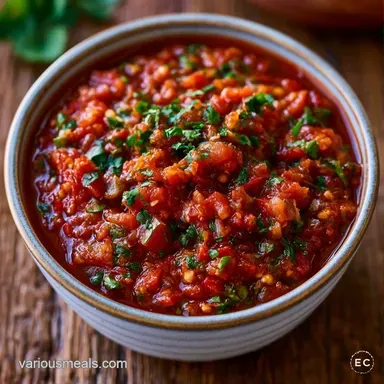
Authentic Homemade Salsa Roja
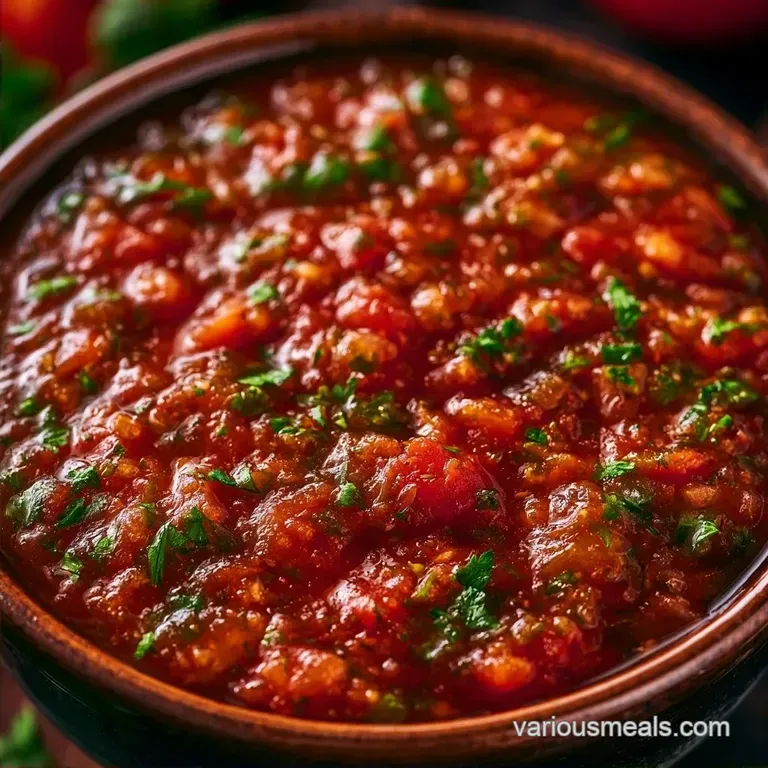
- Time: 5 min active + 10 min cook
- Flavor/Texture Hook: Smoky, bold, and smooth
- Perfect for: Tacos, eggs, or simple chip dipping
The smell of charred tomato skins hitting a hot pan is the only way to start this. For a long time, I thought you needed a fancy clay comal or a charcoal grill to get that authentic smoky taste. I spent way too much money on gear I didn't need.
Truth is, a cheap cast iron skillet does the job just as well. You don't need hours of simmering to get a deep flavor. This Salsa Roja comes together fast, using a few smart tricks to mimic a slow cooked sauce.
It's a low effort approach that doesn't sacrifice the punch. You'll get a bold, mahogany colored sauce that tastes like it took all afternoon, but it actually takes about 15 minutes.
Salsa Roja: Quick and Smoky Red Sauce
Charring: High heat blisters the skins and caramelizes the sugars in the vegetables. This adds the smoky base without a grill.
Toasting: Warming the dried chiles in oil wakes up the oils. This makes the Salsa Roja taste rich rather than just spicy.
Emulsion: Blending the charred veg with a bit of oil and lime juice creates a smooth, cohesive sauce.
| Method | Time | Texture | Best For |
|---|---|---|---|
| Fresh (Salsa Fresca) | 5 mins | Chunky/Watery | Fresh salads, fish |
| Roasted (This Recipe) | 15 mins | Smooth/Rich | Tacos, Enchiladas |
| Canned/Boiled | 10 mins | Uniform/Flat | Budget meal prep |
What Each Ingredient Does
| Ingredient | What It Does | Best Swap |
|---|---|---|
| Roma Tomatoes | Bulk and acidity | Fire roasted canned tomatoes |
| Ancho Chiles | Sweet, raisiny depth | Dried Guajillo chiles |
| Arbol Chiles | Sharp, direct heat | Red pepper flakes (less depth) |
| Lime Juice | Brightness/Balance | Apple cider vinegar |
The Essential Shopping List
- 4 medium Roma tomatoes, halved Why this? Less water, more meat than beefsteak
- ½ medium white onion, sliced into wedges Why this? Sharpness that mellows when charred
- 3 cloves garlic, peeled Why this? Essential aromatic base
- 4 dried Chiles de Árbol, stems removed Why this? Provides the primary heat
- 2 dried Ancho chiles, seeded and torn in half Why this? Adds a smoky, fruity base
- 1 tbsp neutral oil Why this? High smoke point for searing
- 1 tsp sea salt Why this? Enhances all other flavors
- ¼ cup filtered water Why this? Adjusts the thickness
- 1 tbsp fresh lime juice Why this? Cuts through the richness
Required Kitchen Gear
You can keep this very simple. A cast iron skillet is the best tool here because it holds heat so well, but any heavy bottomed pan works. You'll also need a standard blender or a food processor.
Don't forget a pair of tongs. Moving charred vegetables around without burning your fingers is a priority. If you don't have a blender, a stick blender in a tall jar works, though the texture might stay a bit chunkier.
Making the Sauce
Place the halved tomatoes, onion wedges, and garlic cloves on a hot cast iron skillet over medium high heat. Leave them undisturbed until skins are blackened and blistered. Remove garlic first, followed by onions and tomatoes. Note: Don't move them too early or they won't char.
Wipe the skillet clean. Add neutral oil over medium heat. Add the dried Arbol and Ancho chiles, stirring constantly for 30-60 seconds until they smell fragrant and look slightly darkened. Remove immediately from heat. Note: Dried chiles burn in seconds, so stay focused.
Transfer the charred vegetables and toasted chiles into a blender. Add salt and lime juice to make your Salsa Roja. Pulse on low, then increase to high until a smooth, mahogany colored emulsion forms.
Check the thickness. If it's too thick, add filtered water one tablespoon at a time until you reach a velvety consistency.
Taste for salt. If the lime is too sharp, add another pinch of salt to balance it.
Pour into a glass jar or bowl. Let it sit for 5 minutes before serving to let the flavors settle.
Fixing Salsa Roja Issues
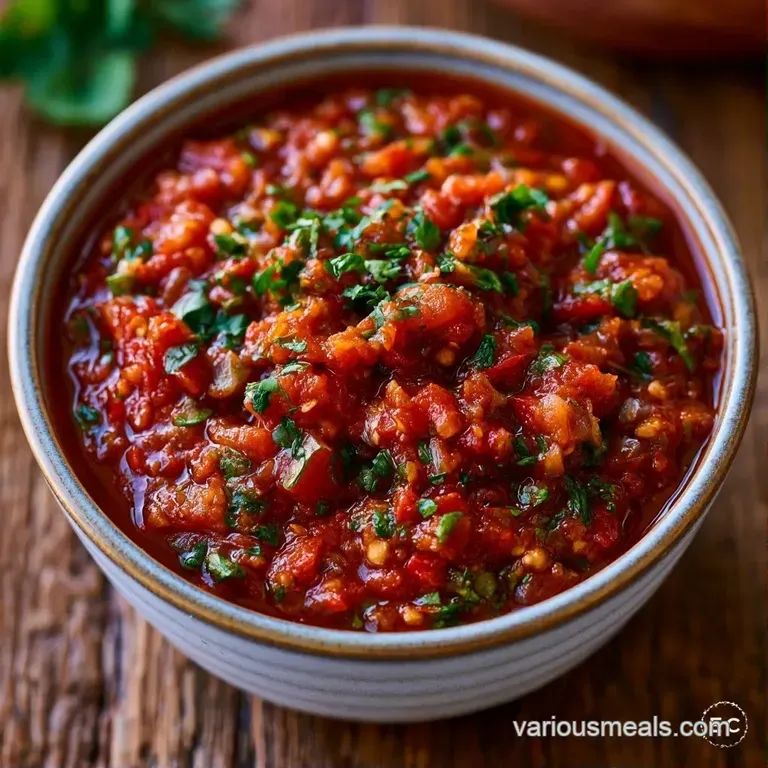
Sometimes the balance is off. It usually comes down to the heat of the pan or the type of chiles used. If the sauce tastes bitter, you likely burnt the garlic or the dried chiles.
If the texture is off, you might have added too much water too quickly. Start slow. The oil from the toasting phase is what keeps the sauce from separating, so don't skip that step.
| Problem | Root Cause | Solution |
|---|---|---|
| Bitter Taste | Burnt garlic/chiles | Strain through mesh or add a pinch of sugar |
| Too Spicy | Too many Arbol chiles | Blend in a tablespoon of Greek yogurt or more tomato |
| Too Watery | Too much water/juice | Simmer in a pan for 5 mins to reduce |
Easy Swaps and Versions
You can easily tweak the heat. If you want it milder, remove the seeds from the Arbol chiles or just use one. For a deeper, more raisin like flavor, add an extra Ancho chile.
If you are in a rush and can't char the vegetables, you can try a Mexican Blender Salsa which uses raw ingredients for a brighter, zingier taste.
For those on a budget, you can use canned fire roasted tomatoes instead of fresh Romas. Just make sure to drain the excess liquid so your Salsa Roja doesn't become a soup.
Storage and Saving
Store this in an airtight glass jar in the fridge for up to 7 days. The flavor actually improves after 24 hours as the chiles infuse into the tomato base.
You can freeze it for up to 3 months. Put it in freezer safe bags, squeezing out all the air. To reheat, thaw it in the fridge overnight or warm it gently in a small pot over low heat.
If you're looking for something even faster for a Tuesday night, my Salsa in 5 Minutes recipe is a great alternative. To avoid waste, save the leftover onion ends and tomato tops in a freezer bag to make a vegetable stock later.
Perfect Pairing Ideas
This sauce is versatile. It's a powerhouse on breakfast tacos with scrambled eggs and avocado. Because of the smoky depth, it also pairs well with grilled proteins like flank steak or blackened shrimp.
If you're serving it as a dip, use thick cut corn tortilla chips. The richness of the Salsa Roja stands up well to the saltiness of the chips. It also works as a base for enchiladas if you simmer it for an extra 10 minutes to thicken it further.
The Truth About Salsa Roja
Many people believe that you need to boil the chiles to soften them. This is a common mistake. Boiling washes away the flavor and leaves the sauce tasting bland.
Toasting the chiles in oil is the correct way. According to Serious Eats, heating dried chiles in fat releases essential oils that provide a deeper, more complex flavor profile.
Another myth is that you need a high powered blender for a smooth sauce. Any basic blender will work if you add the water gradually. The key is the order of ingredients, not the horsepower of the machine.
Salsa Roja isn't about complex techniques. It's about heat management and choosing the right chiles. Keep your pan hot, watch your chiles, and don't over blend.
Right then, you've got a professional tasting sauce without the professional price tag. It's simple, budget friendly, and brings a huge amount of flavor to the table. Trust me, once you stop boiling your chiles and start toasting them, you'll never go back.
Recipe FAQs
What is Salsa Roja made of?
Roasted Roma tomatoes, white onion, and garlic blended with dried Ancho and Árbol chiles. It is seasoned with sea salt and lime juice, then thinned with filtered water.
How do I make authentic Salsa Roja?
Char tomatoes, onion, and garlic in a hot cast iron skillet over medium high heat until blackened. Toast dried chiles in neutral oil for 30-60 seconds, then blend everything with salt and lime juice until smooth.
What is the difference between salsa verde and Salsa Roja?
The primary difference is the base vegetable and chile type. Salsa Roja uses red Roma tomatoes and dried red chiles, while salsa verde typically relies on tomatillos and green chiles.
Why did my salsa taste bitter?
You likely toasted the dried chiles for too long. These chiles only require 30-60 seconds of heat; exceeding this time burns the skins and creates a harsh, bitter flavor.
How do I achieve a restaurant quality velvety texture?
Blend on high speed until a smooth mahogany colored emulsion forms. If the consistency is too thick, add filtered water one tablespoon at a time until it is perfectly velvety.
How long does Salsa Roja stay fresh?
Up to 7 days in an airtight glass jar in the fridge. The flavor actually improves after 24 hours as the chiles fully infuse into the tomato base.
Can I use fresh chiles instead of dried?
Yes, though the flavor will be brighter and less smoky. If you prefer the taste of fresh peppers, you can use the same blending logic found in a jalapeno cilantro sauce.
Smoky Salsa Roja