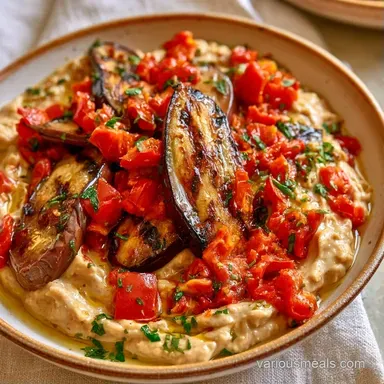
Smoky Roasted Eggplant Spread
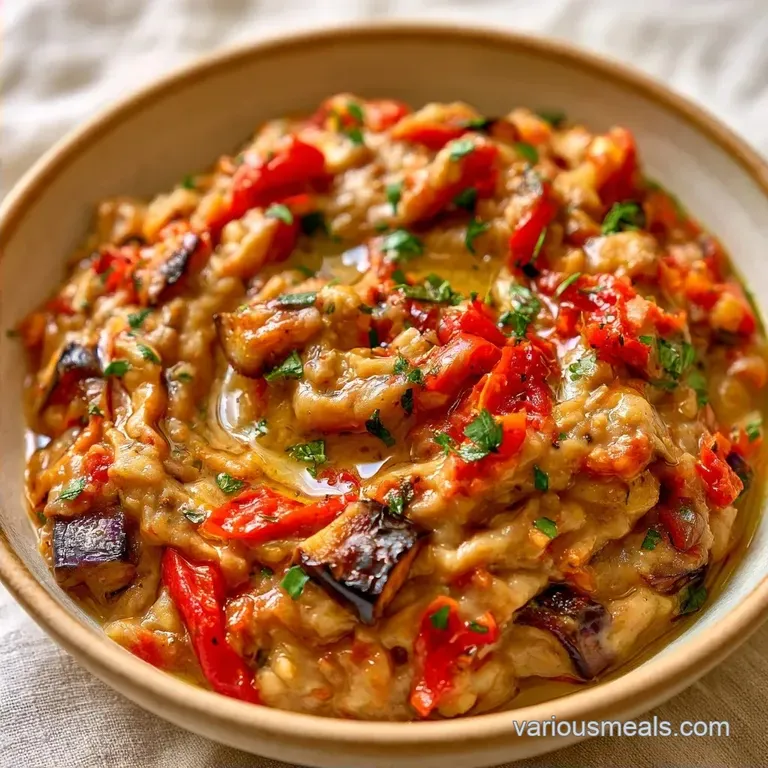
- Time: 15 min active + 35 min roasting
- Flavor/Texture Hook: Smoky and slightly rustic
- Perfect for: budget-friendly meal prep or healthy snacking
- Simple Roasted Eggplant Spread Recipe
- What Makes This Work
- Ingredient Deep Dive
- Equipment Needed
- From Prep to Plate
- Avoiding Kitchen Disasters
- Make It Your Own
- Fresh vs. Shortcut Comparison
- Adjusting the Batch Size
- Eggplant Myths
- Make-Ahead and Leftover Tips
- Serving Suggestions
- Recipe FAQs
- 📝 Recipe Card
Simple Roasted Eggplant Spread Recipe
You know that sound when a food processor just spins and splashes watery vegetable juice everywhere? I've been there. Most people end up with a bland, limp eggplant mush that tastes like boiled cardboard because they roast too low or crowd the pan. It's a frustrating mess that doesn't hold its shape on a cracker.
This Roasted Eggplant Spread fixes that by using a over high heat approach. Instead of steaming the veg, we blast them at 425°F to get those dark, charred edges. This changes the whole vibe from "watery side dish" to a concentrated, savory dip.
You're getting a plant forward snack that's easy on the wallet but tastes expensive. It's essentially just a few humble garden vegetables and a bit of citrus, yet it hits all the right notes.
What Makes This Work
High Heat: Roasting at 425°F evaporates moisture quickly. This concentrates the sugars and prevents the spread from becoming runny.
Citrus Balance: The lemon juice cuts through the oil and the richness of the eggplant. It brightens the whole profile so it doesn't feel heavy.
Manual Folding: Adding parsley at the end by hand keeps the green flecks visible. Blending it would just turn the dip a muddy brown color.
Ingredient Deep Dive
| Ingredient | What It Does | Best Swap |
|---|---|---|
| Eggplant | Provides the creamy base | Zucchini (will be more watery) |
| Red Bell Peppers | Adds sweetness and color | Orange peppers (mildly sweeter) |
| Lemon Juice | Adds acidity and brightness | Lime juice (adds a zestier punch) |
| Olive Oil | Carries flavor and helps browning | Avocado oil (neutral taste) |
The Pantry List
- 1.5 lb eggplant, diced into 1 inch cubes Why this? Dicing ensures even roasting and faster charring.
- 12 oz red bell peppers, seeded and chopped Why this? Red peppers provide the most sweetness.
- 1 medium red onion, coarsely chopped
- 6 cloves garlic, peeled and smashed
- 3 tbsp extra virgin olive oil (for roasting)
- 1 tsp kosher salt
- 1/2 tsp black pepper
- 1/4 tsp cayenne pepper Why this? Adds a subtle warmth without overpowering.
- 2 tbsp fresh lemon juice
- 2 tbsp extra virgin olive oil (for blending)
- 1/4 cup fresh parsley, chopped
Budget Smart Swaps
If you're watching the spending, don't worry about the "extra virgin" label for the roasting oil. A standard olive oil or vegetable oil works just as well for the over high heat stage. For the blending stage, though, I suggest sticking to a decent olive oil since you taste it more in the raw form.
Equipment Needed
A large baking sheet is the most critical piece of gear. Using a pan that's too small will cause the vegetables to crowd and steam, which creates the exact watery consistency we're trying to prevent.
Try lining the sheet with parchment paper; it keeps the garlic from sticking and makes tidying up much faster. For the final blend, a standard food processor is ideal, but you can use an immersion blender in a deep bowl if you prefer a bit more texture.
From Prep to Plate
- Set your oven to 425°F (220°C) and cover a large baking tray with parchment paper.
- In a large bowl, combine the diced eggplant, bell peppers, red onion, and smashed garlic with 3 tablespoons of olive oil, salt, pepper, and cayenne.
- Arrange the vegetables in a single, thin layer on the tray. Note: Avoid overcrowding the pan to ensure the vegetables roast rather than steam.
- Roast for 30–35 minutes, stirring halfway through, until the edges are charred or deeply browned.
- Take the tray out of the oven and allow the vegetables to cool for 5–10 minutes.
- Place the roasted vegetables and all remaining pan juices into a food processor.
- Pulse the mixture while slowly pouring in the lemon juice and the remaining 2 tablespoons of olive oil until the texture is smooth yet slightly rustic.
- Use a spatula to fold in the chopped parsley by hand.
Chef Tip: To achieve a more intense char, move the tray to the top rack for the final 5 minutes. Keep a close eye on it to ensure the garlic doesn't burn and turn bitter.
Avoiding Kitchen Disasters
Correcting a Runny Texture
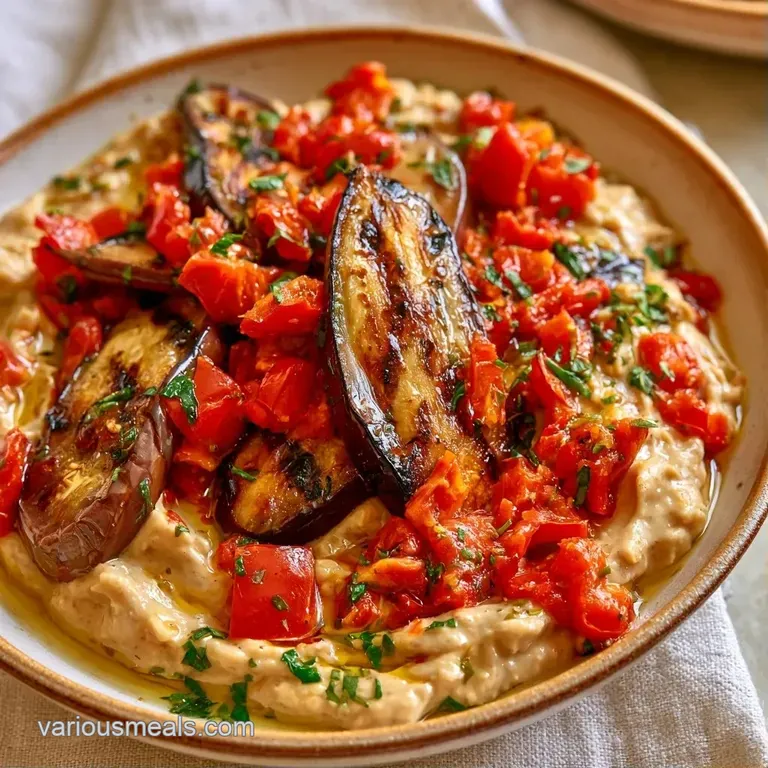
Sometimes the eggplant remains too moist, even when using high heat. If your dip resembles a soup more than a spread, don't worry. You can resolve this by simmering the blended mix in a small saucepan over medium heat for a few minutes to remove the extra liquid.
Addressing Bitterness
If the garlic overcooks in the pan, it can develop a bitter flavor. Should you notice a sharp, burnt taste, stir in a bit more lemon juice or a dash of sugar. The sweetness and acidity will help neutralize those burnt notes.
Improving Grainy Consistency
This usually occurs if the vegetables weren't processed long enough or the initial dice was too coarse. Pulse the mixture for another 30 seconds, but be careful not to over blend; you want a smooth consistency, not a thin puree.
| Problem | Root Cause | Solution |
|---|---|---|
| Runny Spread | Excess moisture / overcrowding | Simmer in a pot for 5 mins |
| Burnt Taste | Garlic overcooked | Use more lemon juice |
| Muddy Color | Blended the parsley | Fold in herbs by hand |
Make It Your Own
For a different taste, try mixing in a tablespoon of tahini or Greek yogurt to give the Roasted Eggplant Spread a nuttier depth and creamier texture. If you want more heat, replace the cayenne with a diced chipotle pepper in adobo.
For an Asian style twist, you can use a similar base check out my Chinese Eggplant Garlic Sauce for ways to incorporate ginger and soy. This dip is highly adaptable.
Quick adjustments:
- Brighter flavor? → stir in 1 tsp lemon zest
- Nuttier taste? → add 1 tbsp toasted sesame seeds
- Creamier result? → mix in 2 tbsp Greek yogurt
Fresh vs. Shortcut Comparison
| Feature | Fresh Roasted | Jarred/Canned |
|---|---|---|
| Flavor | Smoky, bright, complex | Flat, metallic, salty |
| Texture | Rustic and chunky | Uniformly smooth/gel like |
| Cost | Very low (whole veg) | Moderate |
Adjusting the Batch Size
If halving the recipe, use a smaller baking sheet so the vegetables roast efficiently without overlapping. The total cook time will probably decrease by 5-10 minutes, so begin checking for charring at the 25-minute mark.
For double or triple batches, avoid piling everything onto one tray. Roast in multiple rounds to avoid overcrowding, which can lead to a soggy texture. When blending a larger quantity, stir in the olive oil and lemon juice gradually to keep the emulsion stable.
Eggplant Myths
Some people think you have to salt eggplant and let it sweat for an hour to remove bitterness. That's mostly true for old school recipes using large, older eggplants. With modern varieties and over high heat roasting, the bitterness vanishes on its own. Don't waste your time with the salting step.
Another myth is that you need a grill to get a smoky flavor. While a grill is great, a 425°F oven creates enough char on the skin and edges to mimic that smokiness perfectly.
Make-ahead and Leftover Tips
Store this Roasted Eggplant Spread in a tightly closed container in the fridge for 4 to 5 days. You'll find the taste often deepens and improves after sitting overnight. It's an ideal choice for healthy lunch meal prep.
If your fridge is full of dips, try my Fire Roasted Tomato Salsa to mix things up. Both options are affordable and packed with nutrients.
I suggest avoiding the freezer. The emulsion may separate, resulting in a grainy texture after thawing. It's best enjoyed fresh or kept refrigerated.
Zero Waste Tip: Keep your eggplant stems and pepper seeds. Store them in a freezer bag along with other vegetable trimmings to create a plant forward broth later on.
Serving Suggestions
The best way to serve this is in a shallow bowl with a swirl of olive oil on top. Pair it with toasted pita triangles, cucumber slices, or thick carrot sticks for a crunch that contrasts with the velvety texture of the dip.
For a more substantial meal, spread it on a piece of sourdough toast and top it with a poached egg or some crumbled feta cheese. It also works as a base layer for sandwiches, replacing mayo with something more nutrient dense.
If you're hosting a crowd, build a Mediterranean platter. Put the Roasted Eggplant Spread in the center and surround it with Kalamata olives, marinated artichokes, and sliced radishes. It's a low cost way to make a table look impressive.
Recipe FAQs
How do you roast eggplant in the oven?
Preheat your oven to 425°F and toss the diced cubes with olive oil and seasoning. Roast them on a parchment lined sheet for 30 35 minutes, tossing halfway through to achieve charred edges.
Is it true that you should roast the vegetables at a lower temperature to prevent burning?
That's a myth. High heat at 425°F is necessary to evaporate moisture quickly and concentrate the sugars for a smoky, rich flavor.
Why does my spread turn out runny instead of creamy?
You likely crowded the baking sheet, which causes the vegetables to steam rather than roast. Keep the mixture in a single thin layer to ensure the water evaporates.
What should I serve alongside this Roasted Eggplant Spread?
Toasted pita bread or sliced cucumbers provide a great crunch against the rustic texture. If you are building a larger appetizer platter, this pairs well with a savory meatball sauce.
Roasted Eggplant Spread