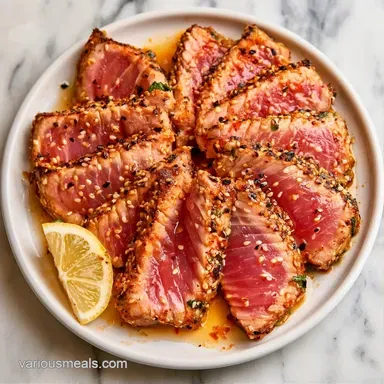
Restaurant-Style Seared Ahi Tuna with Lemon
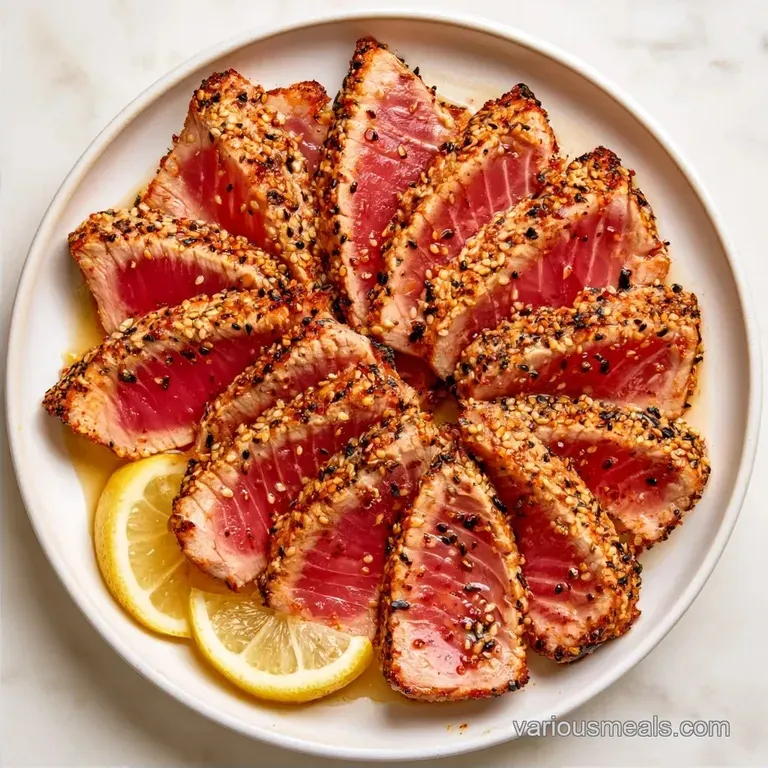
- Duration: 10 min active + 5 min resting
- Sensory Hook: Toasted sesame crunch with a velvety, rare center
- Occasion: Bold weeknight dinners or an impressive date night
The scent of toasted sesame seeds hitting a scorching pan is unforgettable. Across the Pacific, from Japan to Hawaii, this approach to tuna often referred to as tataki is centered on contrast. It is a way of celebrating the fish's natural quality by barely exposing it to the flame.
I'll never forget my first experience with this at a little shop in Honolulu. The tuna was just barely warm on the surface, while the center remained buttery and raw. It completely shifted my perspective on how to "cook" fish.
You can recreate that professional effect in your own kitchen. This Seared Ahi Tuna with Lemon focuses on a rapid, intense sear paired with a bright, zesty finish.
Seared Ahi Tuna with Lemon
Let's start with the fundamentals. You're aiming for a seared, brown perimeter with a center that remains a vivid, ruby red. Overcooking it by just a minute ruins the effect.
To achieve a rare finish, you need high heat and perfectly dry fish. Surface moisture causes the tuna to steam instead of sear, resulting in a grey, rubbery texture.
- High Thermal Mass
- A cast iron pan prevents the temperature from plummeting when the cold fish is added.
- Flash Searing
- Searing for under 60 seconds per side keeps the inside raw while browning the exterior.
- Acid Balance
- Finishing with lemon balances the heavy notes of the sesame oil and tuna.
Whether you use fresh or frozen sushi grade tuna will affect the final result.
| Feature | Fresh Sushi Grade | Frozen Shortcut | Impact |
|---|---|---|---|
| Color | Vibrant Ruby | Pale Pink | Visual appeal |
| Texture | Firm and Clean | Softer/Watery | Mouthfeel |
| Taste | Mild/Oceanic | Slightly fishier | Flavor depth |
Gathering Your Essentials
Organize your ingredients before starting the stove. You won't have a spare second to hunt for the soy sauce once the oil shimmers.
- 2 (6 oz / 170g) Ahi tuna steaks Why this? Sushi grade is essential for raw eating
- 2 tbsp sesame seeds (black, white, or mixed)
- 1/2 tsp kosher salt
- 1/2 tsp coarsely ground black pepper
- 1 tbsp avocado oil Why this? A high smoke point prevents a burnt flavor
- 1 tbsp fresh lemon juice
- 1 tbsp low sodium soy sauce
- 1 tsp toasted sesame oil
- 1/2 tsp garlic powder
If any items are missing, refer to the table below for flavor balanced replacements.
| Original Ingredient | Substitute | Why It Works |
|---|---|---|
| Avocado Oil | Grapeseed Oil | Similar high smoke point. Note: Do not use butter or olive oil |
| Soy Sauce | Tamari | A gluten-free alternative with a similar salty profile |
| Sesame Seeds | Poppy Seeds | Adds a nutty crunch, though less fragrant than sesame |
Equipment Needed
You don't need a lot, but the pan matters. Honestly, don't even bother with non stick here.
- Cast iron skillet (the gold standard for searing)
- Tongs for flipping
- Paper towels for drying the fish
- Sharp knife for slicing against the grain
- Flat plate for the seed crust
Key Steps
Serious Eats' research suggests that patting fish or zucchini dry prevents them from steaming or becoming gummy. Apply that principle here using plenty of paper towels.
Phase 1: Preparing the Crust
- Pat all sides of the tuna steaks completely dry. Note: Dry fish is essential for a crisp sear
- Combine sesame seeds, salt, and pepper on a flat plate.
- Press the tuna firmly into the seeds until a thick, even layer is formed.
Phase 2: The Flash Sear
- Heat avocado oil in a cast iron skillet over high heat until the oil shimmers and just begins to smoke.
- Sear the fish for 45 to 60 seconds per side. Avoid moving the tuna until a mahogany colored crust develops.
- Using tongs, sear the thin edges for 15 seconds each, allowing the sesame seeds to toast.
Phase 3: The Lemon Finish & Slicing
- Turn off the burner. Quickly add the soy sauce, lemon juice, garlic powder, and toasted sesame oil. The pan will sizzle, releasing a vibrant citrus aroma.
- Flip the tuna in the glaze for 10 seconds.
- Transfer to a cutting board and let it rest for 2 minutes.
- Slice against the grain into 1/2 inch thick pieces.
What Nobody Tells You
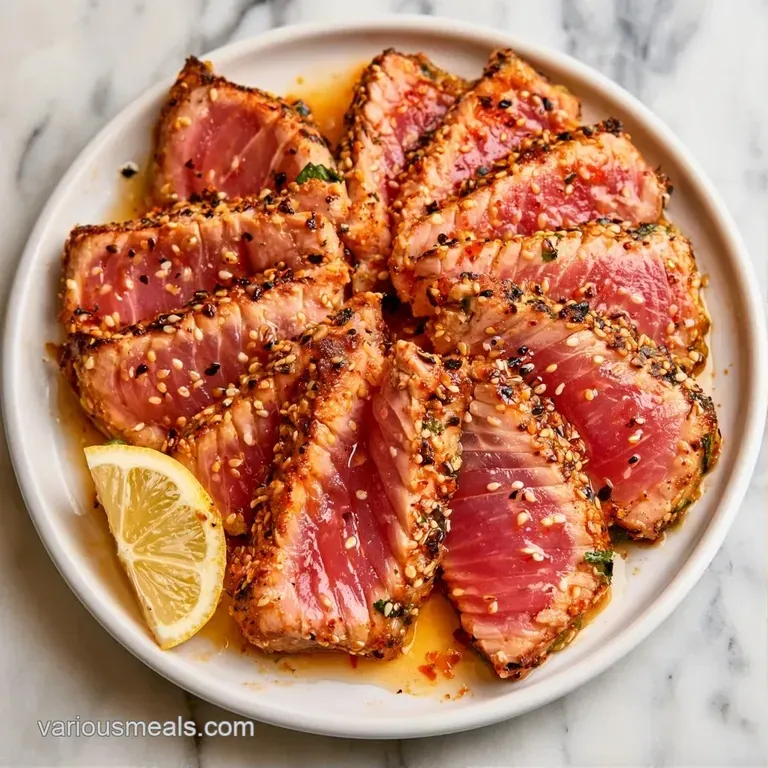
Most people treat fish like a steak, but Seared Ahi Tuna requires a different mindset. It's more like a flash fry than a traditional roast.
The Cold Start: If the tuna is too warm, the center cooks faster. Keeping it chilled until the moment it hits the pan helps maintain that raw middle.
The Oil Choice: Using an oil with a low smoke point, like extra virgin olive oil, will result in a bitter, burnt taste at the temperatures required for this recipe.
The Rest Period: Even though it's barely cooked, resting allows the juices to redistribute. If you slice it immediately, the blood red juices will run all over your plate.
Avoiding Kitchen Disasters
The biggest issue is usually temperature. If the pan isn't screaming hot, you'll get a grey band of overcooked fish around the edges.
Overcooked Middle
If your tuna turns grey in the middle, you've gone too far. Stick to the 60 second limit. If you prefer a medium rare center, you can push it to 90 seconds, but be careful.
Seeds Not Sticking
This happens if the fish is too wet. Ensure you pat it dry. If you're still struggling, a tiny brush of soy sauce on the fish before pressing into seeds acts like glue.
Fish Sticking to Pan
This is a sign the pan wasn't hot enough or the oil hadn't reached its shimmer point. If it sticks, don't force it; let the crust form for another 15 seconds, and it will naturally release.
If the sear is too aggressive for your taste, try my peppered Ahi tuna method for a different crust.
| Problem | Root Cause | Solution |
|---|---|---|
| Grey Center | Cooked too long | Reduce sear to 45 seconds per side |
| Burnt Seeds | Pan too hot/too long | Use a timer; don't guess the seconds |
| Bland Taste | Lack of salt in crust | Season the tuna before adding seeds |
Storage and Freshness
This dish is designed to be eaten immediately. The contrast between the hot crust and cool center is what makes it.
Fridge: You can store leftovers in a sealed container for 1-2 days. However, the crust will soften, and the texture changes. Freezer: Do not freeze once seared. It ruins the protein structure and makes the fish mushy.
For zero waste, don't toss the leftover lemon halves. Zest them into a fresh garden salad or use the remaining juice to brighten up a batch of homemade mayo.
Dietary Adaptations
You can easily tweak this for different needs. For a different twist, check out the sesame ginger Ahi tuna version for more heat.
For a Keto or Paleo version, this recipe is already almost there. Just ensure your soy sauce is replaced with coconut aminos.
If you want a nut free version, swap the sesame seeds for crushed black peppercorns or toasted breadcrumbs.
- For more heat
- Add a pinch of cayenne to the seed crust.
- For a firmer set
- Chill the tuna in the freezer for 10 minutes before searing.
- For a bolder glaze
- Add a teaspoon of grated fresh ginger to the final pan toss.
Pairing Ideas
Tuna with Lemon needs a side that doesn't compete with the bold, salty glaze.
The Fresh Route: A chilled cucumber salad with rice vinegar and a touch of sugar works brilliantly. The coolness matches the rare center of the fish.
The Hearty Route: Serve it over a bed of steamed bok choy or a simple jasmine rice. The rice soaks up that lemon soy glaze, meaning nothing goes to waste.
If you're serving Ahi Tuna with Lemon as an appetizer, slice the pieces thinner and serve them on a platter with a side of wasabi and pickled ginger.
Tuna with Lemon also pairs well with a crisp, dry white wine or a cold sparkling water with a lime wedge. This keeps the palate clean between the rich, fatty bites of the fish.
Whether you're making this for a quick Tuesday dinner or a fancy party, the trick is confidence. Trust the timer, keep the heat high, and don't overthink it. Just sear, glaze, and serve.
High in Sodium
850 mg 850 mg of sodium per serving (37% 37% of daily value)
The American Heart Association recommends that most adults limit their sodium intake to no more than 2,300 mg per day to maintain healthy blood pressure.
Tips to Reduce Sodium
-
Eliminate Added Salt-30%
Remove the 1/2 tsp of kosher salt entirely; the soy sauce already provides a significant amount of salt for the seasoning.
-
Swap for Coconut Aminos-20%
Replace the low-sodium soy sauce with coconut aminos, which offers a similar savory flavor with much lower sodium content.
-
Increase Lemon Juice-10%
Increase the fresh lemon juice to 2 tbsp to enhance the acidity and brightness, which helps trick the palate into needing less salt.
-
Use Fresh Garlic-5%
Substitute the garlic powder with freshly minced garlic for a bolder, more natural flavor profile.
-
Boost with Aromatics
Add freshly grated ginger or extra black pepper to add depth and heat without adding any sodium.
Recipe FAQs
What's the best way to cook ahi tuna at home?
Sear the steaks over high heat in avocado oil for 45 to 60 seconds per side. This method creates a savory crust while keeping the center rare and tender.
Is it true that frozen tuna can't be cooked medium rare?
Actually, no. You can achieve a professional medium rare result with frozen steaks as long as you thaw them and pat them completely dry before cooking.
Should tuna steaks remain pink inside?
Yes, the center should be pink or red to maintain a buttery texture. Cooking the fish until it is grey throughout makes the protein dry and tough.
How to prepare frozen tuna steaks for searing?
Thaw the fish completely and pat all sides dry with paper towels. Press the steaks firmly into a mixture of sesame seeds, salt, and pepper before they hit the pan.
Can I use a grill pan for this recipe?
Yes, a grill pan works well for creating charred lines. Just ensure the pan is shimmering hot with avocado oil to prevent the fish from sticking.
Which sides pair best with seared tuna?
A fresh Italian tomato salad balances the rich, savory glaze perfectly. The acidity of the tomatoes complements the toasted sesame oil.
Seared Ahi Tuna Steaks